
So recently, I finished my goal of visiting every single Lesser Antilles Caribbean island nation, and in this travel guide I’ll explain how I did it independently, without taking a cruise and without relying on all-inclusive resort travel.
In this post, I’ll share how I visited all of the Lesser Antilles Caribbean countries, including:
- Trinidad and Tobago
- Saint Lucia
- Grenada
- Saint Vincent and the Grenadines
- Barbados
- Saint Kitts and Nevis
- Antigua and Barbuda
- Dominica
I also included Martinique in this itinerary. While it’s not a country (as it’s part of France), it’s an important gateway for independent travel in the Lesser Antilles, especially if you’re flying from Europe or Montréal, Canada.
Table of Contents
Lesser Antilles Caribbean Islands Travel Guide
🌴 Planning the Lesser Antilles Independently (Quick Tips)
✈️ Flights Between Islands
- Best site for Caribbean regional flights:
👉 Search inter-island flights
🚗 Car Rentals (highly recommended on all of the islands)
- Best platform: Discover Cars
👉 Compare car rentals here
⛴️ Ferries
- Saint Lucia ⇄ Martinique ⇄ Dominica:
👉 Check ferry schedules and prices here
🏨 Accommodation
- Budget → luxury options:
👉 Search hotels & guesthouses on Booking.com
🛡️ Travel Insurance (this is what I use for long-term travel)
📶 eSIM for Every Country
I traveled through these islands independently, combining regional flights, ferries, local minibuses, renting a car, walking, and the occasional tour or taxi, rather than cruise excursions. Throughout this guide, I’ll share both budget-friendly options and more comfortable or upscale stays, so you can plan this trip based on your own travel style and budget.
I had already visited Trinidad and Tobago earlier, when I needed to fly to a third country to get from Guyana to Venezuela, as it isn’t possible to cross the border overland due to the ongoing conflict. After finishing my journey through every country in South America in Venezuela, it felt like the perfect moment to continue on and visit all the remaining Lesser Antilles Caribbean countries as well.
Why I Didn’t Take a Caribbean Cruise
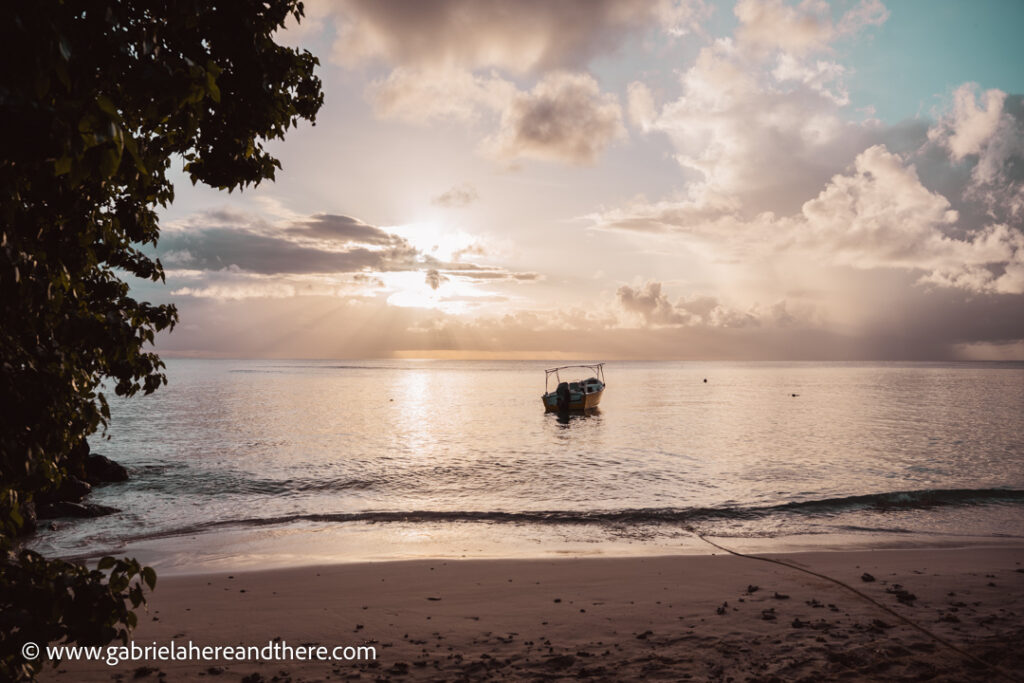
A Caribbean cruise would probably have been cheaper — at least on paper. But most cruises stop at each island for just a few hours, often for less than a day.
You’re herded into a port town, offered the same packaged excursions as everyone else, and then sent back to the ship before you’ve had any real interaction with the country itself.
That’s not how I want to experience places.
I wanted to:
- Spend several days (or even weeks) on each island
- Eat local food, not cruise buffets
- Use local transport and stay in local neighborhoods
- See more than just the cruise port
Traveling independently gave me the freedom to slow down, explore beyond the main tourist zones, work remotely when I wanted to, and experience islands like Dominica and Tobago in a way most cruise passengers never do.
Is It Possible to Visit the Lesser Antilles Without a Cruise?
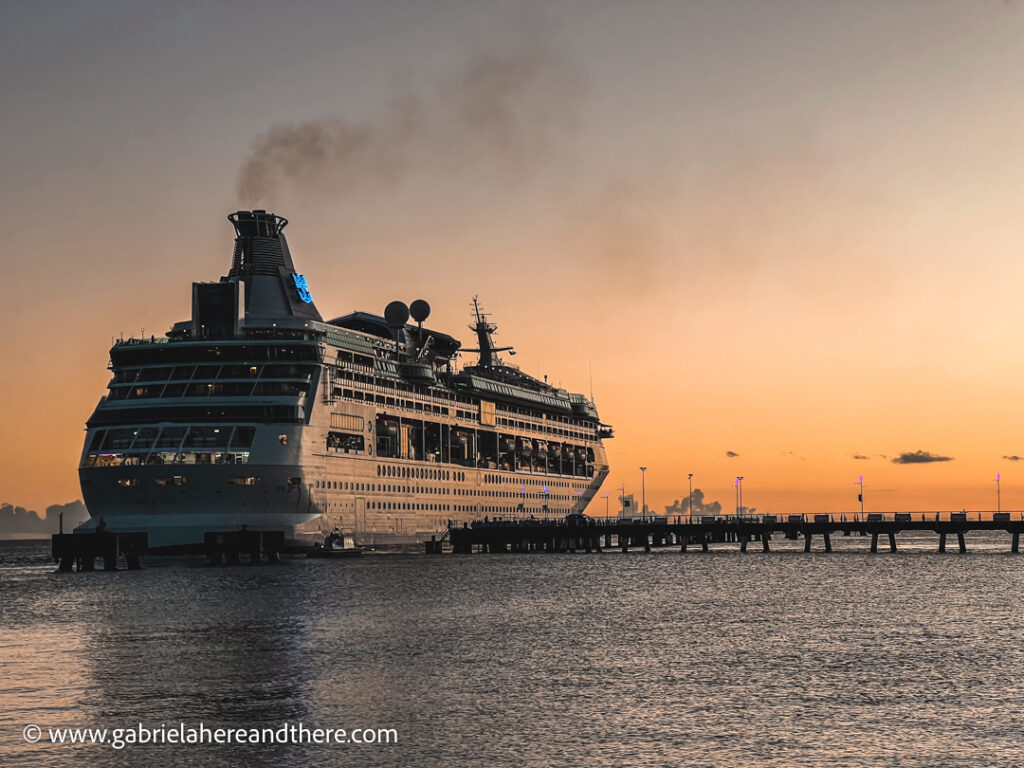
Yes — but it requires planning, flexibility, and realistic expectations about cost.
Not all islands in the Lesser Antilles have direct connections with each other. Flights are limited, ferries only operate on certain routes, and some islands are far more expensive than others. That’s exactly why the order of travel matters, and why this guide focuses heavily on logistics, routes, and budget planning.
In the sections below, I’ll break down:
- The best Lesser Antilles itineraries, depending on where you’re flying from
- How to travel between islands without a cruise
- Where to stay on a budget (and where it’s worth spending more)
- Transportation options on each island
- Realistic daily costs
- Things to do on each island
- Which islands are easiest — and hardest — to travel independently
If you’re dreaming of visiting the Caribbean without cruises, without all-inclusive resorts, and without spending a fortune, this guide will show you exactly how to do it.
My Suggested Lesser Antilles Itinerary
I have two different suggested itineraries for visiting the Lesser Antilles independently, depending on whether you’re flying to the Caribbean from Europe or North America.
Because flights between the Lesser Antilles islands are limited — and not all islands have direct connections with each other — the order of travel matters a lot if you want to visit all of them without backtracking or paying extremely high flight prices.
Suggested Itinerary if Flying From the USA, the Caribbean, or South America
This is the route I recommend if you’re flying from the United States, other parts of the Caribbean, or South America:
- Trinidad and Tobago
(Alternatively, you can also start in Barbados, which has excellent flight connections.) - Saint Lucia
- Grenada
- Saint Vincent and the Grenadines
- Barbados
- Saint Kitts and Nevis
- Antigua and Barbuda
- Dominica
- (Optional) Ferry to Martinique if you’re flying onward to Europe or Canada
This route works well because it follows the most logical flight connections between the islands and avoids unnecessary backtracking.
Suggested Itinerary if Flying From Europe or Canada
If you’re flying from Europe (France) or Montréal, Canada, I recommend starting and ending your trip in Martinique.
Because Martinique is part of France, it often has much cheaper flights from Europe compared to other Caribbean islands, making it one of the best entry points to the Lesser Antilles.
- Martinique
- Ferry to Saint Lucia
- Grenada
- Saint Vincent and the Grenadines
- Trinidad and Tobago
- Barbados
- Saint Kitts and Nevis
- Antigua and Barbuda
- Dominica
- Ferry back to Martinique
This itinerary allows you to loop through the Lesser Antilles efficiently and return to Martinique for your flight home.
Important Notes About Flights and Ferries in the Lesser Antilles
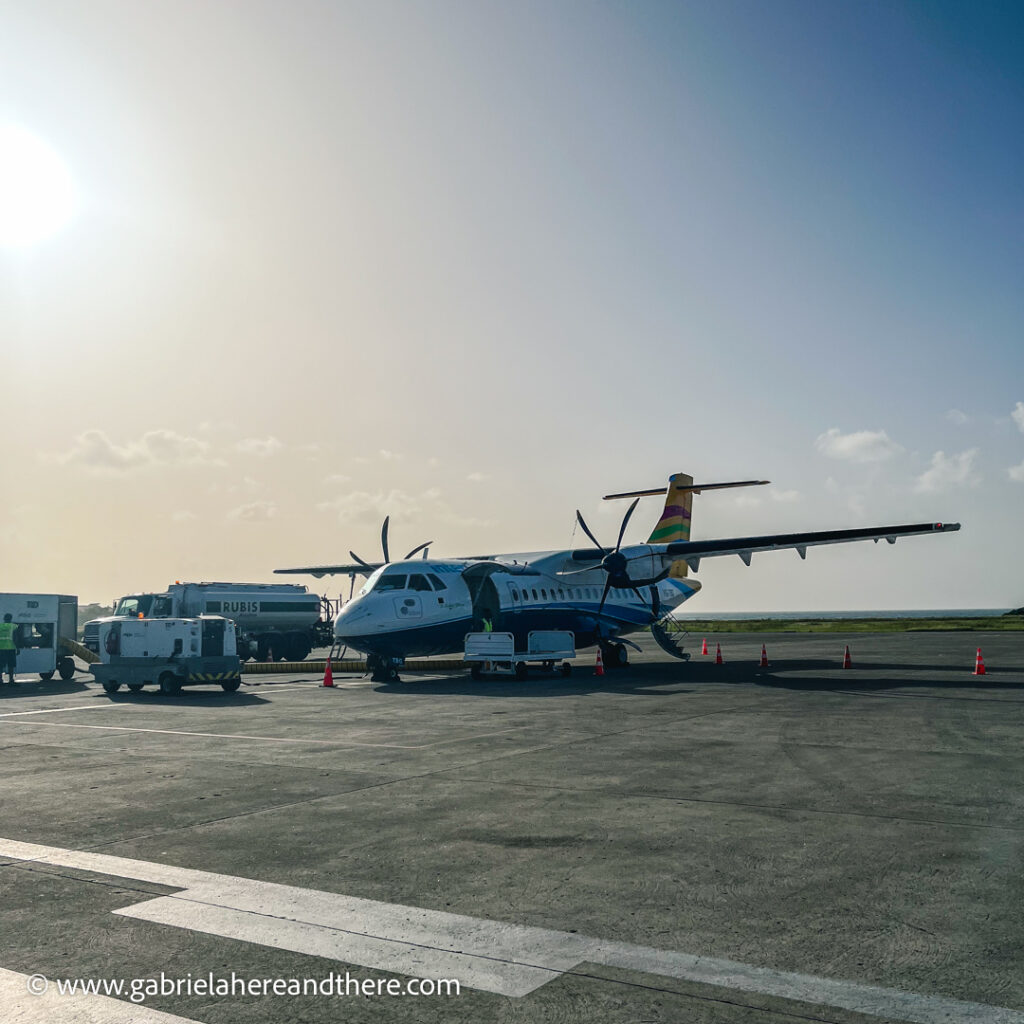
- POS Airport (Trinidad and Tobago) and BGI Airport (Barbados) have the best international connections and are ideal starting or ending points for this trip.
- Most of the other islands require more careful planning, as not all of them have direct flights between each other.
- Some routes only operate a few times per week, so you’ll need to plan your itinerary around flight days.
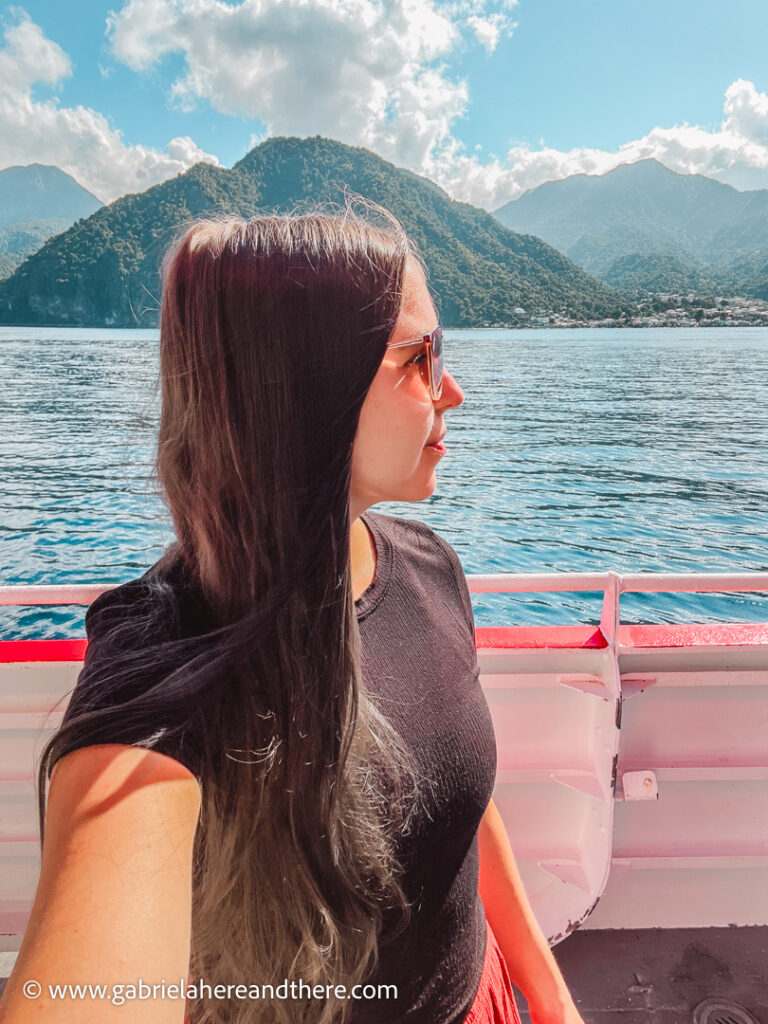
There is only one ferry service that connects islands in this region, and it operates between:
- Martinique
- Saint Lucia
- Dominica
- Guadeloupe
Outside of this route, traveling between the Lesser Antilles islands almost always requires flying. The best airline with the most connections between the islands is InterCaribbean. You can compare flight prices online on Trip.com.
How I Structured This Trip Around Remote Work
I had been working remotely throughout my time in South America, but for the Caribbean I wanted to slow down a bit and take some time off from constant travel and work.
Staying long-term in many of the Lesser Antilles islands can be very expensive, so I decided to base myself and work remotely in three of the larger islands, where there were more things to do:
- Dominica
- Saint Lucia
- Trinidad and Tobago
Out of these, Saint Lucia was by far the most expensive, and if I were planning this trip again, I wouldn’t stay there as long. Dominica and Tobago, on the other hand, offered much better value for longer stays.
How Expensive Are the Lesser Antilles Islands — and Is It Possible to Visit Them on a Budget?
In this guide, I’ll share realistic tips on how to visit the Lesser Antilles on a budget — and I say on a budget lightly, because this part of the world is still one of the most expensive regions I’ve ever traveled in.
Accommodation is by far the biggest expense. On most islands, the cheapest Airbnbs or hotel rooms were usually around $50 USD per night, and in many places even higher than that — especially if you don’t want to compromise on safety, comfort, or location.
That said, it is possible to reduce costs if you’re flexible and willing to travel a bit more locally.
How I Kept Costs Down in the Caribbean
To save money while traveling through the Lesser Antilles, I focused on a few key things:
- Cooking my own meals whenever possible
- Shopping at local supermarkets and markets
- Using local minibuses instead of taxis
- Eating at local ital restaurants when eating out (ital food is a plant-based style of Caribbean cooking, commonly associated with Rastafarian culture and focused on natural, unprocessed ingredients — perfect for vegans!)
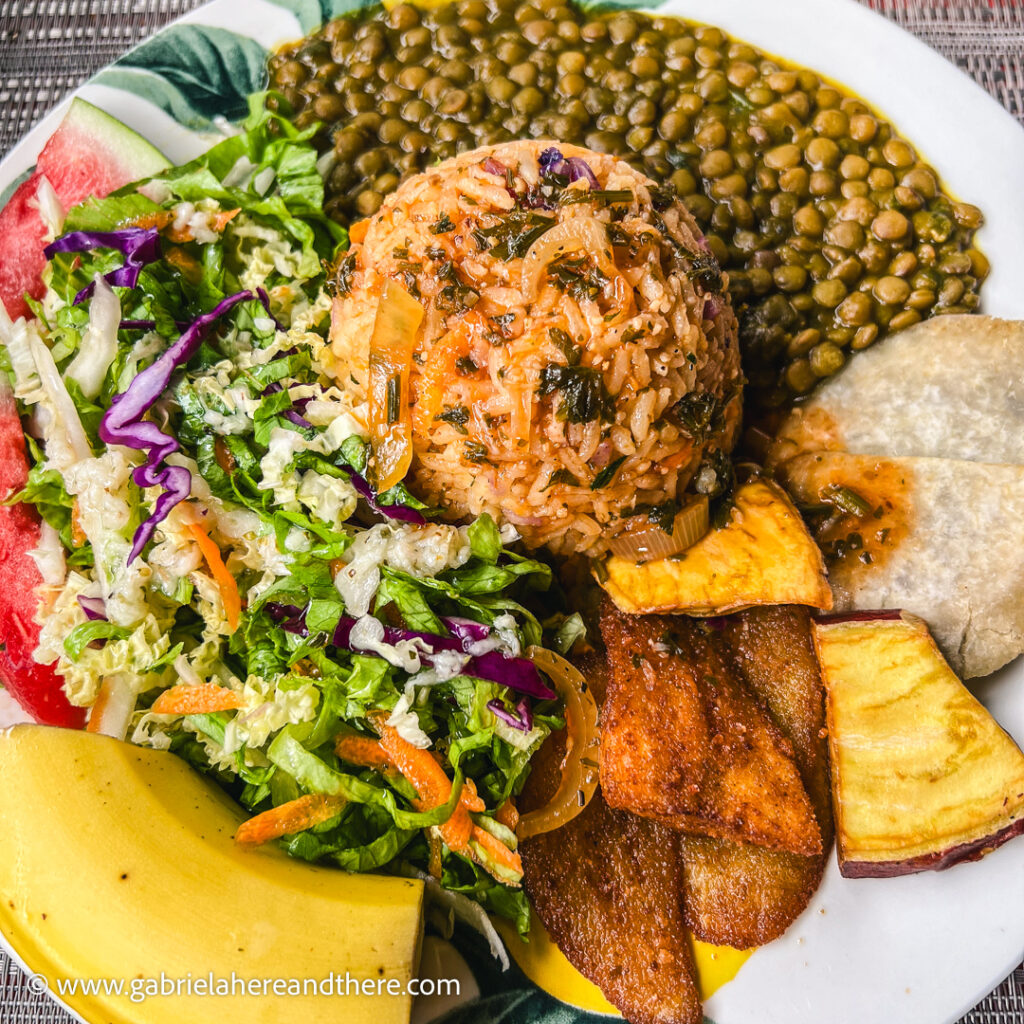
Eating locally makes a big difference. Restaurants aimed at tourists can be very expensive, while small local places are often far more affordable and usually serve much better food.
Throughout this guide, I’ll also point out budget-friendly stays, as well as more comfortable and luxury options, so you can decide where you want to save and where you want to splurge.
What’s the Best Way to Get Around the Islands?
Renting a Car
By far, the best and most convenient way to get around most of the Lesser Antilles islands is by renting a car — especially if you want to visit beaches, waterfalls, viewpoints, and other sights that aren’t reachable by public transport.
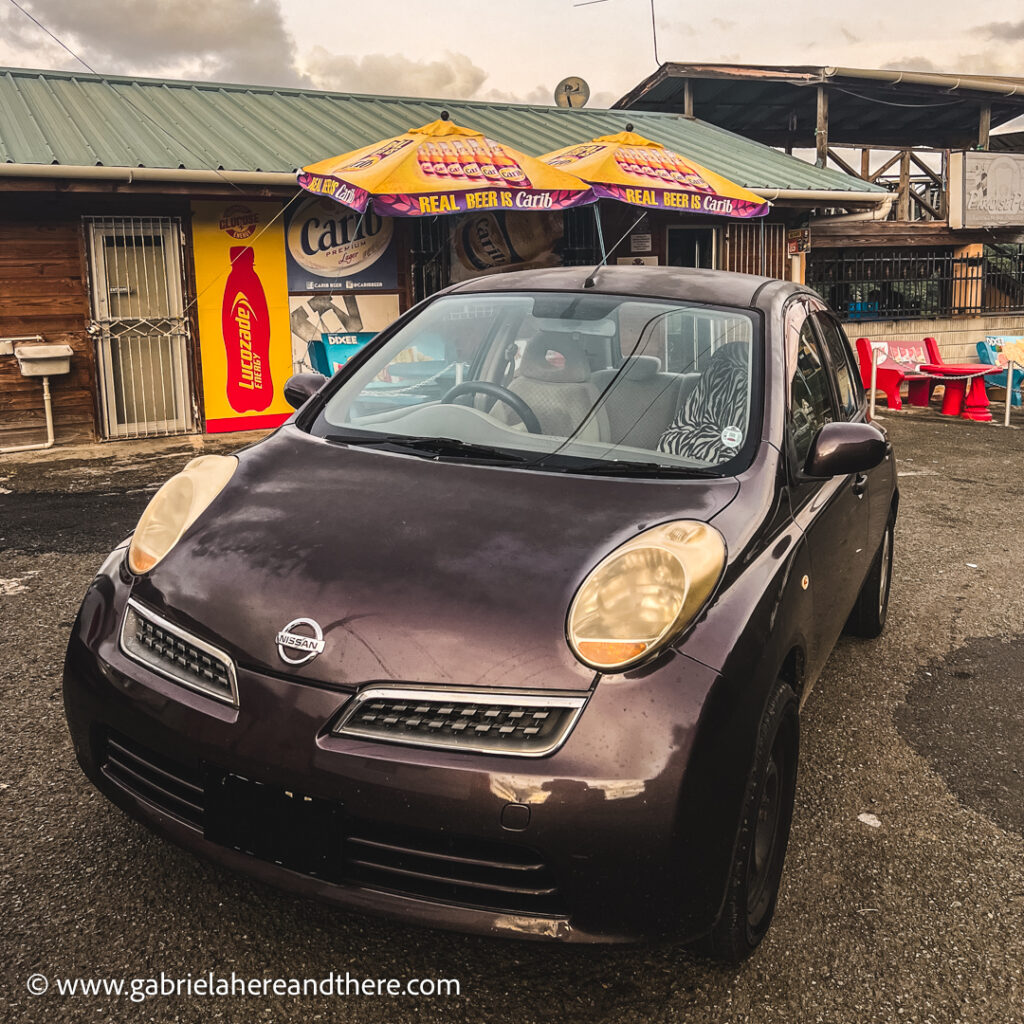
That said, car rental prices in the Caribbean can be very high, especially during peak season. It’s also important to book rental cars in advance, as availability can be limited and last-minute options are often scarce. I recommend comparing prices on sites like DiscoverCars to find the best deals.
I personally only rented a car in Tobago, where prices were reasonable. In most of the other islands, renting a car was simply out of my budget when I checked the prices.
👉 If you’re considering renting a car, I recommend comparing prices in advance, as costs vary a lot by island and by season.
Using Local Minibuses and Walking
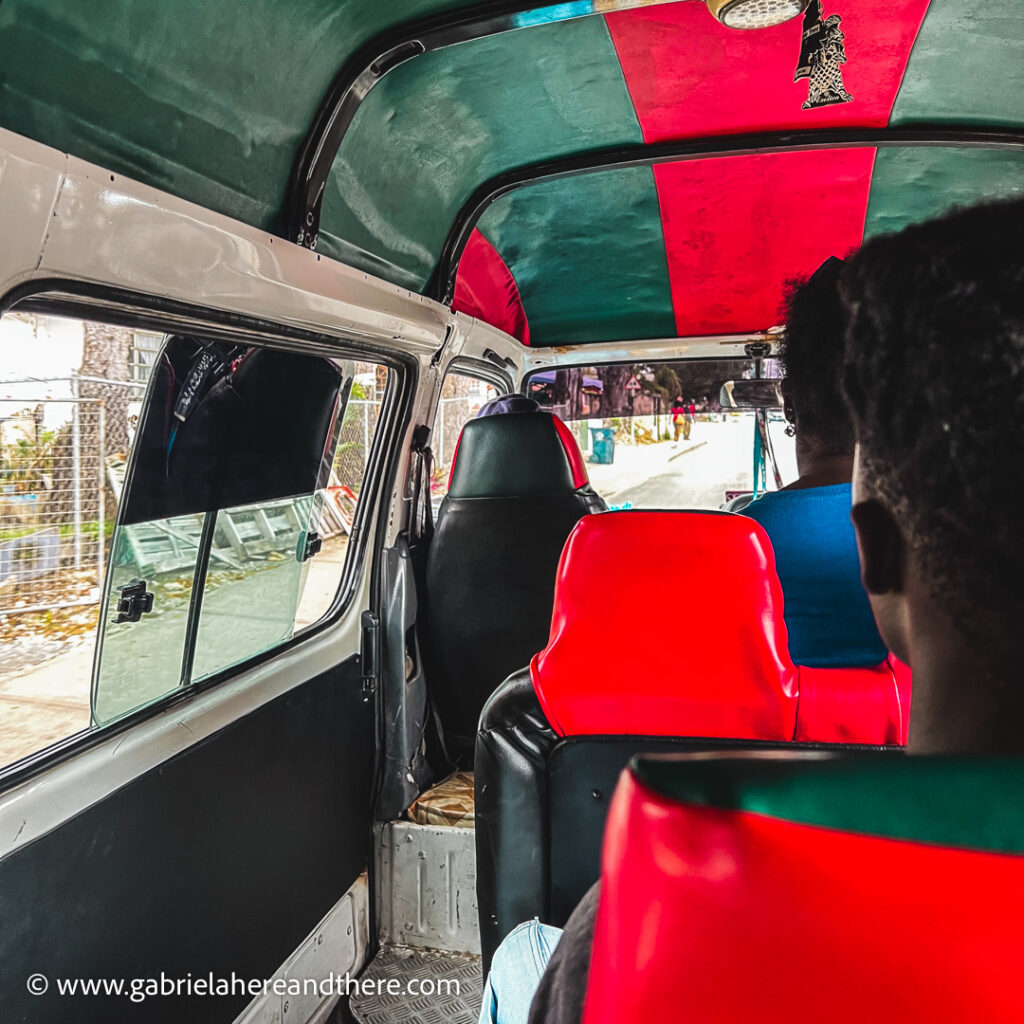
Instead of renting a car, I mostly:
- Took local minibuses to get around
- Walked whenever possible
- Used taxis occasionally, especially when arriving at a new airport
Local minibuses are very cheap, usually costing just a couple of dollars per ride. However, they aren’t always the most convenient option for visitors, as they don’t necessarily go directly to the main tourist sights and can be confusing at first.
Taxis, on the other hand, are very expensive everywhere in the Lesser Antilles. In many cases, renting a car for a day is actually cheaper than taking multiple taxi rides.
Hitchhiking (With Caution)
In Saint Lucia, for example, I didn’t have a car, and local buses didn’t take me to all the places I wanted to visit. Because of that, I ended up hitchhiking a couple of times.
That said, you do need to be careful. Some areas can feel a bit sketchy, and I wouldn’t generally recommend hitchhiking in most parts of the Lesser Antilles.
Joining Tours as a Transport Option
In many of the Caribbean islands, joining a tour can actually be cheaper than taking a taxi, especially if you’re traveling alone.
Not all places can be reached by local minibuses, and tours often include transportation, entrance fees, and a local guide.
This is particularly useful for waterfalls, volcano areas, viewpoints, and if you want to visit the major sights as efficiently as possible, joining a tour is often the easiest option. I have included links to some of the most popular tours throughout this guide.
Overview of the Lesser Antilles Countries
🇹🇹 Trinidad & Tobago
Trinidad and Tobago ended up being my favorite country in the entire Caribbean region.
🇹🇹 Trinidad & Tobago — Quick Planning Tips
✈️ Flights
- Best airport: Port of Spain (POS)
- One of the best-connected airports in the southern Caribbean and a common entry point for independent travelers.
👉 Search flights to Trinidad & Tobago
🚗 Car Rental
- Strongly recommended for independent travel
- Cars often sell out, so book in advance
👉 Compare car rental prices on Discover Cars
🛥️ Tours & Activities
- Buccoo Reef & Nylon Pool glass-bottom boat tour
- Tobago Island Circle Tour (best overview of the island)
- Argyle Waterfall tour with hotel pickup
- Little Tobago Bird Sanctuary visit & boat tour
🏨 Accommodation
- Budget → luxury options:
👉 Search hotels & guesthouses on Booking.com
📶 eSIM for Trinidad & Tobago
I spent most of my time in Tobago and I loved it. Tobago is a very laidback island and is also generally considered safer and more relaxed than the main island. One of the main reasons I enjoyed Tobago so much is that far fewer cruise ships stop here, which means fewer crowds and fewer prices being pushed up by short-term cruise tourism.
As a result, Tobago felt more local, more affordable, and much more my style.
Trinidad vs Tobago: Where I Spent My Time
I only spent a couple of nights in Trinidad, mainly visiting the capital city Port of Spain and an area closer to the airport. While Port of Spain has interesting culture and food, it felt a bit sketchy in some parts and not so safe, and I personally wouldn’t recommend it for a long stay.
There are nicer parts of Trinidad — especially beach areas and nature spots — but visiting those properly would have required renting a car again. Because that was out of my budget at the time, I decided to base myself almost entirely in Tobago, which I don’t regret at all.
To get from Trinidad to Tobago, you can either take a ferry or fly. The flight is very short and is one of the few places where flights are also very affordable.
Where I Stayed in Tobago (Budget-Friendly Base)
Tobago is home to the only hostel in the entire country, and one of the very few hostels in the Lesser Antilles as a whole.
I stayed at Candles in the Wind, located in Crown Point, and it ended up being one of my favorite stays of the entire trip. In addition to dorms, they also offer private rooms, the owner is friendly and incredibly helpful, and the atmosphere is social and welcoming without feeling like a party hostel.
I stayed in a private room, and the owner gave me lots of local tips, lent me snorkeling gear, and was generally just incredibly welcoming. I ended up extending my stay multiple times, which says a lot.
Best Area to Stay in Tobago
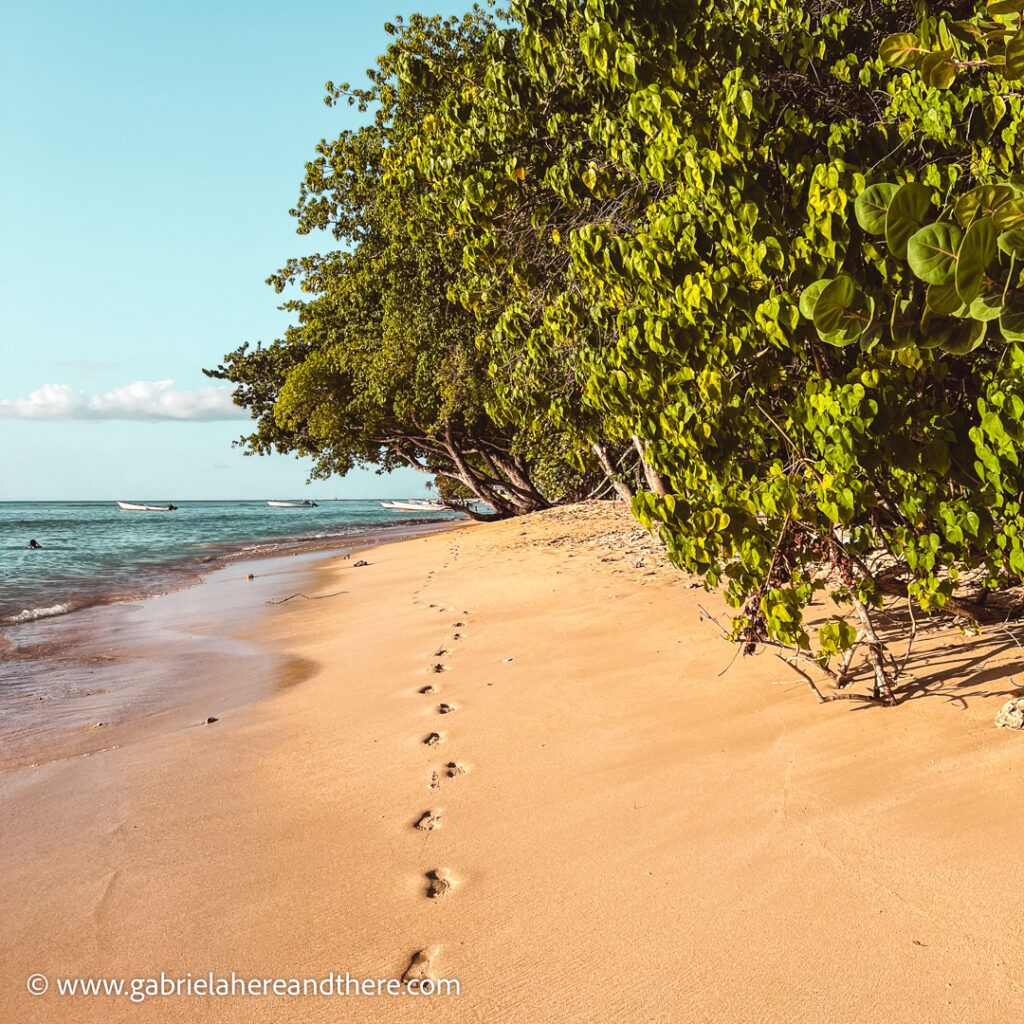
If you don’t have a car, Crown Point is hands down the best place to stay. It’s within walking distance of restaurants and shops, close to some of the best beaches on the island, and very near the airport.
In fact, Crown Point is so compact that I walked from the airport to my hostel, which is almost unheard of in the Caribbean.
If you’re looking for a quieter, more scenic beachside stay, then Castara is another excellent option, especially if you’re happy to be a bit more remote.
Things to do in Tobago
Pigeon Point Beach
This is an absolute must-visit if you’re staying in Crown Point.
Pigeon Point is one of the most famous beaches in Tobago, with white sand, calm turquoise water, and iconic jetty views. It’s very easy to reach and perfect for swimming or just relaxing for the day.
Buccoo Reef, Nylon Pool & No Man’s Land
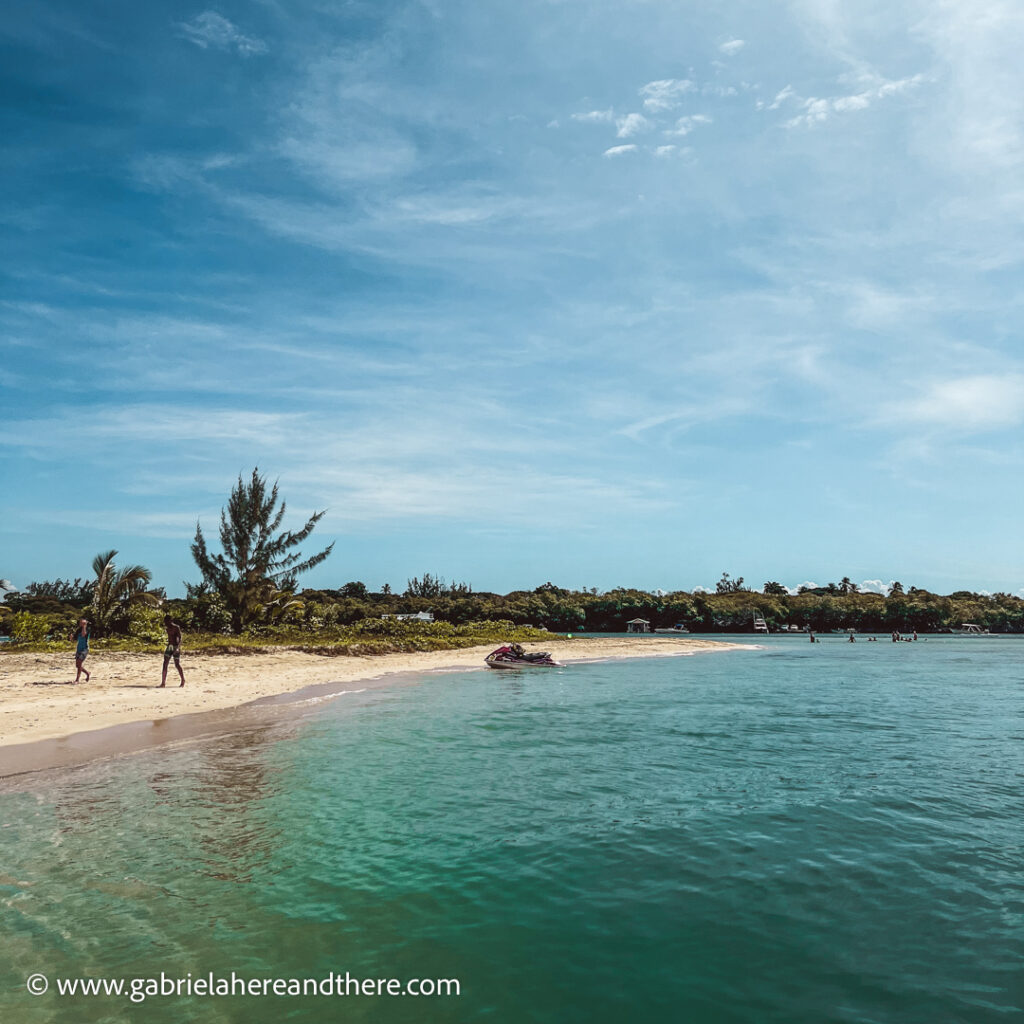
This is one of the most popular activities in Tobago and makes for a perfect half-day trip.
From Crown Point, you take a glass-bottom boat out to:
- Buccoo Reef for snorkeling
- Nylon Pool, a shallow natural pool in the sea where locals say a swim makes you 10 years younger
- No Man’s Land, a tiny sandbar island where the tour usually ends
This is an easy and affordable tour and you can also book it online here.
Argyle Falls
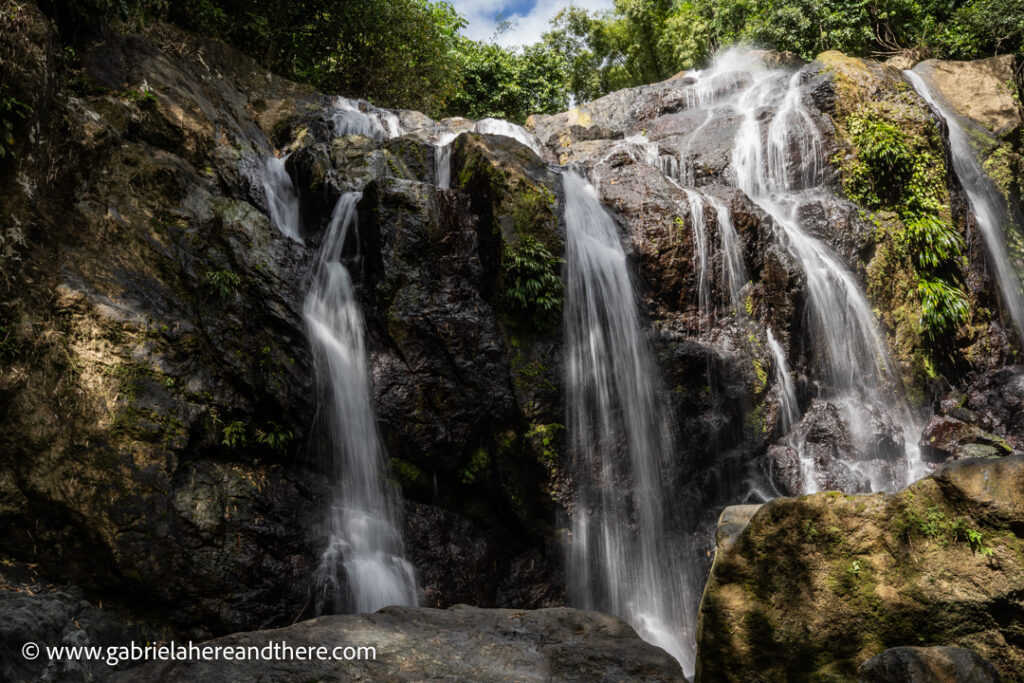
These are the most famous waterfalls in Tobago and well worth visiting. If you don’t have a car, you can book a tour to the falls here.
Although they’re popular, they didn’t feel overly crowded when I visited. The walk to the falls is straightforward, and you can swim in the pools at the bottom.
There are also smaller, quieter waterfalls around the island if you have more time or local tips.
Castara
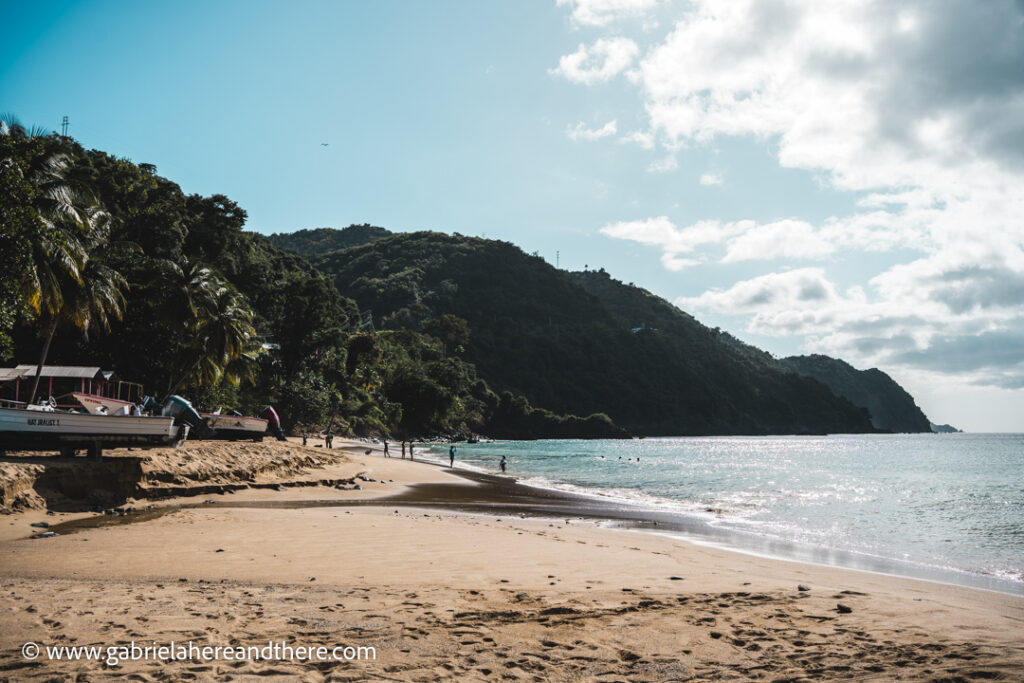
Castara quickly became one of my favorite places in Tobago, and next time I visit, I would absolutely stay here.
The main highlight is Castara Beach — peaceful, beautiful, and with some of the best sunsets on the island. I came here multiple times just to sit on the beach and watch the sun go down.
Nearby, you’ll also find Castara Waterfall, which is a much quieter alternative to Argyle Falls and very easy to visit.
If you walk around the village a bit, you’ll also spot lots of hummingbirds, which was such a cool experience.
Castara has some small hotels and guesthouses that are not overly expensive such as Guava Shores Castara, La Casa de Castara, and Cottage Mango.
Pirate’s Bay
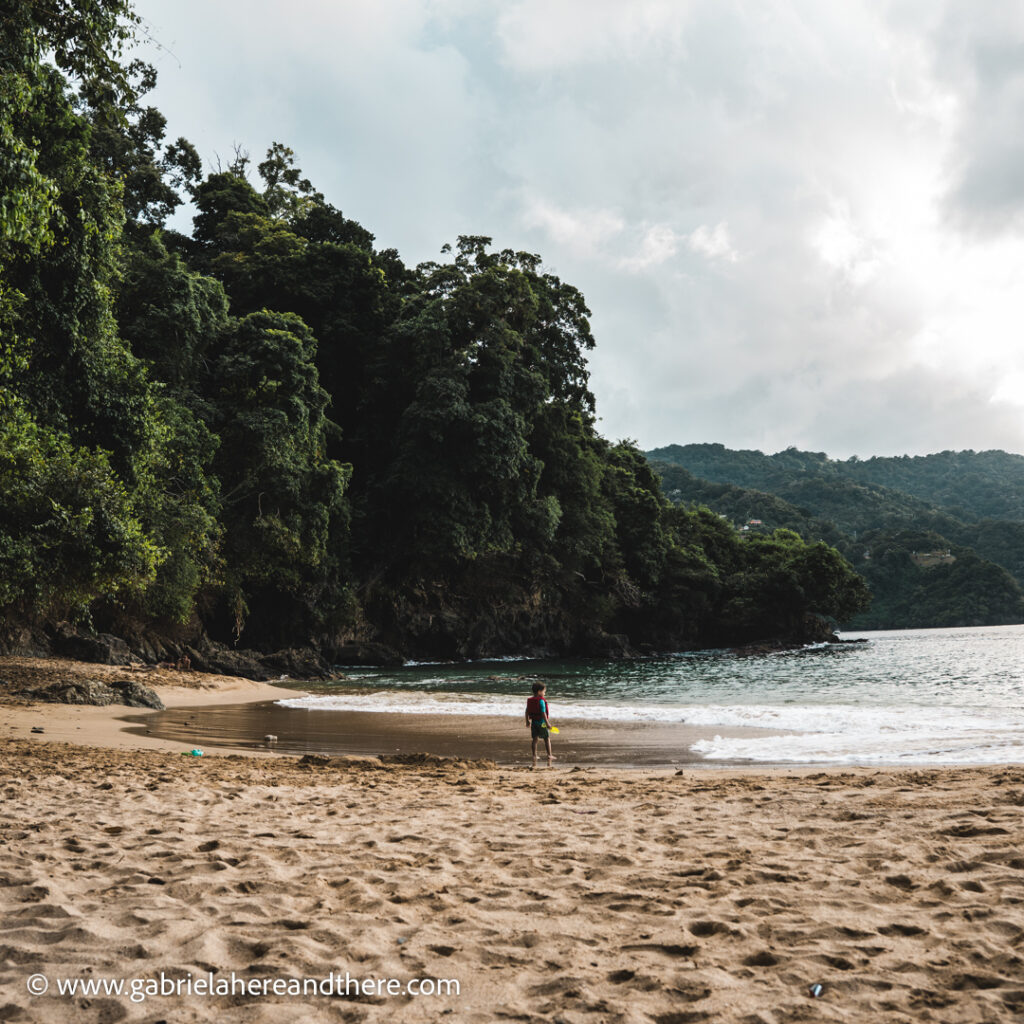
This was my favorite snorkeling spot in Tobago.
Pirate’s Bay requires a short walk from the parking area, but the walk itself is beautiful and not too difficult. The water here is clear, and there are plenty of fish.
Thanks to my hostel lending me snorkeling gear, this was completely free for me — but even if you rent gear locally, it’s worth it.
Englishman’s Bay
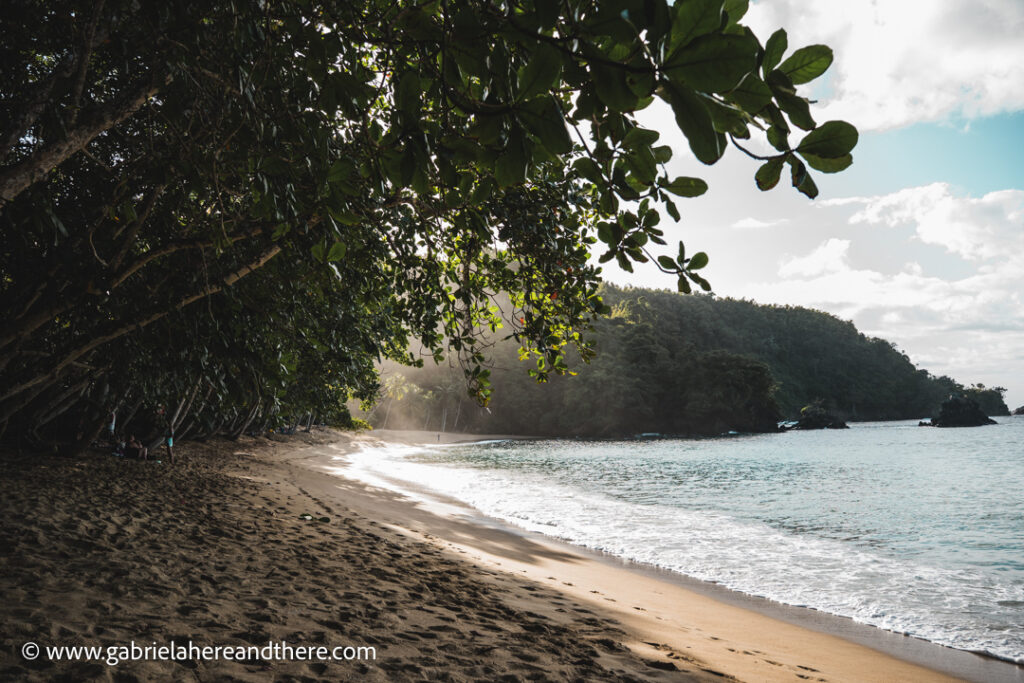
Besides Castara, Englishman’s Bay has to be one of the most beautiful beaches in Tobago.
It’s very quiet and peaceful, backed by lush green forest, and there’s even a cute swing on the beach that makes for great photos. This is the kind of place where you can easily spend half a day doing absolutely nothing.
Buccoo Sunday School Party
If you want to experience more local life in Tobago, head to the Buccoo Sunday School Party.
I’m not much of a party person when I travel, but this was recommended to me by my hostel owner, and I’m glad I went. It’s a lively local event with music, food, and dancing — a very different experience from resort nightlife.
Where to Stay in Tobago (Summary)
- Crown Point → best without a car, close to restaurants, beaches, and the airport
- Castara → best for a quieter, more scenic beachside stay
🏨 Where to Stay in Tobago
Budget: Candles in the Wind (Crown Point)
Mid-range: Guava Shores Castara (Castara)
Luxury: Blue Haven Hotel (Bacolet Bay)
🇱🇨 Saint Lucia
I based myself in two different locations in Saint Lucia — the north and the south — as they offer very different experiences.
- In the north, I stayed in Rodney Bay
- In the south, I stayed in Soufrière
🇱🇨 Saint Lucia — Quick Planning Tips
✈️ Flights
👉 Search flights to Saint Lucia
🚗 Car Rental
- Strongly recommended for independent travel
- Cars often sell out, so book in advance
👉 Compare car rental prices on Discover Cars
🛥️ Tours & Activities
- Private customizable day tour with driver (a good option if you don’t want to rent a car)
- Sulphur Springs mud bath & Toraille Waterfall
- Gros Piton hike (full-day tour)
🏨 Accommodation
- Budget → luxury options:
👉 Search hotels & guesthouses on Booking.com
📶 eSIM for Saint Lucia
The south of Saint Lucia is where you’ll find most of the island’s famous natural sights, but it’s also significantly more expensive. The north, on the other hand, is more developed, has better infrastructure, and is generally easier if you’re traveling independently without a car.
Where to Stay in Saint Lucia: North vs South
Rodney Bay (North)
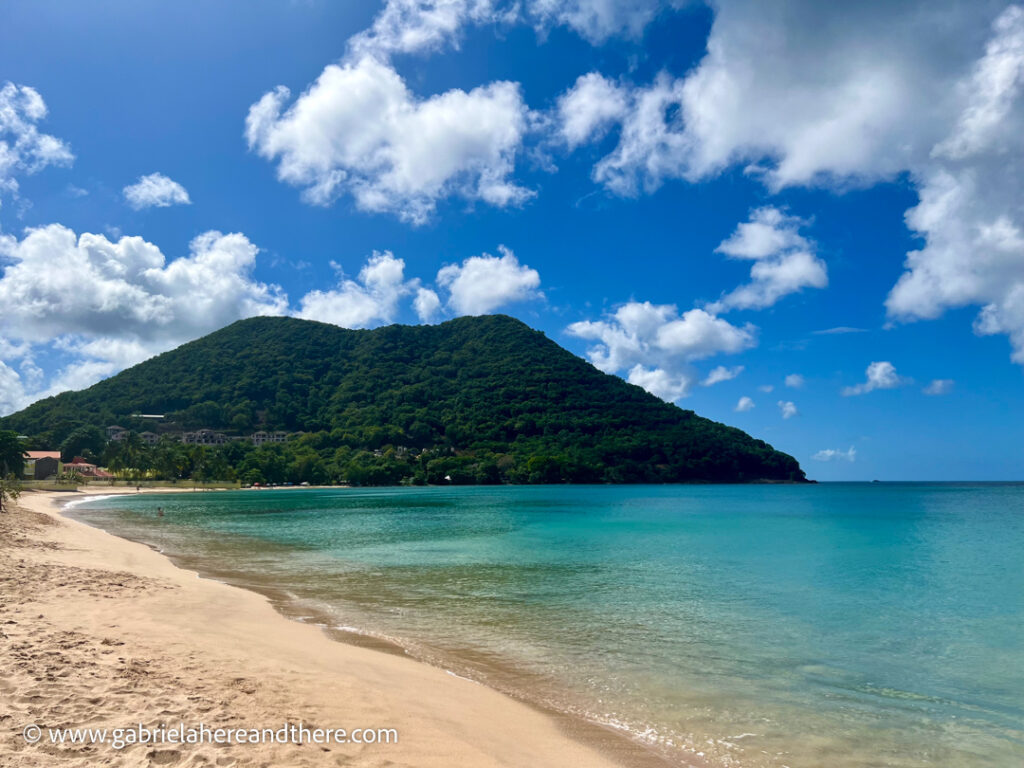
Rodney Bay is one of the most practical bases in Saint Lucia if you don’t have a car. The area has plenty of restaurants, cafés, and supermarkets, better public transport connections than most other parts of the island, and it’s also very walkable, with Reduit Beach just nearby.
Because of this, Rodney Bay works well for budget and mid-range travelers, and it’s also where many longer-term visitors base themselves.
That said, I would avoid walking around late at night. Both Rodney Bay and Soufrière felt a bit sketchy after dark, and it’s better to use taxis in the evenings. I highly recommend renting a car in Saint Lucia.
Soufrière (South)
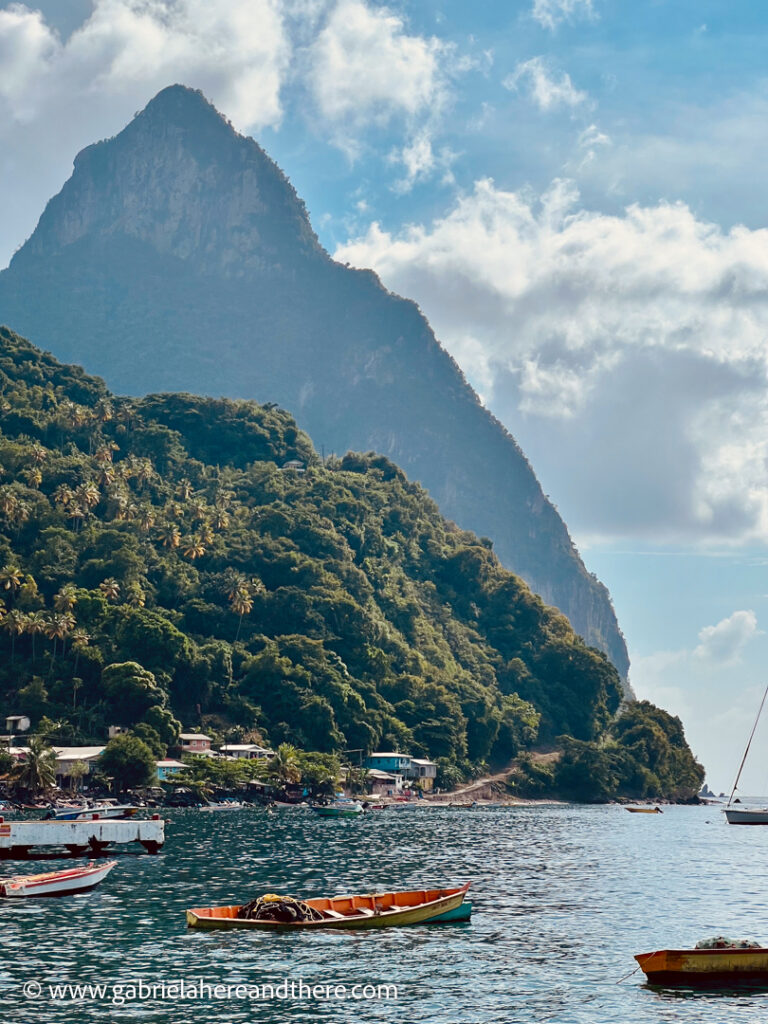
Soufrière is much smaller, more scenic, and closer to Saint Lucia’s main attractions — but it’s also far more expensive. This is where you’ll find many of the island’s luxury resorts, especially around the Pitons.
If you want to be close to nature and don’t mind paying more — or if you’re planning a shorter stay — the areas around Soufrière are beautiful places to base yourself.
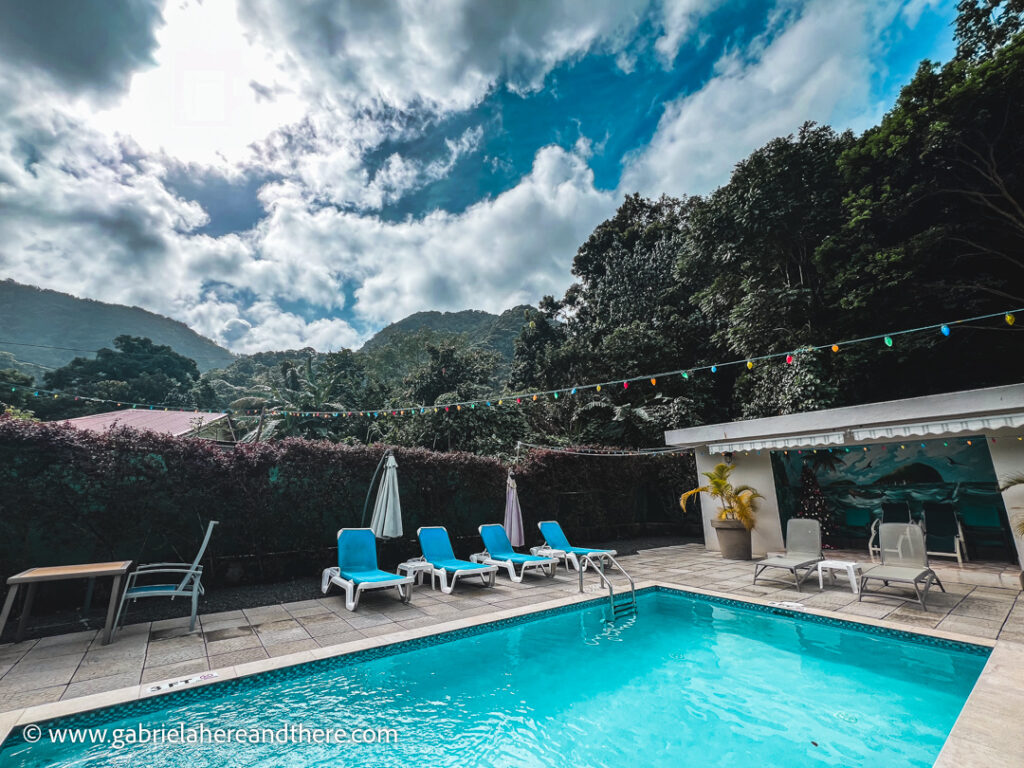
I personally wouldn’t stay in the town center of Soufrière. Instead, I stayed a bit outside of town, up in the mountains, at Amazon Villas. I didn’t have a car while staying there, but I would strongly recommend having one if you stay in this area. Otherwise, you’re quite stuck in the evenings once the buses stop running. You can use Discover Cars to compare car rental prices.
Things to Do in Saint Lucia
The Pitons
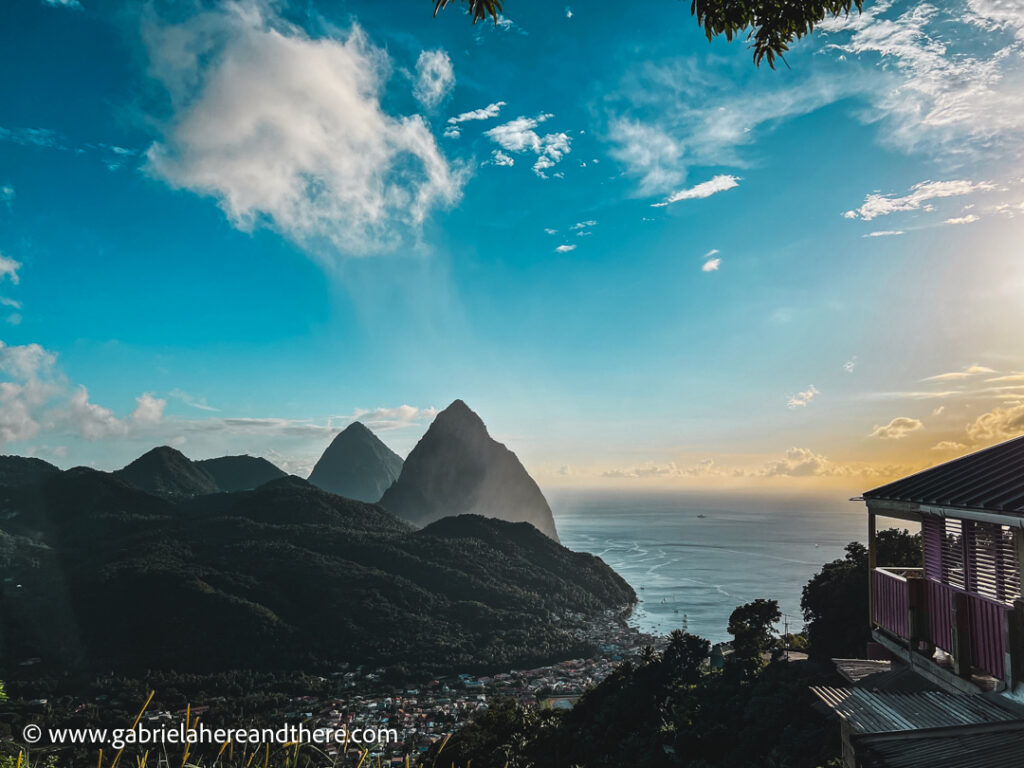
The Pitons are the most famous and iconic sight in Saint Lucia — and for good reason.
These two dramatic volcanic peaks dominate the landscape in the south of the island and are a UNESCO World Heritage Site. You can admire them from viewpoints and beaches, or hike Gros Piton if you’re up for a challenge.
If you’re staying in Soufrière, you’ll be very close to the Pitons. If you’re based in Rodney Bay, visiting them usually requires either a long bus journey, a taxi, or joining a tour.
👉 Joining a guided Pitons hike is often the easiest option if you don’t have a car.
Sulphur Springs
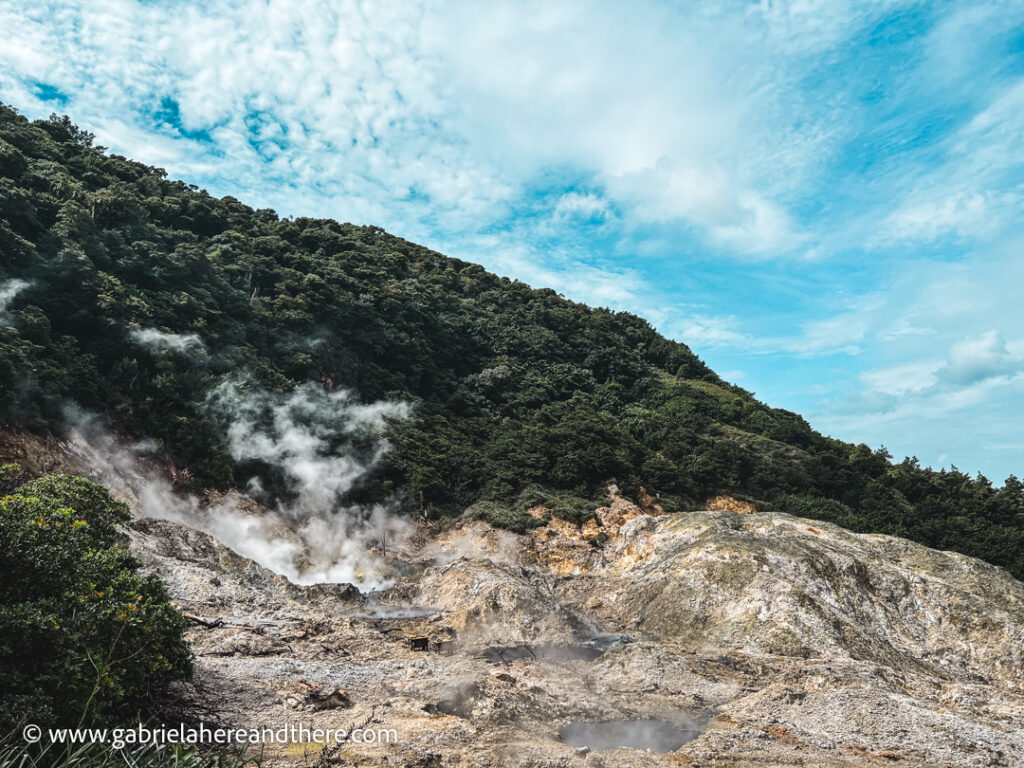
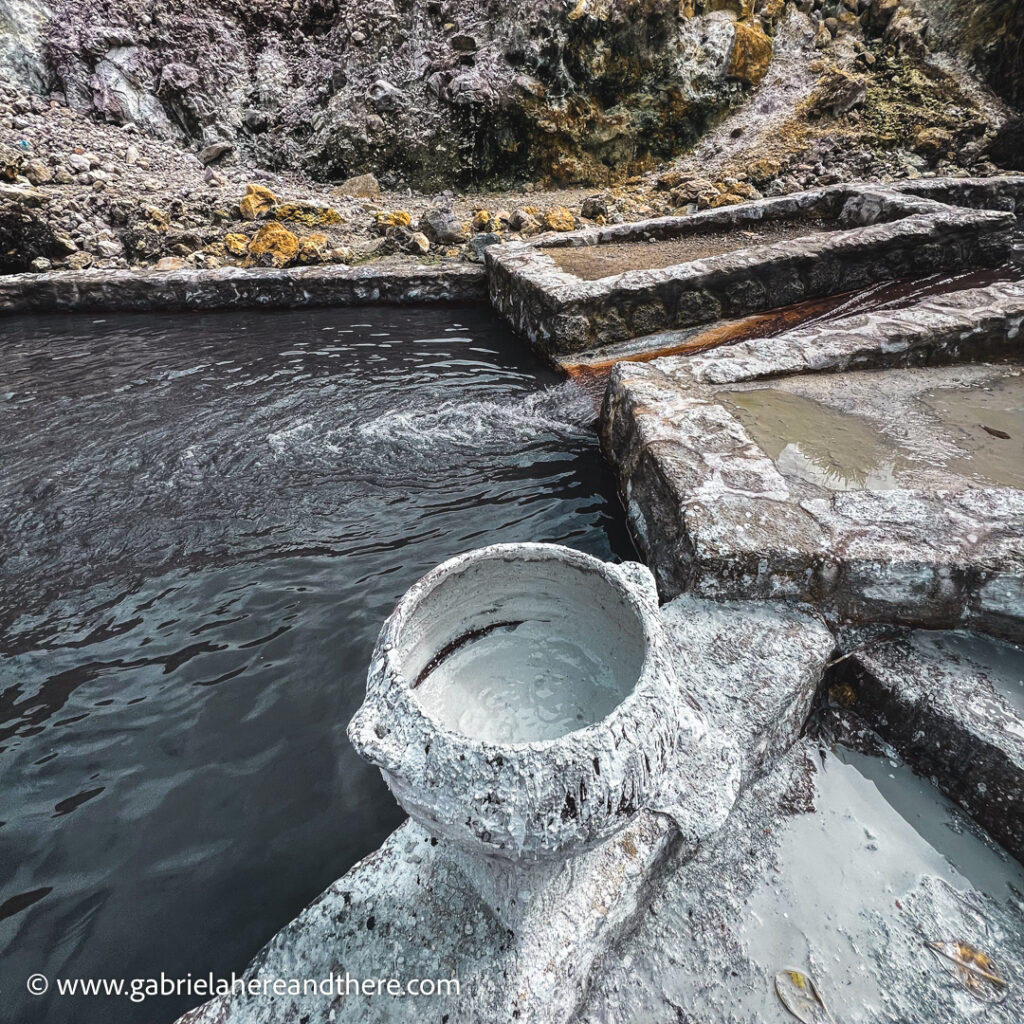
The Sulphur Springs near Soufrière are often described as the world’s only drive-in volcano.
Here, you can see bubbling geothermal activity up close and visit the nearby mud baths, where people cover themselves in volcanic mud that’s said to be great for your skin. Afterward, you can rinse off in warm pools or under a nearby waterfall.
This is one of Saint Lucia’s most popular attractions and is easiest to visit with a rental car, by taxi, or as part of a half-day tour from Soufrière.
I didn’t have a car, so I ended up hitchhiking here, as the local buses don’t run all the way to the site. The best way to reach the Sulphur Springs is by joining a tour. This tour also includes a visit to the Toraille Waterfalls, Piton viewpoints, and the Botanical Gardens.
Gros Islet
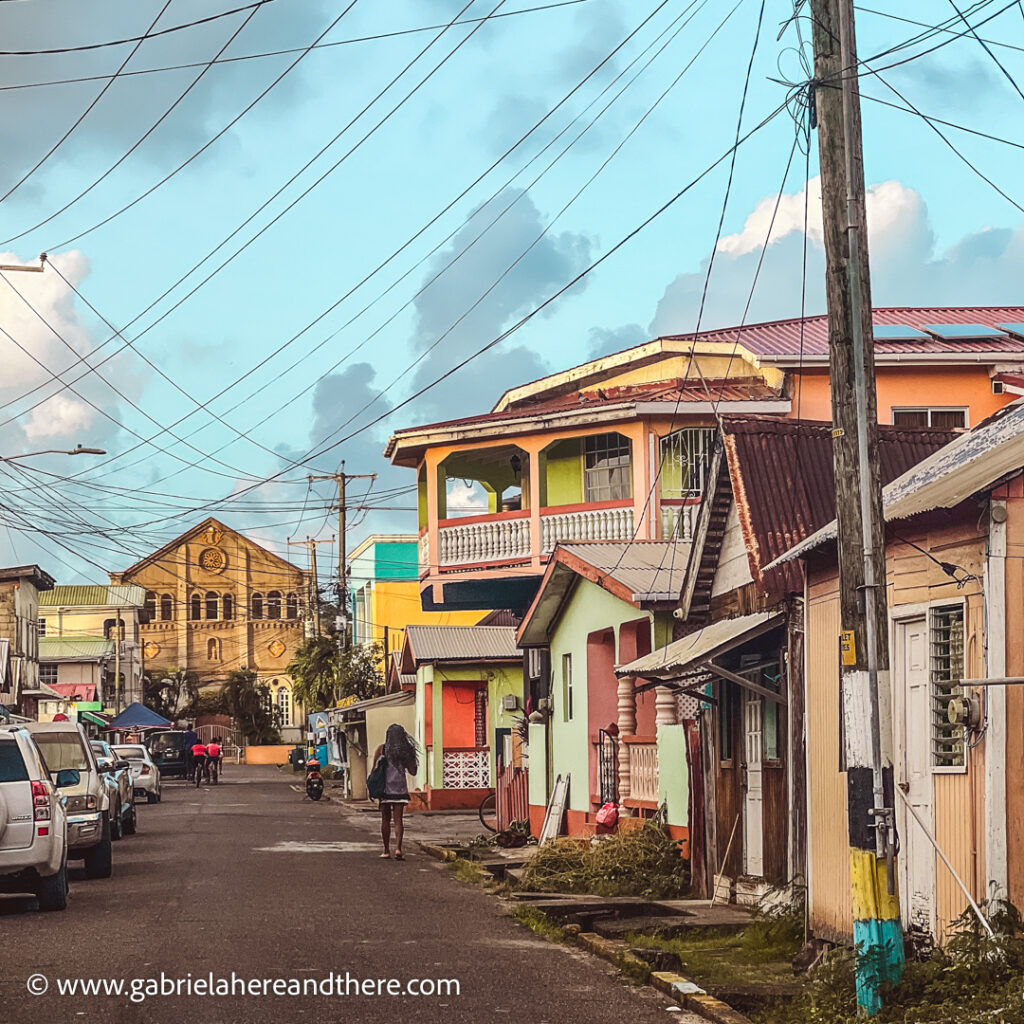
Gros Islet is a small town just north of Rodney Bay and is best known for its Friday night street party.
On Friday evenings, the streets fill with food stalls, music, dancing, and locals and visitors mixing together. It’s a great place to try local food, hear Caribbean music, and experience a more social side of Saint Lucia.
Even outside of Friday nights, Gros Islet is worth a short visit for a walk around and a meal, as there are lots of affordable food options.
Pigeon Island National Park
Pigeon Island National Park is one of the best places to visit in the north of Saint Lucia and is easily accessible from Rodney Bay.
Here you’ll find:
- Historic ruins and old fortifications
- Coastal walking trails
- Panoramic viewpoints over the sea
- Small beaches where you can swim
It’s a great half-day trip and one of the easiest attractions to visit independently if you’re staying in the north. If you would like to stay in the area, the famous Sandals Resort is located here.
Rodney Bay & Reduit Beach
Reduit Beach is the main beach in Rodney Bay and one of the longest beaches in Saint Lucia.
It’s an easy place to spend a relaxed day swimming, walking along the shore, or watching the sunset. Because of its location, it’s also lined with hotels, beach bars, and restaurants, making it very convenient if you’re staying nearby.
Waterfalls in Saint Lucia
Saint Lucia has several beautiful waterfalls scattered around the island, especially in the south.
Some of the most popular include:
- Diamond Falls (near Soufrière, often combined with botanical gardens)
- Toraille Waterfall, where you can stand directly under the cascade
Many waterfalls are easiest to reach by car or guided tour, especially when you’re staying in Soufrière.
Where to Stay in Saint Lucia (Summary)
Choosing the right area to stay in Saint Lucia makes a huge difference, especially if you’re traveling independently and without a car.
Best Areas to Stay in Saint Lucia
Rodney Bay (North)
→ Best without a car, with the widest choice of restaurants, supermarkets, and easy access to Reduit Beach
→ Good base for budget and mid-range travelers and anyone staying longer
→ Easier to get around using local buses and taxis
Soufrière (South)
→ Best for nature and scenery, close to the Pitons, waterfalls, Sulphur Springs, and dramatic beaches
→ Much more expensive overall
→ Ideal for shorter stays, splurges, or if you want to be close to Saint Lucia’s main attractions
🏨 Where to Stay in Saint Lucia
Budget: Paradise Living Apartment (budget apartment in Rodney Bay)
Mid-range: Amazon Villas (close to Soufrière and nature)
Luxury: Anse Chastanet Resort (with Piton views)
🇬🇩 Grenada
Grenada is often called the “Spice Island” of the Caribbean, and it ended up being one of the easiest islands to travel independently in the Lesser Antilles.
Compared to some of the more resort-heavy islands, Grenada felt more walkable — at least in the capital, St. George’s, and around Grand Anse. These are really the only two areas where getting around without a car is practical.
🇬🇩 Grenada — Quick Planning Tips
✈️ Flights
👉 Search flights to Grenada
🚗 Car Rental
- Strongly recommended for independent travel
- Cars often sell out, so book in advance
👉 Compare car rental prices on Discover Cars
🛥️ Tours & Activities
- Sailing & snorkeling tour to the Underwater Sculpture Park
- Annandale Waterfall, fort & beach escape (shared tour)
- St. George’s half-day spice & waterfall tour
🏨 Accommodation
- Budget → luxury options:
👉 Search hotels & guesthouses on Booking.com
📶 eSIM for Grenada
Outside of St. George’s and Grand Anse, having a car is highly recommended if you want to explore the island properly and reach waterfalls, viewpoints, and rural areas more easily. You can compare car rental prices here.
Grenada is a great choice if you want a mix of:
- A genuinely beautiful capital city
- One of the best beaches in the region
- Easy day trips
- Food, culture, and nature without needing a car full-time
Things to Do in Grenada
St. George’s
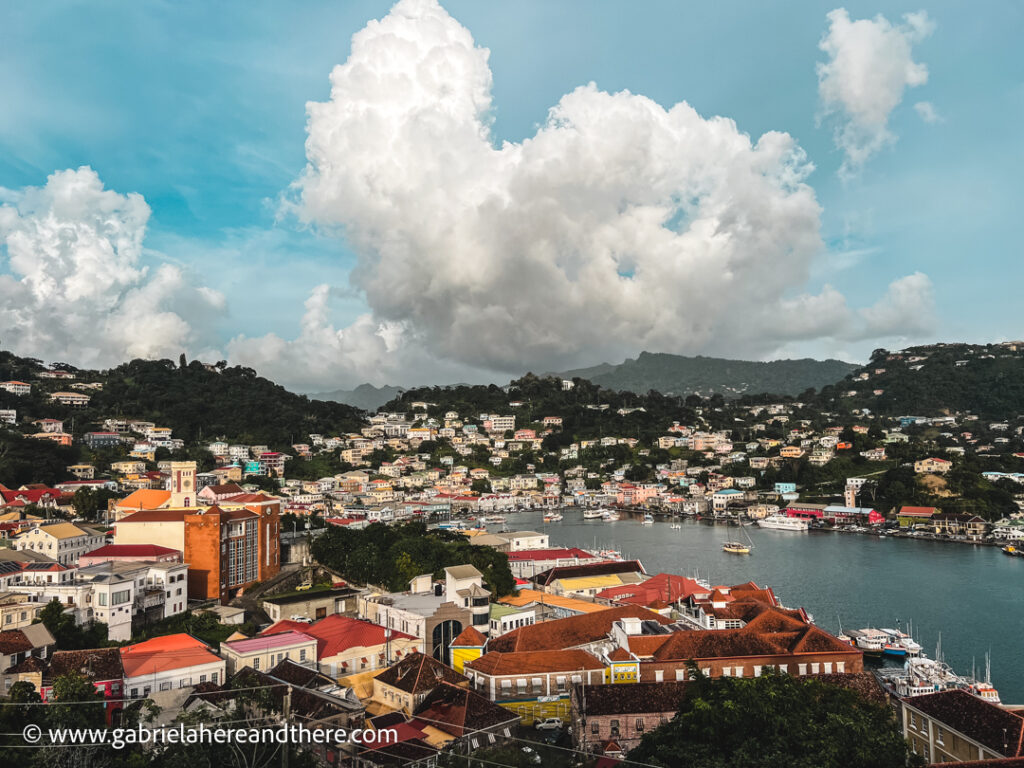
St. George’s is one of the most picturesque capital cities in the Caribbean. It’s built around a horseshoe-shaped harbor, with colorful buildings stacked up the hillsides.
I highly recommend walking around the city, especially the harbor area and the streets climbing uphill behind it. St. George’s is compact, lively, and feels very local, with markets and small shops, historic buildings and viewpoints, as well as plenty of cafés and local food spots to explore.
If you want more context, you can also join a tour, which is a good option if you’re short on time or want to learn more about Grenada’s history.
Grand Anse Beach
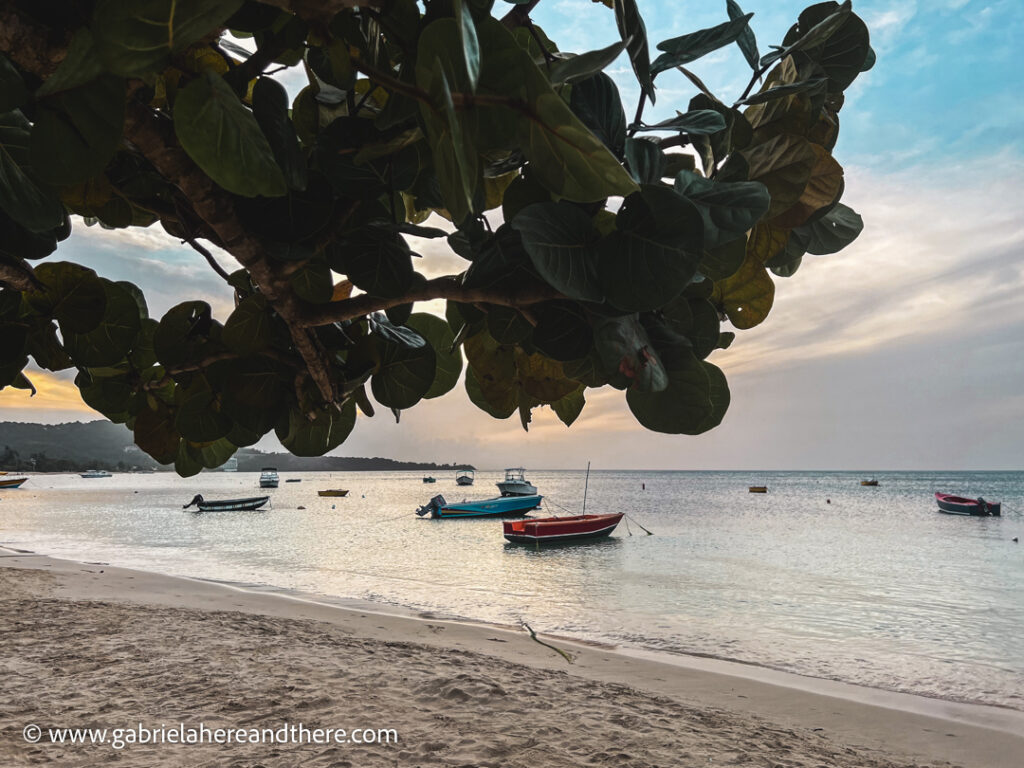
Grand Anse Beach is hands down the best area to base yourself in Grenada, especially if you’re traveling independently.
I chose to stay in Grand Anse for several reasons:
- It’s home to the best beach in the country
- There are lots of restaurants, cafés, and small shops nearby
- It’s just a short and cheap bus ride from St. George’s
- It’s easy to get around without a car
Grand Anse Beach itself is long, wide, and absolutely beautiful, with calm water that’s perfect for swimming. Even if you’re not staying directly on the beach, it’s an excellent place to spend your days.
Because of its location and infrastructure, Grand Anse works well for budget, mid-range, and luxury travelers, which makes it ideal for an island-hopping itinerary like this one.
BBC Beach (Morne Rouge Beach)
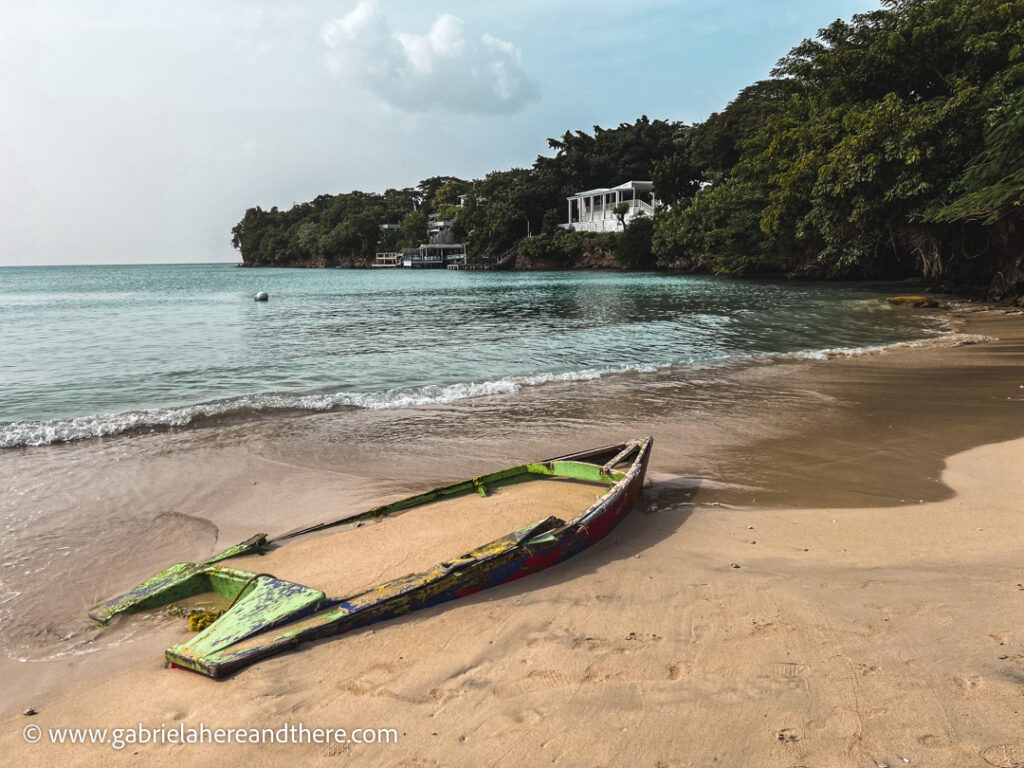
BBC Beach, also known as Morne Rouge Beach, is a beautiful and much quieter alternative to Grand Anse Beach, and a great option if you’re staying in the Grand Anse area.
If you’re based in Grand Anse, you can walk to BBC Beach in about 15–20 minutes, depending on your exact location. The walk is straightforward and follows the main road over a small hill.
BBC Beach is smaller and more sheltered than Grand Anse and usually much less crowded. When I visited, there were hardly any people around, and it was a perfect spot for a relaxed swim.
Spice Tour
Grenada is famous for its spices — especially nutmeg, cinnamon, cloves, and mace.
A spice tour is one of the most popular activities on the island and one of the best ways to learn more about Grenada’s agricultural history and see where these spices actually come from. You can book a spice tour online here.
Chocolate Museum
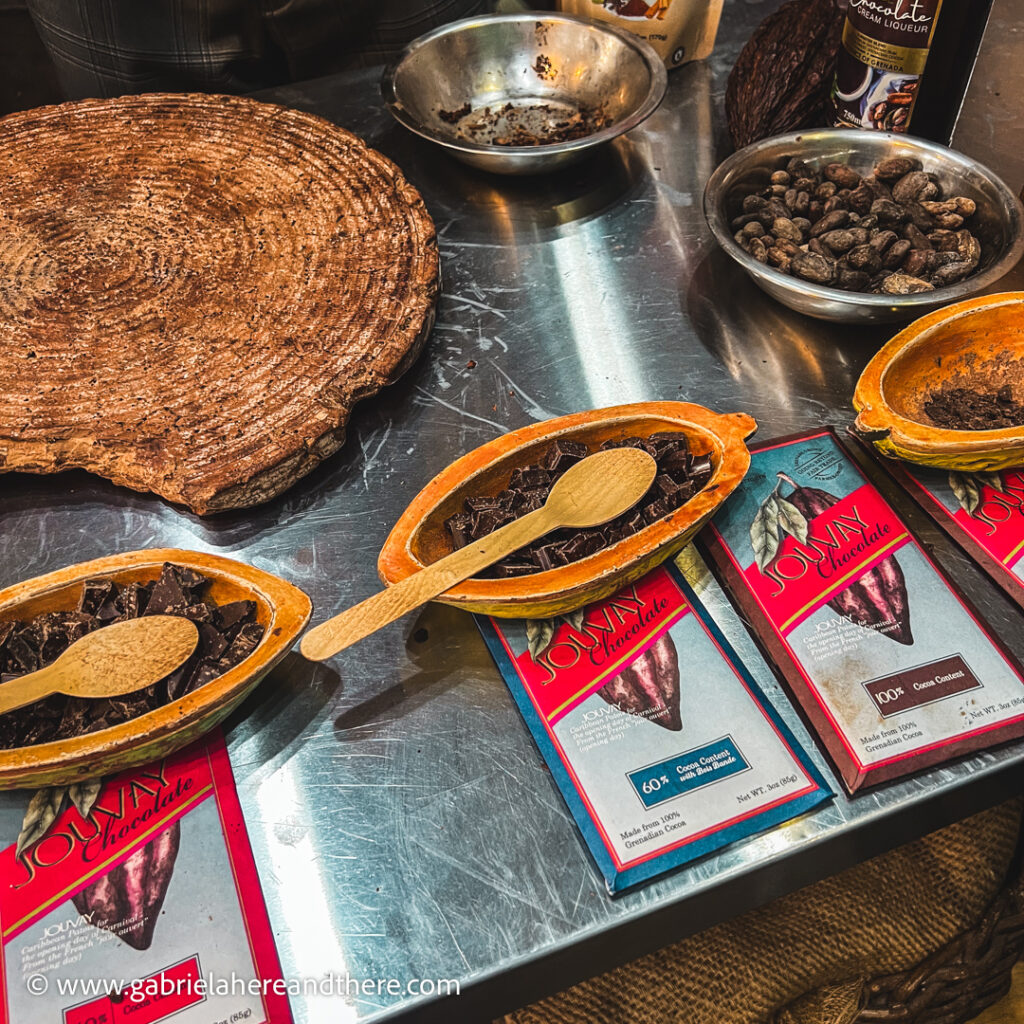
The Chocolate Museum in St. George’s is a great (and free) stop while exploring the capital.
There’s a free chocolate-making demonstration, and you can taste different types of locally produced chocolate. They also sell products, and I picked up:
- Cacao nibs (apparently very healthy!)
- A solid cacao bar that can be used as a moisturizer
- And some chocolate of course!
There’s also a small café on-site, and I even found vegan gelato, which was so good! This is an easy activity to combine with a walk around St. George’s.
Annandale Falls
Annandale Falls is one of the easiest and most accessible waterfalls to visit in Grenada.
It’s located just outside St. George’s and can be reached most easily as part of a tour. The waterfall itself is very pretty, and you can swim in the pool at the bottom.
Bianca C Shipwreck (Diving & Snorkeling)
The Bianca C is one of the most famous dive sites in Grenada and is often referred to as the “Titanic of the Caribbean.”
If you’re a diver, this is one of the top reasons to dive in Grenada. The wreck is massive and lies offshore, and there are several dive operators offering trips.
If you don’t dive, there are also snorkeling trips that visit the area and nearby underwater sights, including reefs and underwater sculptures.
Where to Stay in Grenada (Summary)
Best Area to Stay
Grand Anse Beach
→ The most practical and enjoyable base in Grenada, especially if you don’t have a car
🏨 Where to Stay in Grenada
Budget: Belview Apartments (nice apartments with a kitchen in a good location, I stayed here)
Mid-range: Catappa Condos (close to Morne Rouge Beach)
Luxury: Silversands Resort Grenada at Grand Anse (one of the most luxurious and best-rated resorts in Grenada)
🇻🇨 Saint Vincent and the Grenadines
Saint Vincent and the Grenadines offers a very different Caribbean experience compared to places like Barbados or Antigua. It feels less polished, more rugged, and more local, with dramatic landscapes, lush hills, and some of the best island-hopping opportunities in the region.
🇻🇨 Saint Vincent and the Grenadines — Quick Planning Tips
✈️ Flights
👉 Search flights to Saint Vincent and the Grenadines
🚗 Car Rental
- Strongly recommended for independent travel
- Cars often sell out, so book in advance
👉 Compare car rental prices on Discover Cars
🛥️ Tours & Activities
- La Soufrière Volcano hike (from Kingstown)
- Dark View Falls & beach tour (from Kingstown)
🏨 Accommodation
- Budget → luxury options:
👉 Search hotels & guesthouses on Booking.com
📶 eSIM for Saint Vincent and the Grenadines
This is also one of the countries where logistics really matter. Prices can climb quickly if you stay on the smaller islands, so where you base yourself has a huge impact on your overall budget.
Where I Based Myself (and why)
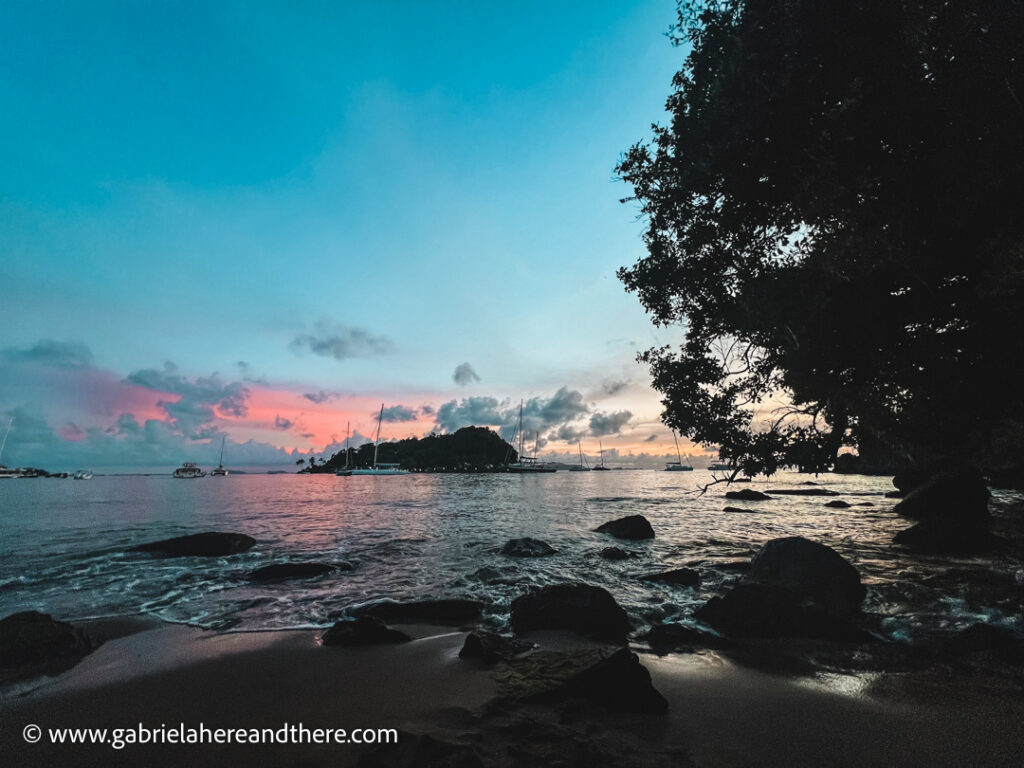
I based myself on the main island of Saint Vincent, in Arnos Vale. This is an area that is:
- Close enough to Kingstown to reach it easily by local minibus
- Far enough away to enjoy quieter surroundings and nice beaches
- Located between the main road and the beach, making it easy to get around without a car
The hotel I stayed at, Beachcombers, was actually one of the nicest places I stayed during my entire Lesser Antilles trip. It felt more like a small resort than a standard hotel, with:
- A beachside swimming pool
- Direct access to the sea
- On-site restaurant and bar
- Easy minibus connections into Kingstown
Things to Do in Saint Vincent and the Grenadines
Bequia Island
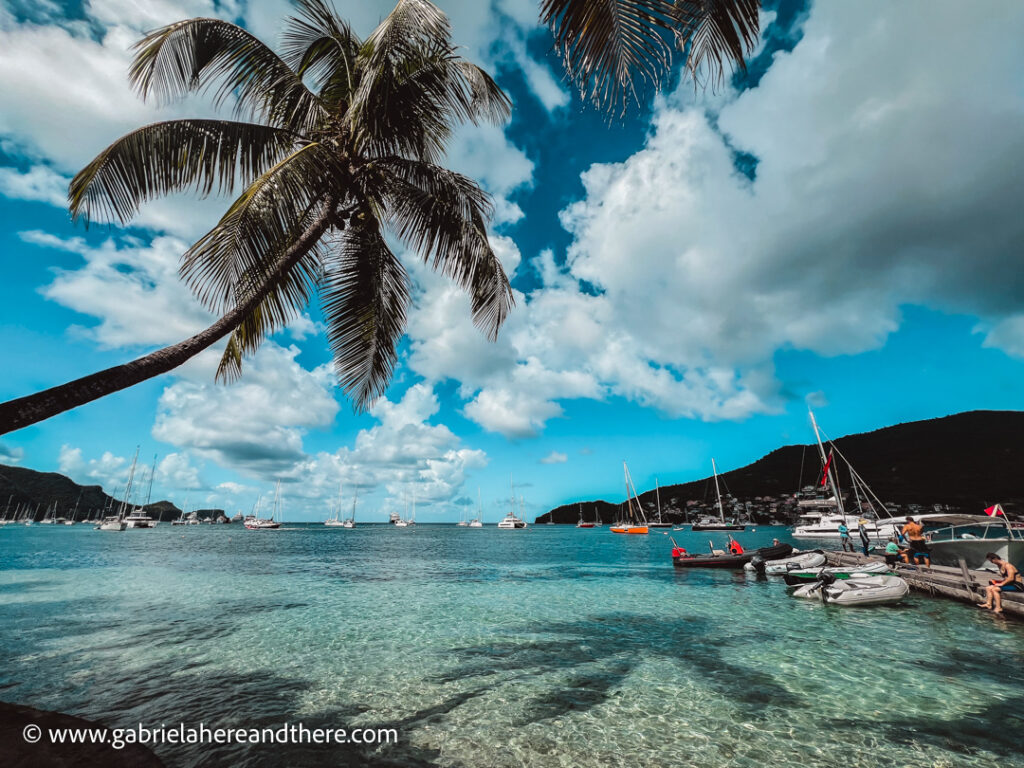
If you only do one thing in Saint Vincent and the Grenadines, make it Bequia. You can easily visit it as a day trip from the main island. There’s no need to book ferry tickets in advance, as you can usually buy them on the spot when boarding.
Bequia is a small, charming island just a short ferry ride from Saint Vincent and has a completely different vibe from the main island. It’s colorful, walkable, and known for:
- Pretty harbor views
- A relaxed island atmosphere
- Crystal-clear water and great snorkeling
- Small beaches and a strong sailing culture
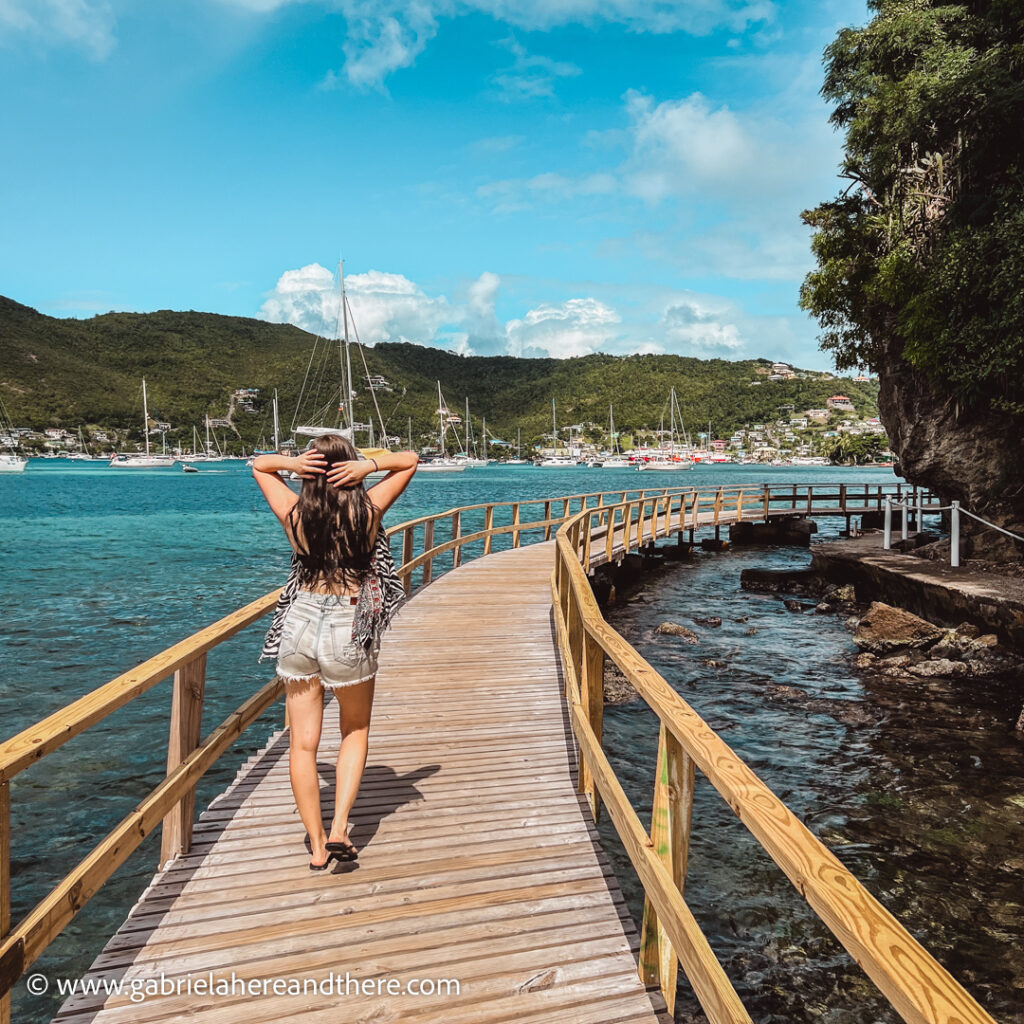
Once you arrive by ferry, you can walk straight through the town, continue along the Belmont Boardwalk, and then follow the seaside boulevard all the way to Princess Margaret Beach. At the far end of the beach, you’ll find a great snorkeling spot, with clear water and plenty of fish — no boat or tour needed.
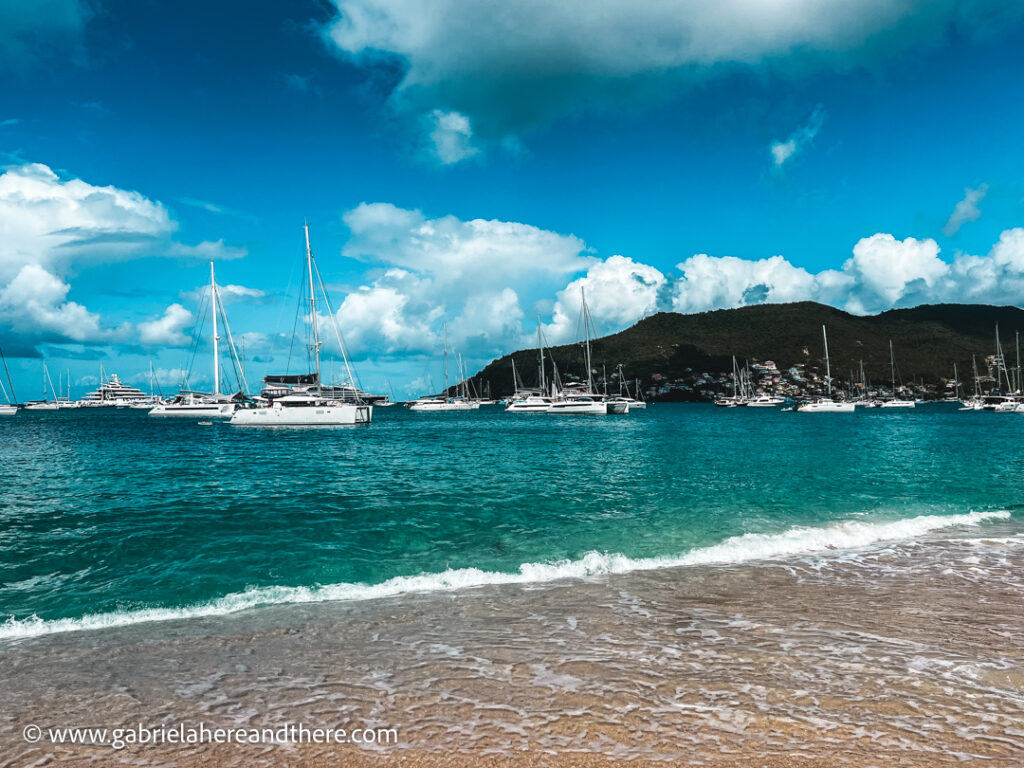
You can easily visit Bequia as a day trip from Saint Vincent, which is what I did. It’s also possible to stay overnight, and there are some really lovely hotels and guesthouses on the island — but I personally found them very expensive, which is why I chose not to base myself there.
If your budget allows, spending a night or two on Bequia would be a beautiful addition to this itinerary.
Dark View Falls
Dark View Falls are among the most impressive waterfalls on the main island.
Reaching them involves a short walk across a bamboo bridge and through lush vegetation. Once you arrive, you’ll find two powerful waterfalls cascading into natural pools where you can swim. It’s a great contrast to the more beach-focused activities elsewhere in the country.
This is also one of the easiest nature sights to visit as part of a tour.
La Soufrière Volcano
La Soufrière dominates the landscape of Saint Vincent and is one of the island’s most dramatic natural features.
If you’re into hiking, it’s possible to hike up the volcano with a guide. The hike is challenging and weather-dependent, but on a clear day, the views are spectacular.
Even if you don’t hike it, simply seeing the volcano from different points on the island gives you a real sense of how wild and volcanic Saint Vincent is.
Where to Stay in Saint Vincent and the Grenadines (Summary)
Best Base Without a Big Budget
Main island of Saint Vincent
→ Best for keeping costs under control
→ Easy access to Kingstown and transport
→ Ideal for day trips to Bequia and beyond
Staying on the Grenadine Islands
Bequia and the Grenadines
→ More scenic and resort-like
→ Much more expensive
→ Better for shorter stays or splurges
🏨 Where to Stay in Saint Vincent and the Grenadines
Budget: Garifuna Retreat Apartment (in Kingstown)
Mid-range: Basil at Villa (a beachside location, I stayed in this area)
Luxury: Bequia Plantation Hotel (luxury hotel in Bequia)
🇧🇧 Barbados
Barbados was probably the most expensive country I visited in the Lesser Antilles, and I had to budget my time there very carefully. The island is more developed, more polished, and more internationally connected than many of the others — which also means higher prices.
That said, Barbados is still very doable independently if you plan carefully and are willing to mix local life with more touristic highlights.
🇧🇧 Barbados — Quick Planning Tips
✈️ Flights
👉 Search flights to Barbados
🚗 Car Rental
- Strongly recommended for independent travel
- Cars often sell out, so book in advance
👉 Compare car rental prices on Discover Cars
🛥️ Tours & Activities
- Harrison’s Cave & Hunte’s Gardens tour
- Bridgetown guided walking tour (history & culture)
- Full-day coast-to-coast island tour
🏨 Accommodation
- Budget + luxury options:
👉 Search hotels & guesthouses on Booking.com
📶 eSIM for Barbados
I didn’t find the nature to be as impressive here as on some of the other islands — Barbados is flatter and has fewer forests — but it more than makes up for it with the highest concentration of beautiful white-sand beaches in the region.
Where I Stayed in Barbados
I stayed in a homestay in a private room, where I had my own room but shared the common areas with the host. This turned out to be a really nice experience — the host was very helpful, gave me local tips, and I had great views from the balcony. If you want to book the same place, you can do it on booking.com.
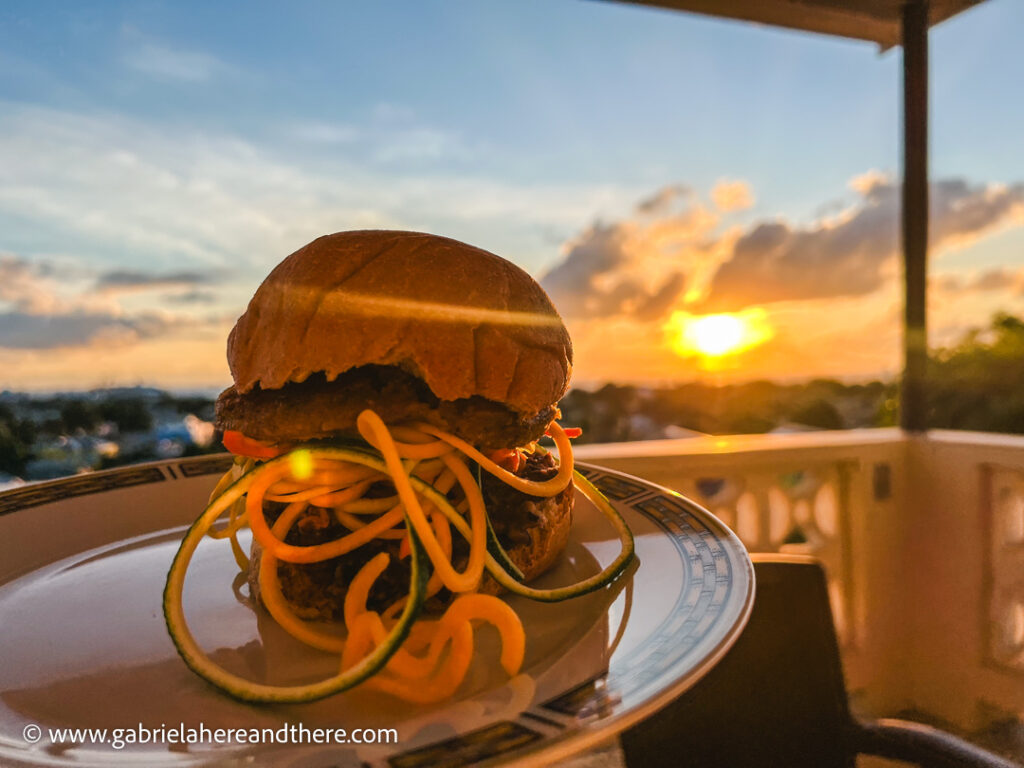
The accommodation was within walking distance of Brighton Beach and about a 15-minute walk to a bus stop, from where I could take a local bus into Bridgetown.
This setup worked well because it allowed me to walk to the beach, avoid taxis and use local transport instead of renting a car.
To keep costs down in Barbados, I:
- Bought groceries at local supermarkets
- Cooked most of my meals myself
- Walked whenever possible
- Used local minibuses, which are cheap and efficient
If you’re traveling independently, this combination makes a huge difference in Barbados, where restaurant meals and taxis can add up very quickly.
Things to Do in Barbados
Rihanna Drive (Rihanna’s Childhood Home)
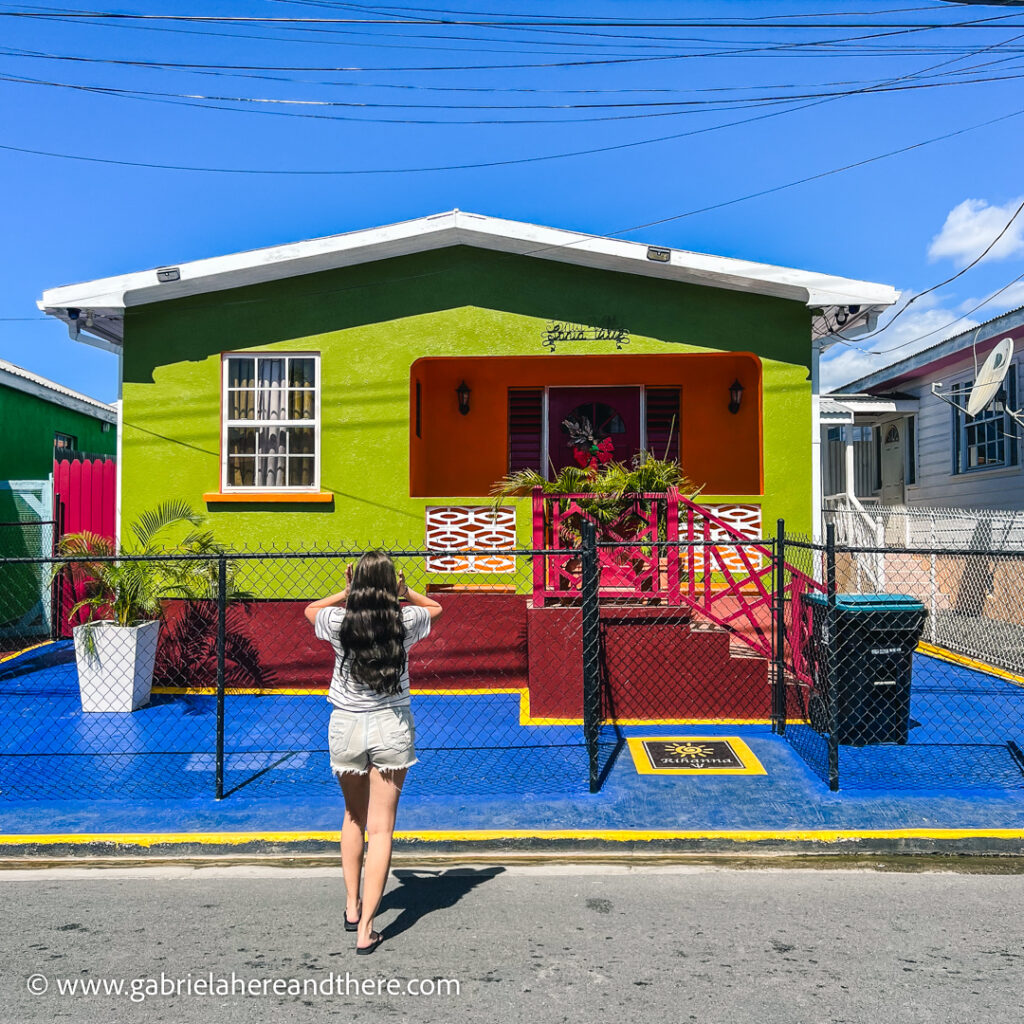
One of the more unusual — but popular — stops in Barbados is Rihanna Drive, where the global pop star grew up.
Rihanna was born and raised in Barbados, and her childhood home is located in a residential area of Bridgetown. While the house itself isn’t a museum and can only be seen from the outside, many visitors stop by for photos. You can apparently even book the house on Airbnb.
This is an easy stop to combine with exploring Bridgetown on foot, and for me it was just a fun and unexpected experience. To explore more of Bridgetown, you can join a walking tour.
Shopping in Barbados
Barbados is one of the best shopping destinations in the eastern Caribbean, especially if you’re looking for duty-free goods.
I’m not a big shopper myself — I travel with carry-on only — but I did have a few essential items I needed to buy, so I ended up checking out the main shopping areas. Some of the most popular spots include:
- Bridgetown, with a mix of local shops and duty-free stores
- Broad Street, known for jewelry, watches, and souvenirs
- Limegrove Lifestyle Centre in Holetown, which offers a more upscale shopping experience
Even if you’re not planning to buy much, exploring these areas gives you a good sense of how Barbados differs from the smaller, less developed islands.
Beaches in Barbados
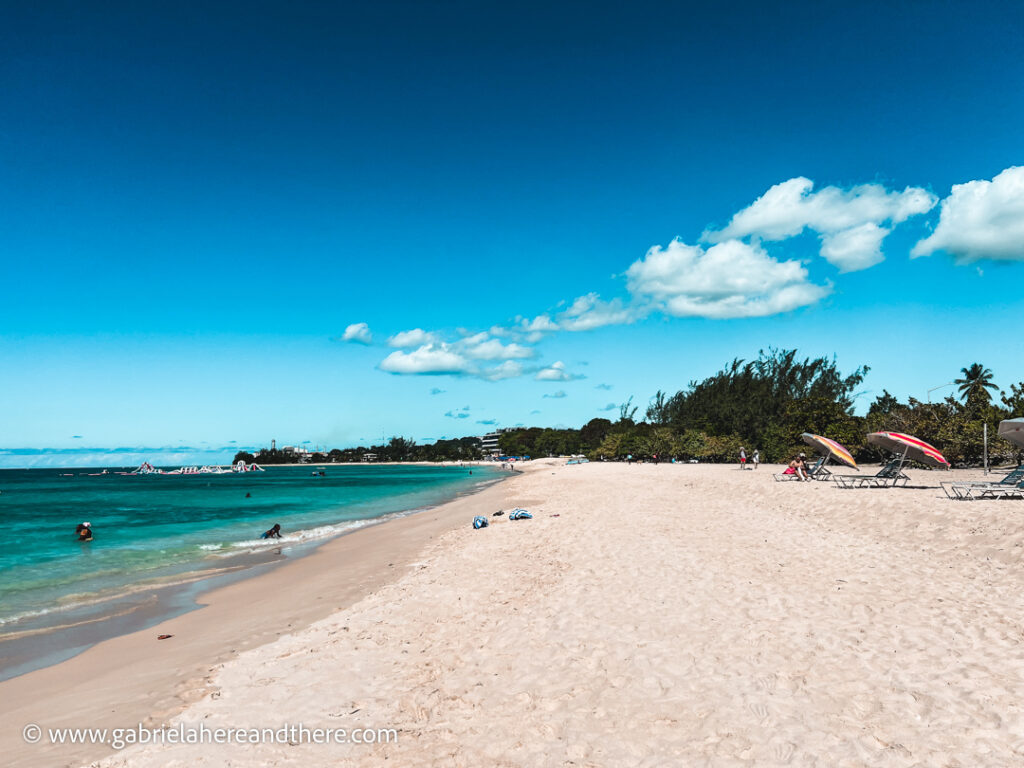
Barbados has some of the best white-sand beaches in the Lesser Antilles — and the good news is that all beaches are public, even those in front of luxury resorts.
Some of the best beaches to visit include:
- Brighton Beach – quieter and close to Bridgetown
- Carlisle Bay – calm water, snorkeling, and close to the city
- Crane Beach – dramatic scenery and pinkish-white sand
- Bottom Bay – one of the most photogenic beaches on the island
Depending on where you’re staying, it’s easy to combine beach time with city exploring.
Harrison’s Cave
Harrison’s Cave is one of Barbados’s most famous attractions and offers a nice change from the island’s beach-focused activities. This natural limestone cave system features impressive stalactites and stalagmites, underground streams, and large caverns.
Visiting Harrison’s Cave is done as a guided tour, either independently by bus and taxi or as part of an organized excursion. It’s a good option if you want a break from the beaches or are visiting on a cloudy day.
Where to Stay in Barbados (Summary)
Choosing the right area to stay in Barbados depends heavily on your budget and how you plan to get around.
Best Areas to Stay
Bridgetown / Brighton Beach
→ Good option for independent travelers
→ Easier access to buses and supermarkets
→ More affordable accommodation options
South Coast (Worthing / St. Lawrence Gap)
→ More restaurants and nightlife
→ Good beach access
→ Mid-range to higher prices
West Coast (Holetown)
→ More upscale and resort-oriented
→ Beautiful beaches
→ Best for splurges and luxury stays
🏨 Where to Stay in Barbados
Budget: A Home Away from Home (homestay, I stayed here)
Mid-range: Melbourne Inn (fairly close to the airport and a nice beach)
Luxury: Sweetfield Manor (a beautiful 5-star property close to Bridgetown)
Barbados is more expensive than many other Lesser Antilles islands, but it’s also easy to navigate, well connected, and very comfortable for independent travel — especially if you plan your accommodation and transport carefully.
🇰🇳 Saint Kitts and Nevis
Saint Kitts and Nevis was my next stop after Barbados — and this leg of the trip ended up being both the longest and the most expensive flight in this part of the Caribbean.
🇰🇳 Saint Kitts and Nevis — Quick Planning Tips
✈️ Flights
👉 Search flights to Saint Kitts and Nevis
🚗 Car Rental
- Strongly recommended for independent travel
- Cars often sell out, so book in advance
👉 Compare car rental prices on Discover Cars
🛥️ Tours & Activities
- Sugar Train tour with drinks (pickup & drop-off from cruise port/city center)
- Best of St. Kitts island tour (includes Timothy Hill & Brimstone Hill Fortress)
🏨 Accommodation
- Budget + luxury options:
👉 Search hotels & guesthouses on Booking.com
📶 eSIM for Saint Kitts and Nevis
There are no direct flights every day between Barbados and Saint Kitts, so this is one of those legs where you really need to plan your travel days carefully and book flights early. If you’re island hopping independently, Saint Kitts and Nevis is often one of the trickier countries to fit into a Lesser Antilles itinerary.
Saint Kitts vs Nevis
As the name suggests, the country consists of two islands:
- Saint Kitts
- Nevis
Originally, I planned to visit both islands. However, once I started looking at accommodation options, it became clear that doing so would significantly increase my budget.
Overall, I found Saint Kitts and Nevis to be very expensive, with limited accommodation options compared to many other Lesser Antilles islands. Nevis in particular had fewer hotels and guesthouses and much higher prices.
Because of that, I decided to base myself only on Saint Kitts, which had more accommodation choices and better transport connections.
If you have a larger budget, adding a night or two on Nevis would be lovely — it’s quieter and more exclusive. But for independent travelers, Saint Kitts is by far the more practical base.
Landscape & General Feel
One thing that immediately stood out to me about Saint Kitts was how lush and green it is, especially compared to some of the flatter, drier Caribbean islands.
The landscape feels very different and is dominated by rolling green hills, volcanic slopes, and dense vegetation.
It feels less beach-only and more scenic and dramatic, with viewpoints, historic sites, and constantly changing landscapes as you move around the island.
Things to Do in Saint Kitts
Timothy Hill Viewpoint
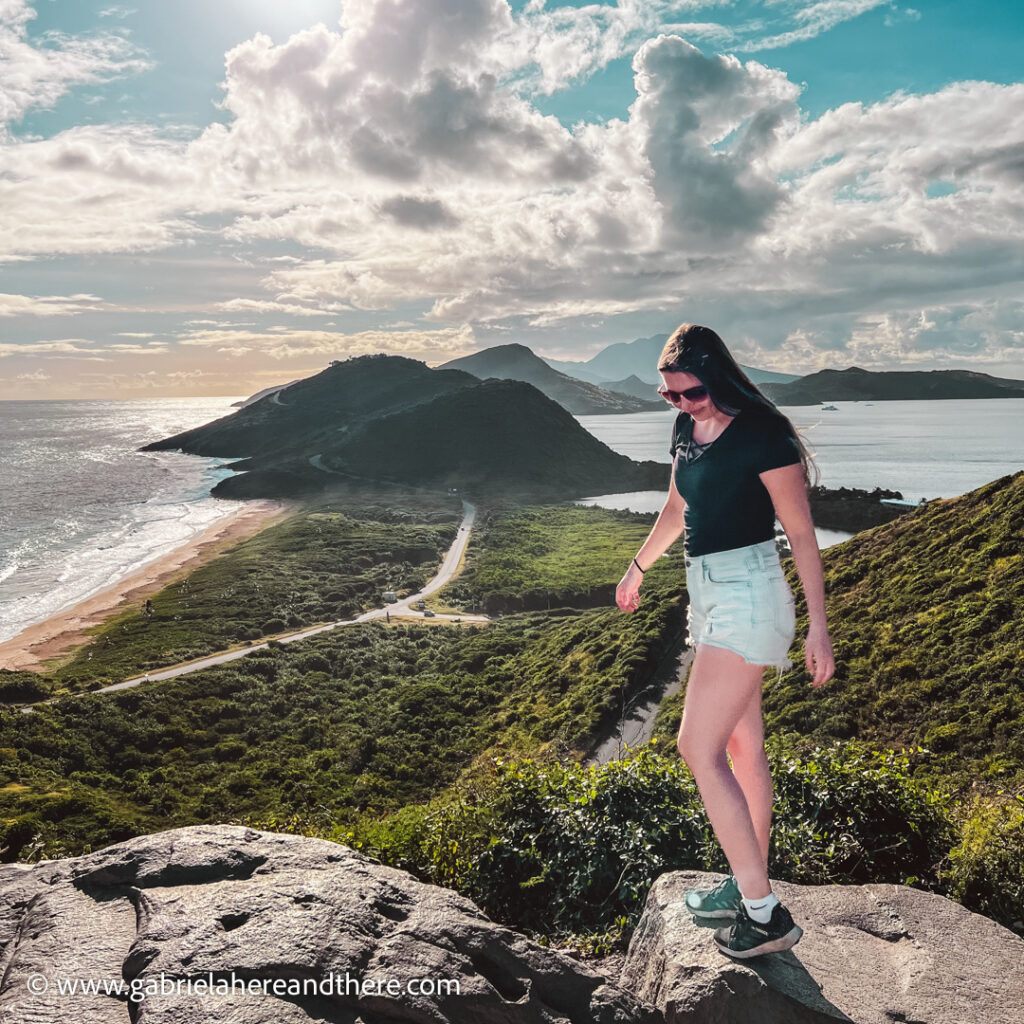
Timothy Hill is one of the best viewpoints on the island and a must-see in Saint Kitts.
From the top, you get beautiful 360-degree views, with the Atlantic Ocean on one side and the Caribbean Sea on the other.
It’s a classic photo stop and one of the easiest ways to understand the island’s geography. Visiting Timothy Hill usually requires a rental car or a tour.
Brimstone Hill Fortress National Park
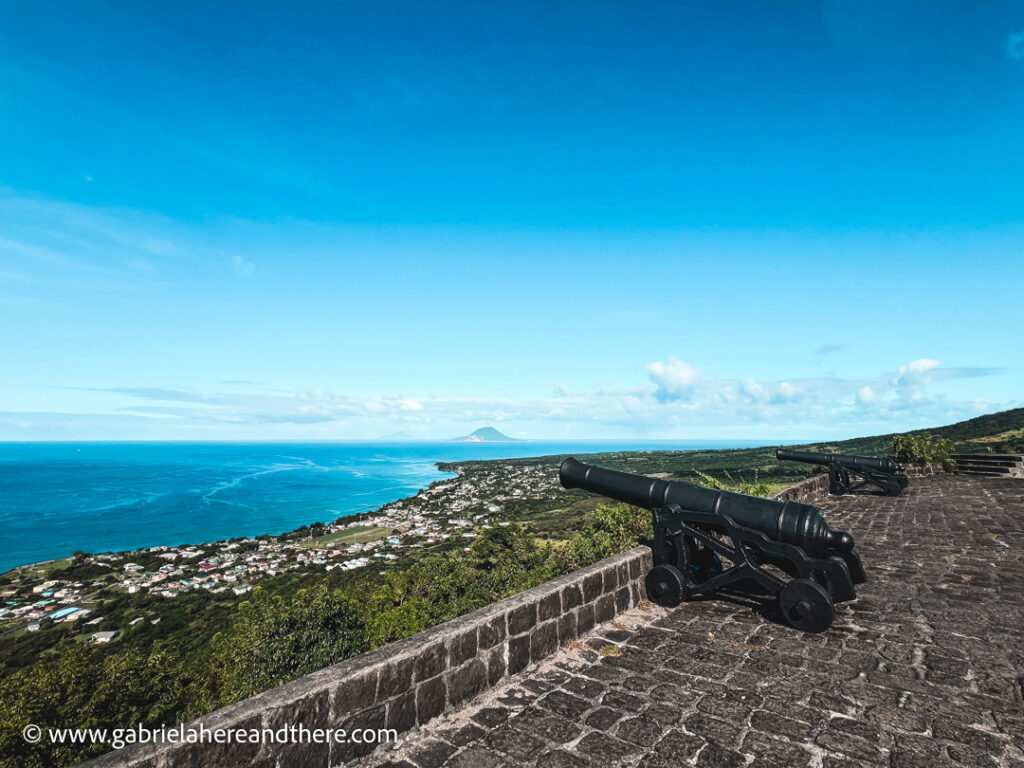
Brimstone Hill Fortress is the most famous historical sight in Saint Kitts and a UNESCO World Heritage Site.
Often referred to as the “Gibraltar of the Caribbean,” this massive fortress was built by the British in the 17th and 18th centuries during intense colonial struggles with the French. Saint Kitts was one of the most strategically important islands in the eastern Caribbean, and control over it changed hands multiple times between the two European powers.
The fortress sits high above the island and offers impressive colonial-era fortifications, panoramic views over the sea, and insight into the island’s military and colonial history.
This is one of the highlights of Saint Kitts, and I highly recommend visiting it as part of a guided tour, which really helps put the history into context.
Basseterre (Capital City)
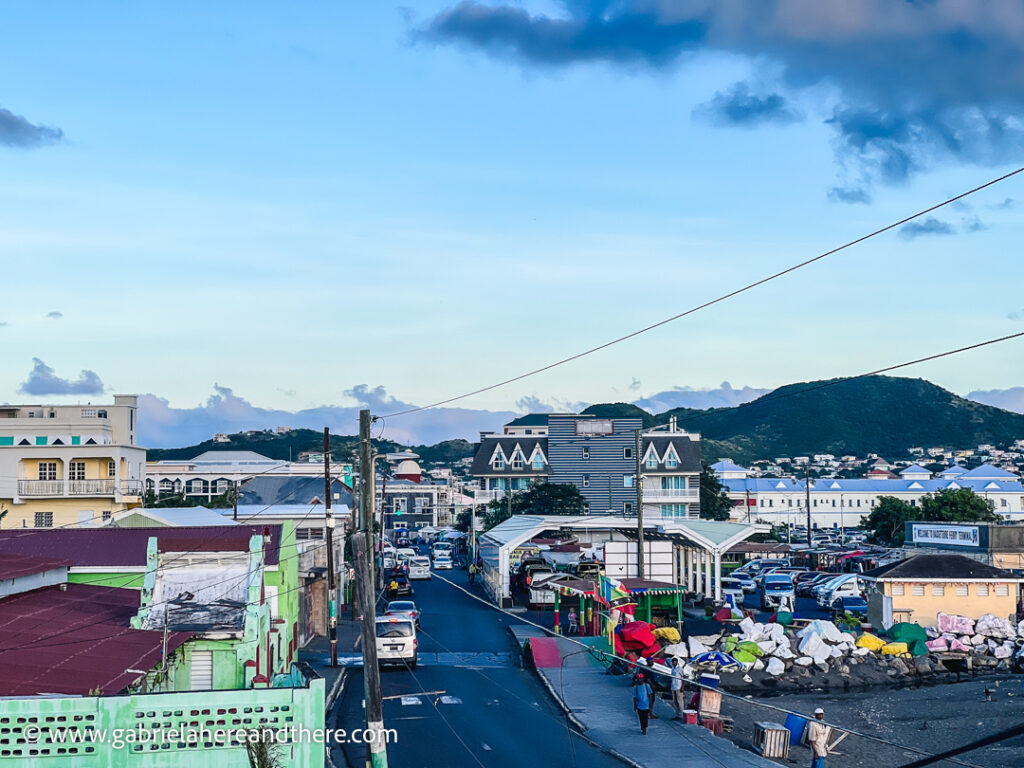
Basseterre is the capital of Saint Kitts and Nevis and a compact city that’s easy to explore on foot.
Highlights include:
- The Berkeley Memorial Clock Tower, one of the city’s landmarks
- Local markets and small shops
- Colonial-era buildings
- Some great ital food spots
Basseterre doesn’t require a full day, but it’s worth spending a few hours walking around to get a feel for local life.
St. Kitts Scenic Railway
The St. Kitts Scenic Railway is one of the most unique attractions on the island.
This historic narrow-gauge railway was originally built to transport sugar cane and now operates as a sightseeing route around parts of the island. This historic narrow-gauge railway was originally built to transport sugar cane and now operates as a sightseeing route around parts of the island. The journey takes you through coastal scenery, former sugar plantations, and lush countryside.
It’s not cheap, but it’s a very relaxed way to see more of the island, especially if you’re not planning to rent a car. You can book the train online.
Where to Stay in Saint Kitts and Nevis (Summary)
Accommodation in Saint Kitts and Nevis is limited and expensive, so booking ahead is essential. I booked very last minute and almost everything was already fully booked — so definitely plan this stop in advance.
Best Area to Stay
Saint Kitts (main island)
→ More accommodation options
→ Easier transport
→ Better base for sightseeing
Nevis is quieter and more exclusive, but better suited for short luxury stays rather than budget or mid-range travel.
🏨 Where to Stay in Saint Kitts and Nevis
Budget: The Colosseum Saint Kitts (good central location in Basseterre, I stayed here)
Mid-range: Sugar Bay Club (this is the main resort area in Saint Kitts)
Luxury: Four Seasons Resort Nevis (a beautiful luxury resort in Nevis)
Saint Kitts and Nevis is greener, more scenic, and more historic than many other Lesser Antilles islands — but it’s also one of the more expensive stops. Careful planning of flights and accommodation makes a big difference here.
🇦🇬 Antigua and Barbuda
Antigua and Barbuda was a huge personal milestone for me — this country marked my 140th country visited.
Reaching Antigua and Barbuda made me stop and really reflect on how far I’d come, not just in my travels but in life in general. Ten years ago, I would never have imagined traveling to this part of the world. Back then, the Caribbean felt completely out of reach — it was simply too expensive, and I could only afford to travel in very budget-friendly regions like Southeast Asia.
So even though I was still traveling on a tight budget, the fact that I had managed to make it all the way here — independently, without a cruise, and entirely on my own terms — made this stop feel incredibly special.
🇦🇬 Antigua and Barbuda — Quick Planning Tips
✈️ Flights
👉 Search flights to Antigua and Barbuda
🚗 Car Rental
- Strongly recommended for independent travel
- Cars often sell out, so book in advance
👉 Compare car rental prices on Discover Cars
🛥️ Tours & Activities
- Half-day historical tour + beach escape (from St. John’s)
- Shirley Heights sunset party with entrance tickets
🏨 Accommodation
- Budget + luxury options:
👉 Search hotels & guesthouses on Booking.com
📶 eSIM for Antigua and Barbuda
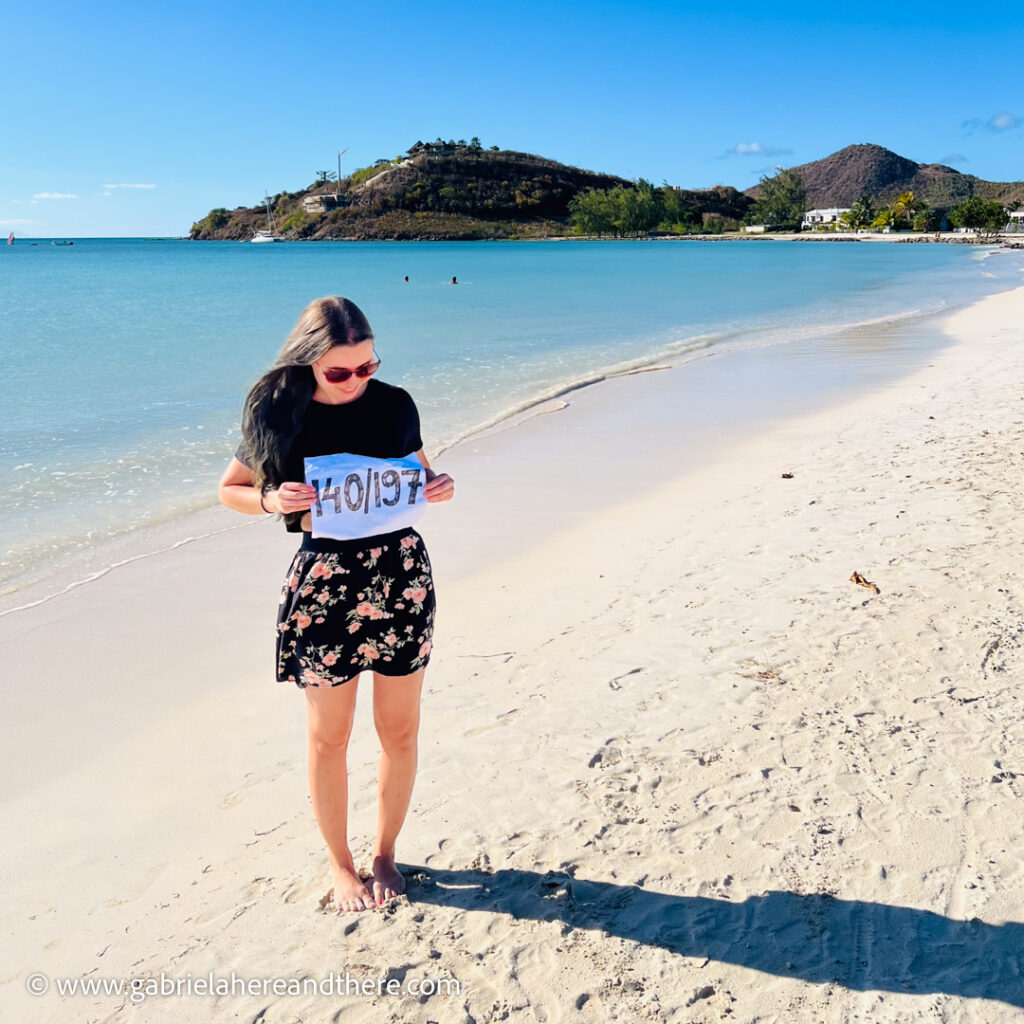
To mark the moment, I bought myself a Sharpie, grabbed a piece of paper, and took a few photos with a “140 / 197” sign. It was a small celebration, but one that meant a lot to me.
General Feel of Antigua and Barbuda
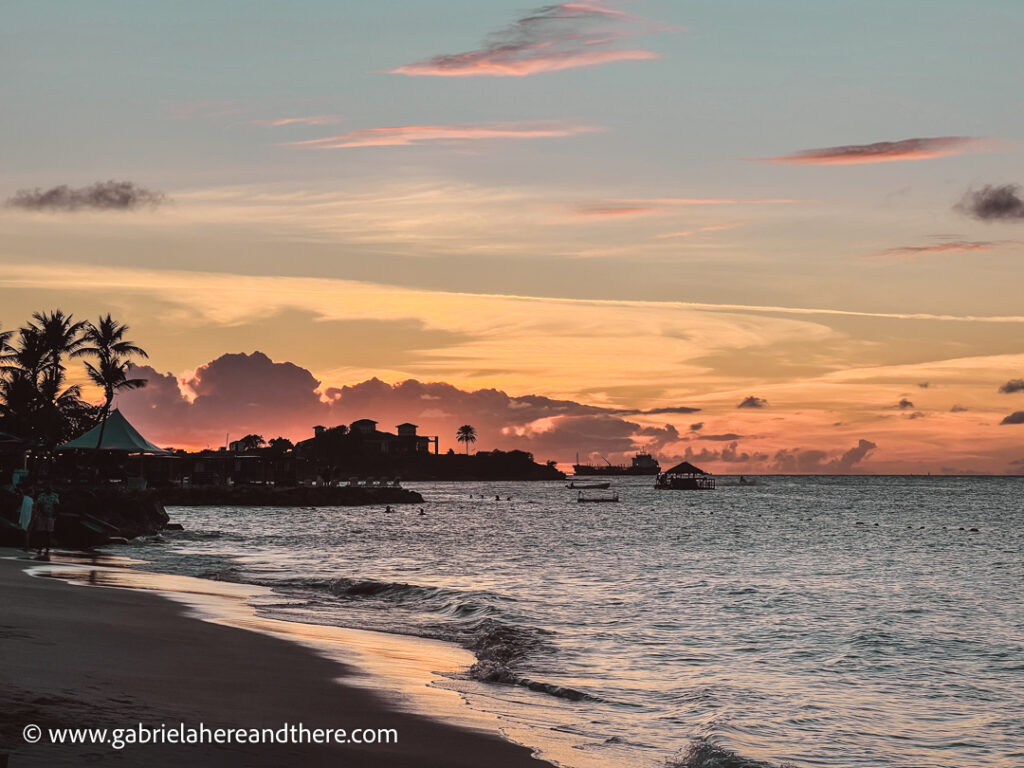
Antigua and Barbuda is very much what people imagine when they think of the Caribbean:
- Turquoise water
- White-sand beaches
- Calm bays and harbors
- A strong sailing and yacht culture
Antigua is the more developed of the two islands and where most travelers stay. Barbuda, on the other hand, is far more remote and quieter, known for its long, undeveloped beaches — but it’s also more expensive and logistically harder to visit.
Things to Do in Antigua and Barbuda
Dickenson Bay Beach
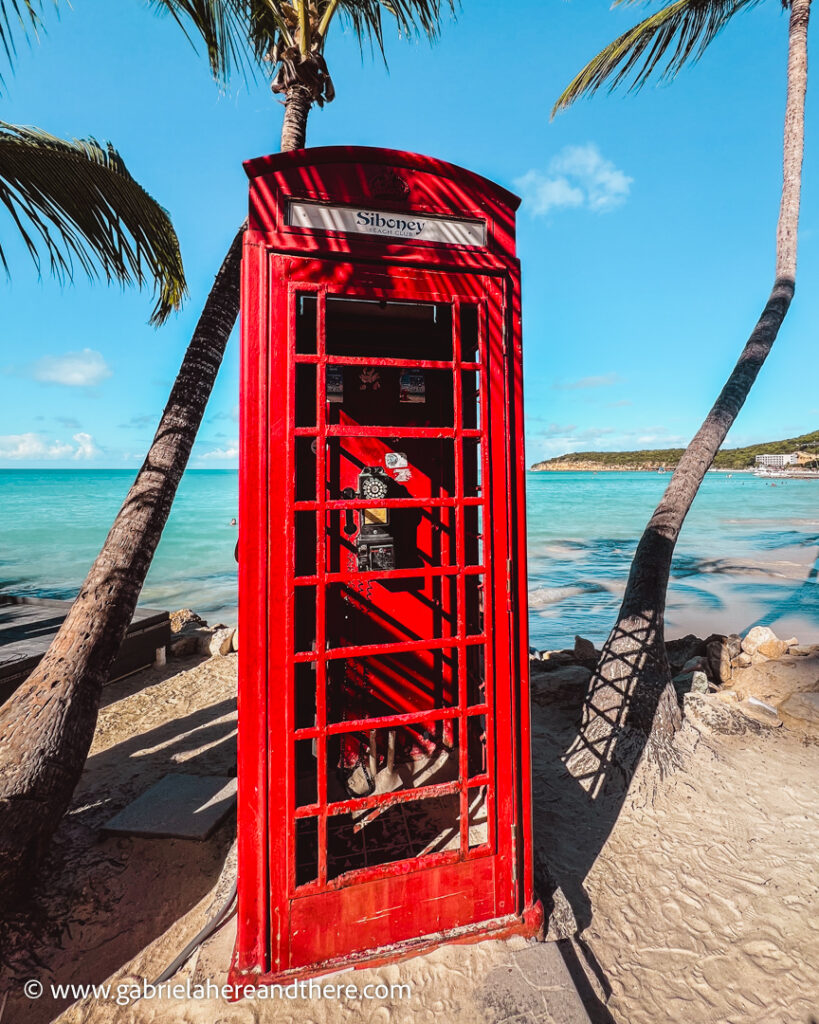
Dickenson Bay Beach is one of the easiest and most accessible beaches in Antigua, especially if you’re staying in or near St. John’s. It’s located just a short drive from the city center and is one of the closest proper swimming beaches to the capital.
The beach has soft white sand, calm turquoise water, and a long shoreline that’s great for swimming or a relaxed walk. Because of its proximity to St. John’s, it’s more developed than some of Antigua’s remote beaches, with beach bars, restaurants, and hotels nearby — so it can be crowded.
One fun and slightly unexpected detail here is the British red telephone box on the beach, a small nod to Antigua’s colonial history and a popular photo spot.
If you’re based in St. John’s and want an easy beach day without spending much time on transport, Dickenson Bay is a very convenient option.
Jolly Harbour
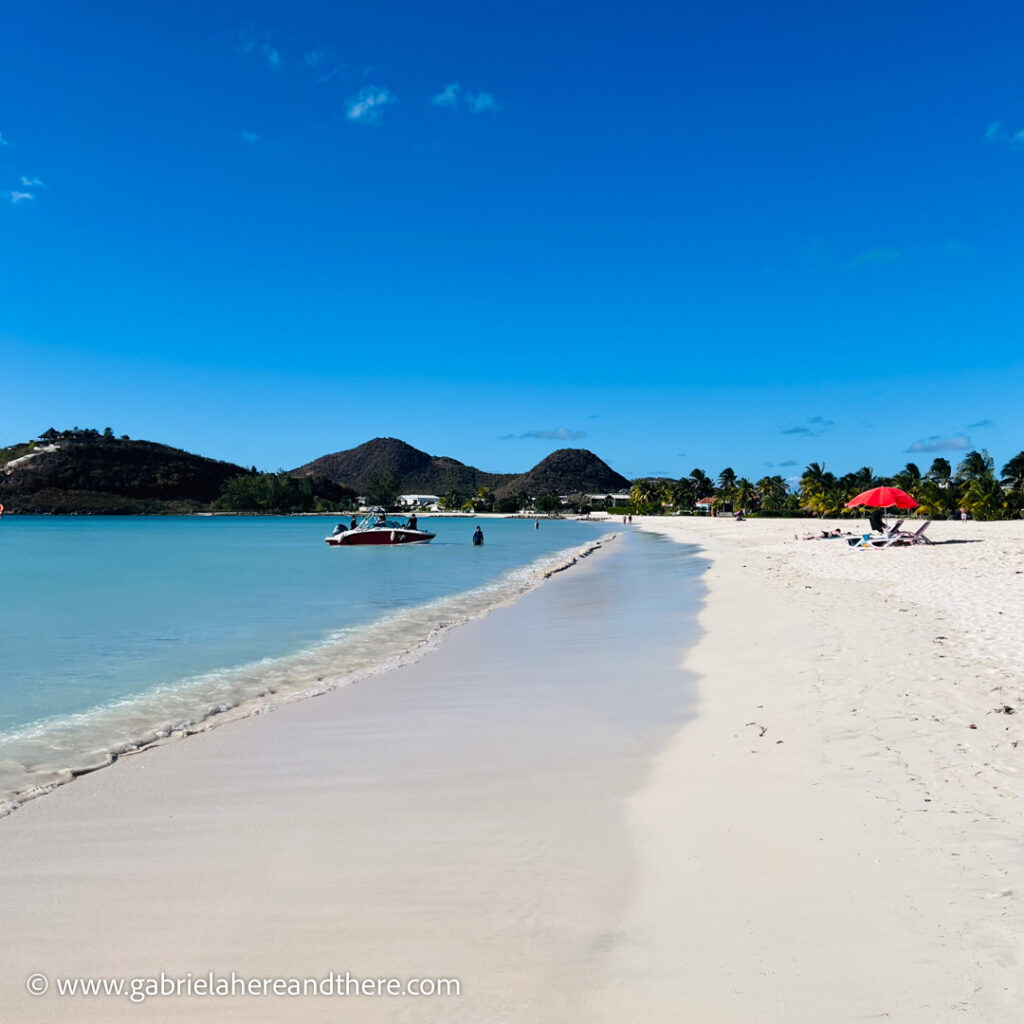
Jolly Harbour is one of the most popular areas in Antigua, especially among sailors and long-term visitors.
The area has a large marina, plenty of restaurants and cafés, shops and supermarkets, and easy access to nearby beaches.
It’s a good place to base yourself if you want a convenient, well-developed area without being right in the capital.
Shirley Heights & Pillars of Hercules
Shirley Heights is one of the most famous viewpoints in Antigua and offers stunning panoramic views over English Harbor and the surrounding coastline.
Visiting around sunset is especially popular, and on certain evenings there’s a lively atmosphere with music, food stalls, and people gathering to watch the sun go down.
Nearby, you’ll also find the Pillars of Hercules — dramatic rock formations carved by the sea — which are easy to combine with a visit to Shirley Heights if you’re exploring the area.
Barbuda Island
Barbuda is much less visited than Antigua and feels like a completely different world. It’s known for:
- Long, pink-sand beaches
- Very little development
- A remote, untouched feel
You can visit Barbuda as a day trip from Antigua by ferry, or stay overnight if your budget allows. Accommodation options are limited and generally expensive, which is why many independent travelers choose to visit Barbuda just for the day.
I had originally planned to visit Barbuda from Antigua as a day trip, but the cost stopped me. A return ferry ticket alone costs around $110 USD, and that doesn’t include any tours or transportation on the island, which are essentially required once you arrive.
If you’re looking for wild, undeveloped beaches and don’t mind the extra cost, Barbuda is absolutely worth considering — just be prepared for the prices.
Where to Stay in Antigua and Barbuda
Accommodation in Antigua and Barbuda ranges from simple guesthouses to high-end resorts, but overall prices are higher than in many other Lesser Antilles countries.
Best Areas to Stay
Around Jolly Harbour
→ Convenient, well-developed
→ Good facilities and beach access
St. John’s
→ More local feel
→ Better access to supermarkets and transport
→ More affordable options for independent travelers
Accommodation Options
Budget option
I stayed at Connie’s Comfort Suites, one of the more affordable accommodation options in Antigua. It worked well for independent travel:
- About a 20-minute walk to St. John’s city center
- Around 15 minutes on foot to a large supermarket, Epicurean Fine Foods
I bought most of my groceries there, including affordable ready-made meals. When I wasn’t eating ital food at local restaurants, I cooked for myself, which helped keep costs down significantly.
🏨 Where to Stay in Antigua
Budget: Connie’s Comfort Suites (close to the city center and supermarket, I stayed here)
Mid-range: Passion Village Apartments by Antigua Living (located in Jolly Harbour)
Luxury: South Point Antigua (a beautiful 5-star resort in English Harbor Town)
🇩🇲 Dominica
Dominica was — besides Tobago — my absolute favorite island in the Caribbean.
One of the main reasons I loved Dominica so much is that the largest cruise ships don’t come here. While some smaller cruise ships do visit, they’re not daily, and the mass cruise tourism you see on many other Caribbean islands is largely missing. As a result, prices are more reasonable, the island feels far more local, and the overall atmosphere is noticeably more relaxed.
🇩🇲 Dominica — Quick Planning Tips
✈️ Flights
👉 Search flights to Dominica
🚗 Car Rental
- Strongly recommended for independent travel
- Cars often sell out, so book in advance
👉 Compare car rental prices on Discover Cars
🛥️ Tours & Activities
- Indian River discovery tour with beach stop
- Trafalgar Falls & geysers rainforest tour (from Roseau)
🏨 Accommodation
- Budget + luxury options:
👉 Search hotels & guesthouses on Booking.com
📶 eSIM for Dominica
Dominica is also by far the most backpacker-friendly island in the Lesser Antilles. If you love nature, hiking, waterfalls, hot springs, and lush green landscapes, this island is very hard to beat.
Arriving in Dominica & First Base: Portsmouth
I flew to Dominica from Antigua and landed at Douglas–Charles Airport, which is located in the north of the island. Because of that, I based myself first in Portsmouth, the second-largest town in Dominica and a common starting point for travelers.
I booked an Airbnb in Portsmouth and arranged for my host to pick me up from the airport. Since I didn’t have a car, this worked really well — and I even convinced him to stop at one place on the way that I really wanted to visit.
Things to Do in Dominica
Pointe Baptiste Chocolate Factory
On the drive from the airport to Portsmouth, we stopped at the Pointe Baptiste Chocolate Factory, which turned out to be a great introduction to Dominica.
The chocolate here is completely natural and locally made. They harvest cacao from local farmers using ecological methods and produce everything on-site. I bought some dark vegan chocolate and chocolate tea made from cacao husks, which was surprisingly good.
My Airbnb host was excited to visit as well and ended up buying chocolate too. This is an easy stop if you’re arriving or leaving via the north of the island.
Portsmouth
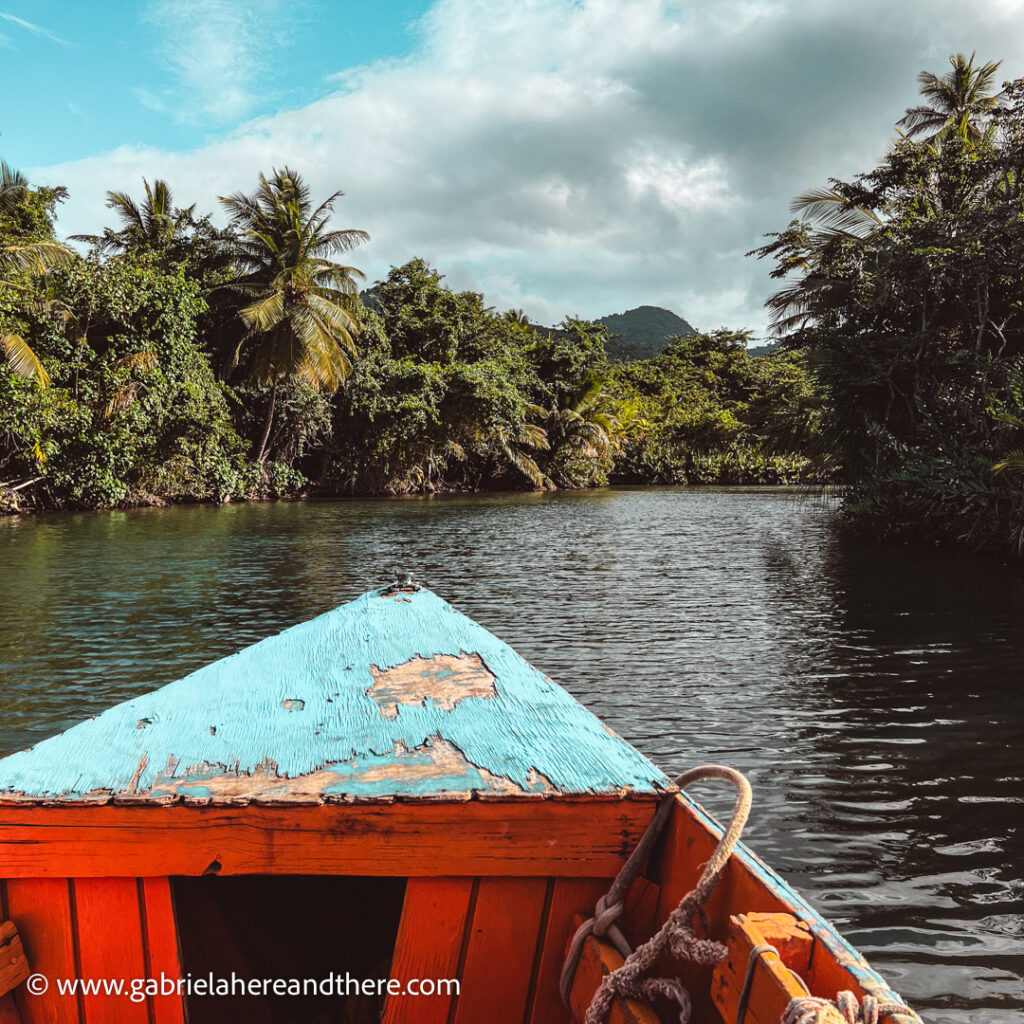
Portsmouth is a very practical base, especially if you’re arriving via Douglas–Charles Airport.
From Portsmouth, you can easily visit:
- Cabrits National Park, home to Fort Shirley and coastal hiking trails
- The Indian River, where you can take a guided boat tour through mangroves
- Nearby beaches and local restaurants
Portsmouth also has supermarkets, small shops, and enough services to make it a comfortable short-term base.
Wotten Waven – The Best Area to Stay in Dominica
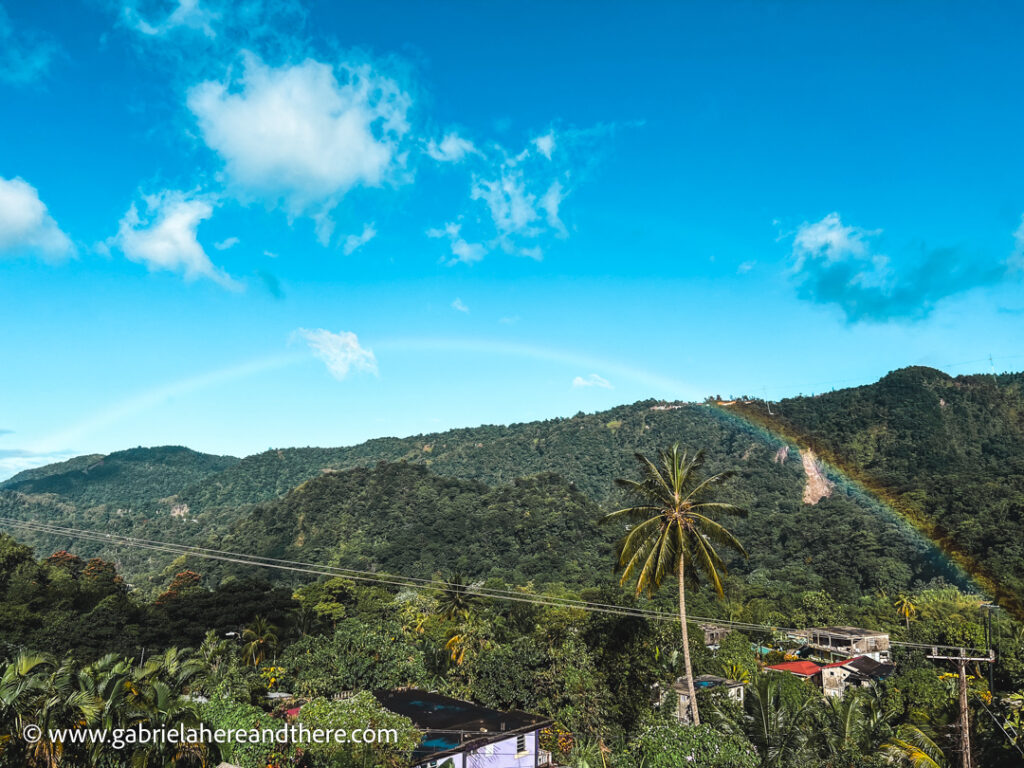
Wotten Waven was hands down the best area to stay on the entire island if you want to experience Dominica’s nature properly.
This small mountain village is surrounded by rainforest and natural hot springs and is perfectly located for exploring Dominica’s interior. I stayed at Le Petit Paradis, which I can honestly say was one of my favorite accommodations of the entire trip.
Staying at Le Petit Paradis
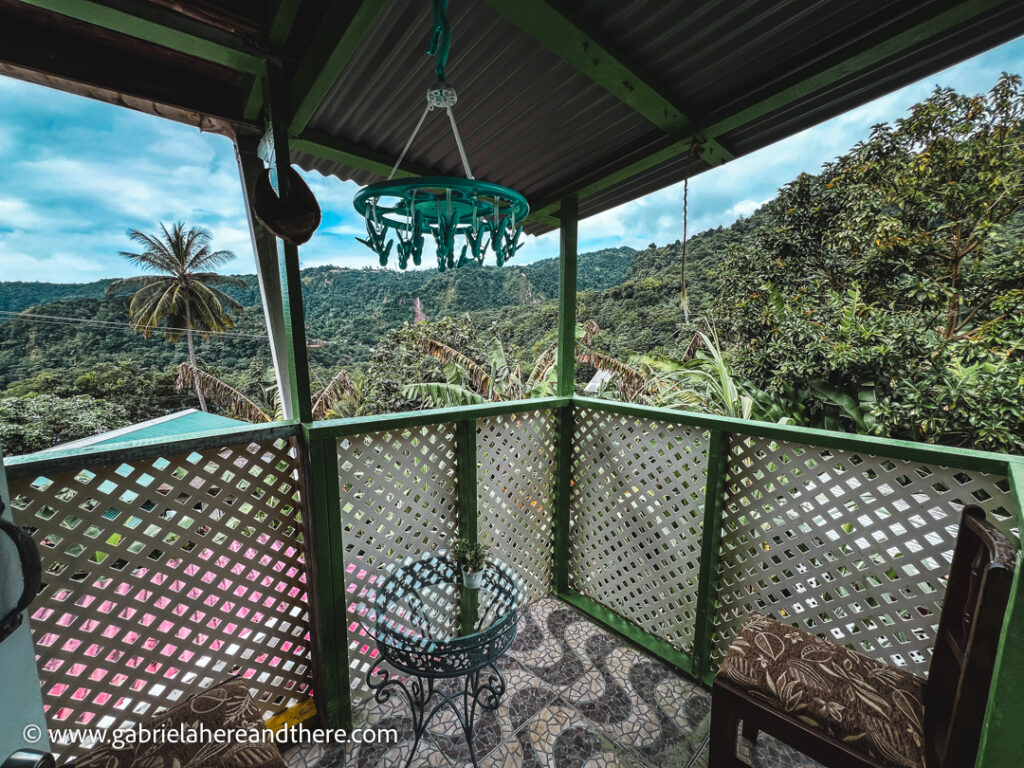
Le Petit Paradis offers:
- Private rooms and dorms
- Incredible views over the mountains
- Easy access to hot springs and waterfalls
Because I planned to base myself here for a while and work remotely, I contacted them beforehand to ask about Wi-Fi and mobile data. I booked a private room with an amazing mountain view, and the internet worked well enough for video calls and remote work — which was impressive given how remote the location is.
Natural Wonders Around Wotten Waven
This area is packed with natural sights, and you can easily spend several days here without getting bored.
Trafalgar Falls
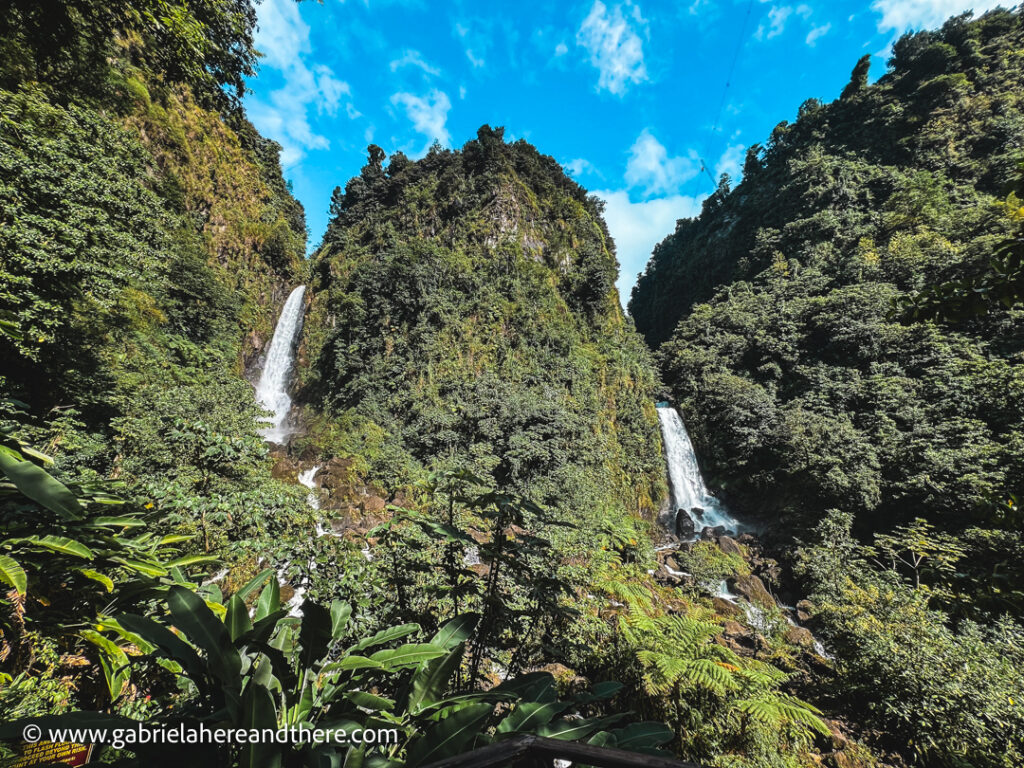
One of the most famous sights in Dominica, Trafalgar Falls consists of two large waterfalls surrounded by lush vegetation.
It’s easy to reach from Wotten Waven and makes for a great half-day trip. I walked there myself, and on the way back I actually got a lift from a local man.
Hot Springs & Sulphur Baths
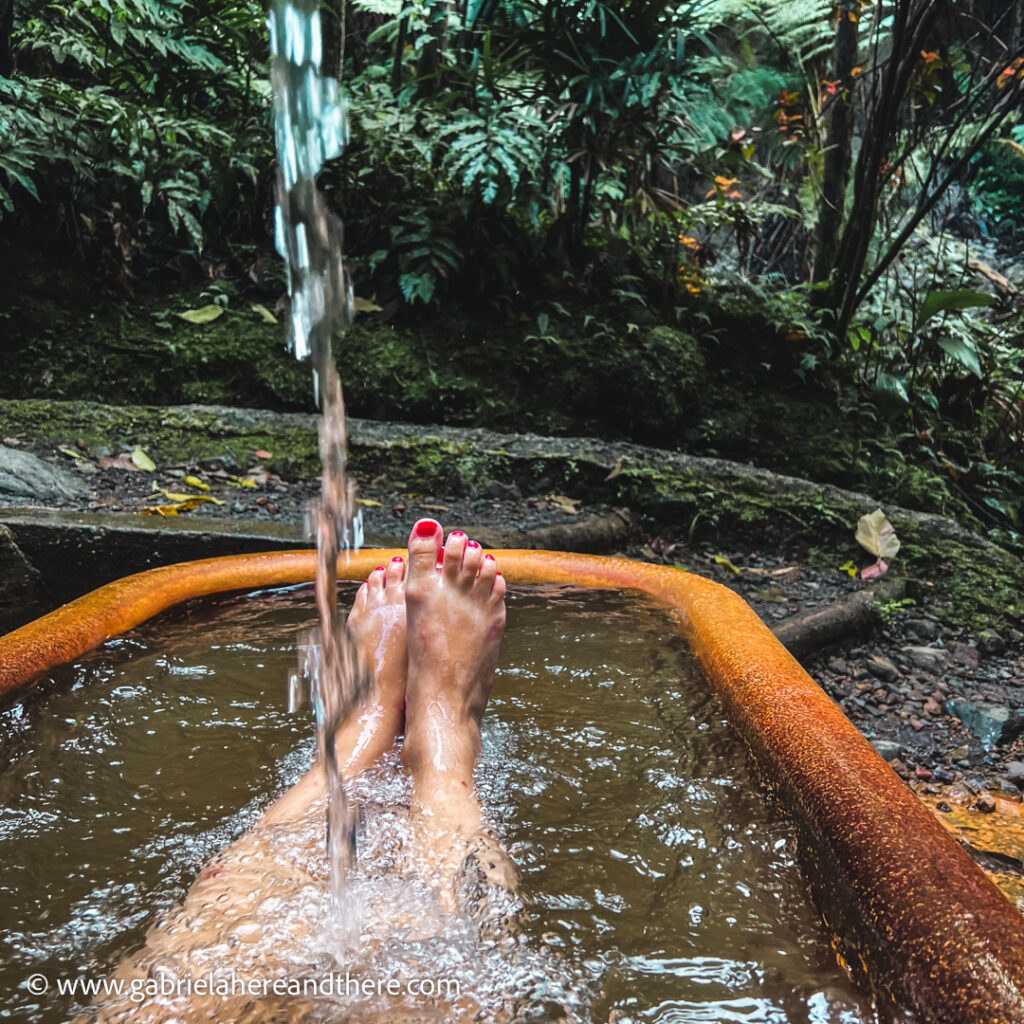
Dominica is full of geothermal activity, and Wotten Waven is one of the best places to experience it.
The nicest natural baths I visited were at Ti Kwen Glo Cho. There are several pools and baths with different temperatures, and the whole place feels like a natural outdoor spa. This was one of my favorite experiences in Dominica and something that really sets the island apart from other Caribbean destinations.
Around Wotten Waven, you can also buy natural purifying mud masks to take home.
Ital Tour & Local Culture
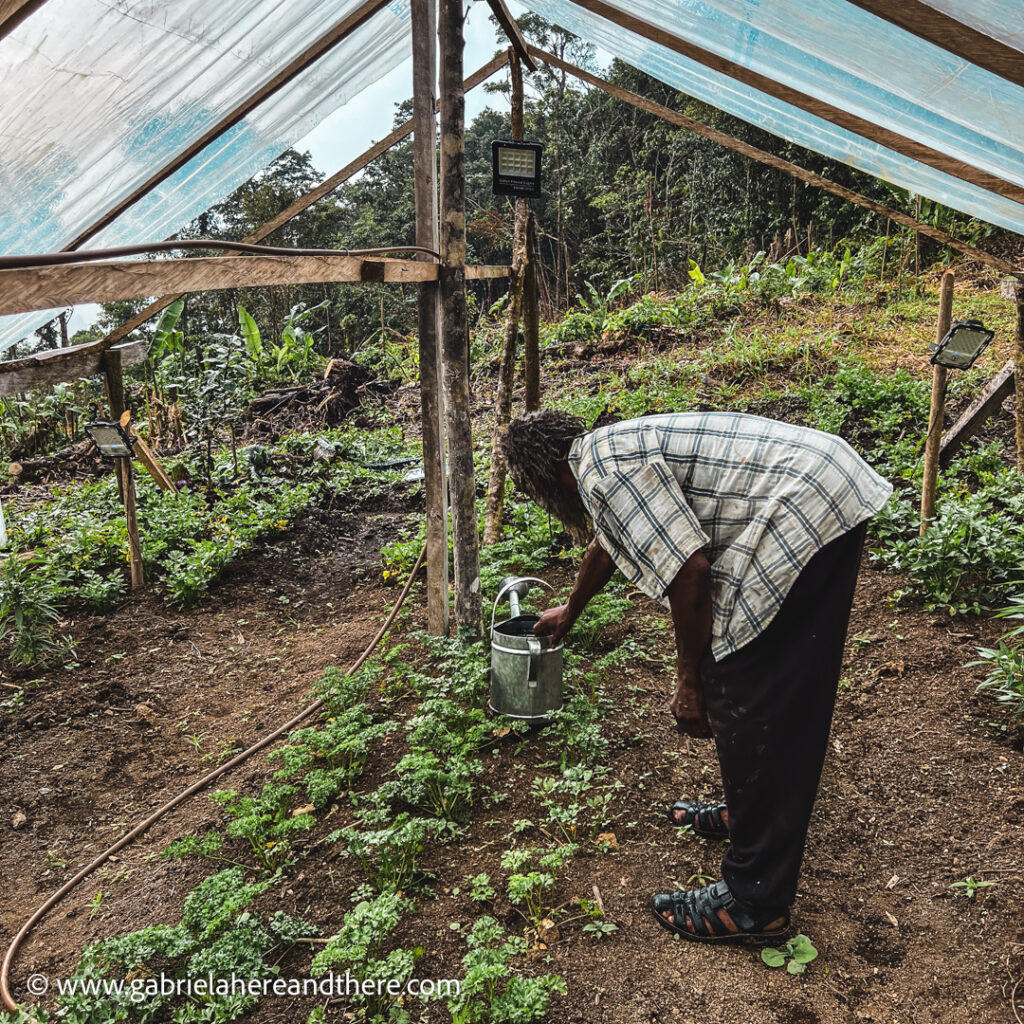
One of the most interesting experiences I had in Dominica was an ital garden tour organized by Le Petit Paradis.
I honestly didn’t know what to expect. The tour turned out to be a very informal walk through a garden with a local Rastaman, who talked about his life in the mountains, Rastafarian culture, and showed us his plants and herbs — yes, including the ones you can smoke.
We ended the walk in his cottage, where he rolled a joint. Definitely not your typical Caribbean tour, but an unforgettable and very local experience!
Roseau – Capital City
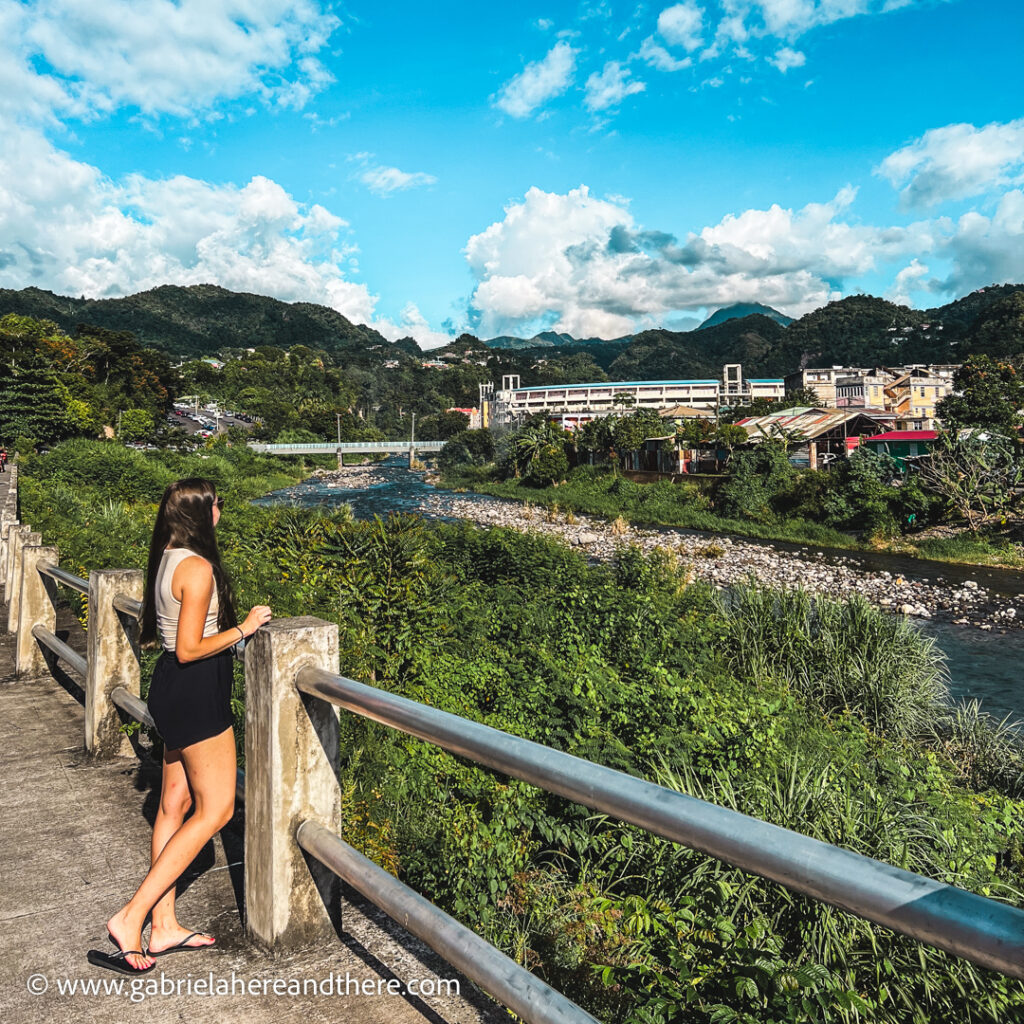
Roseau is the capital of Dominica and another practical base on the island.
While there isn’t a huge amount to do here, it’s a good place to work remotely, arrange tours and transport and access services and supermarkets.
I spent most of my time in Roseau working and eating amazing ital food at Starline Ital Kitchen. I also visited the Botanical Gardens, and you can hike up to Morne Bruce Viewpoint for views over the city.
Roseau feels more functional than scenic, but it’s still worth spending some time here.
Soufrière – Bubble Beach & Sulphur Pools
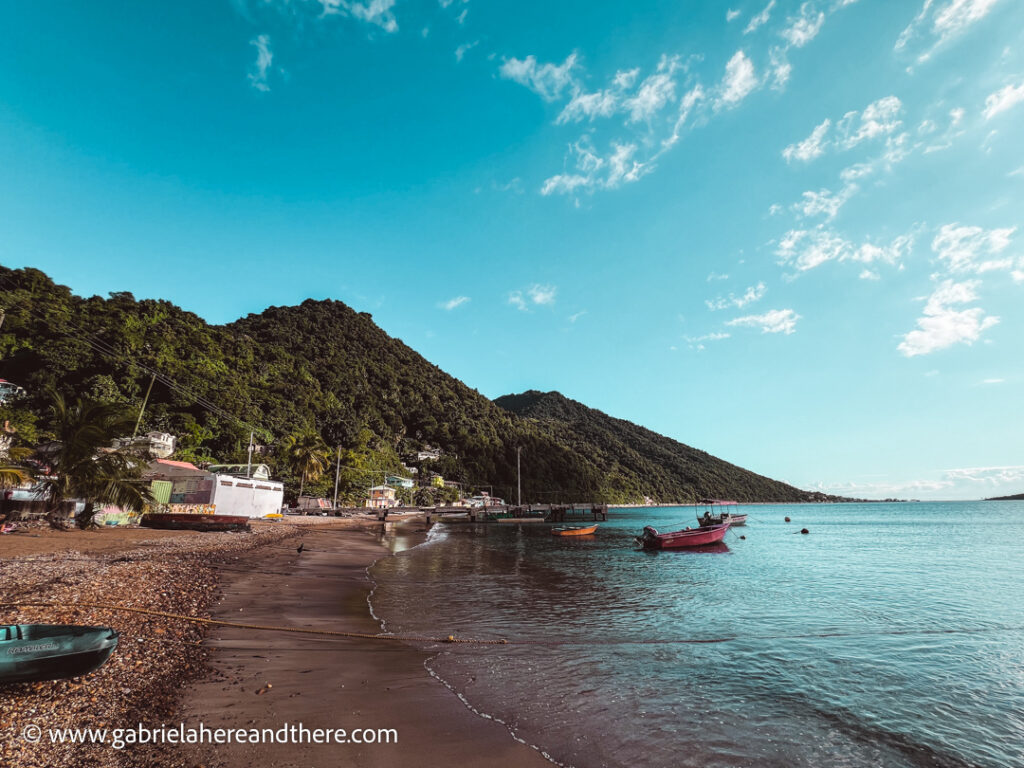
Soufrière is located in the south of Dominica and is famous for its volcanic activity.
One of the highlights here is Bubble Beach, where volcanic gases bubble up through the shallow water near the shore. Nearby, you’ll also find natural sulphur pools, which are warm, mineral-rich, and completely unique.
A quick warning: be very careful with your clothes. I completely ruined a light-colored T-shirt and shorts after visiting the sulphur pools — the sulphur stains didn’t come out even after several washes. Avoid light-colored clothes and bikinis (black is best).
Where to Stay in Dominica (Summary)
Dominica offers some of the best value accommodation in the Lesser Antilles, especially for nature-focused travelers.
Best Areas to Stay
- Wotten Waven → best for nature, hot springs, and waterfalls
- Portsmouth → convenient for arrival and northern sights
- Roseau → practical base with services and transport
🏨 Where to Stay in Dominica
Budget: Le Petit Paradis (beautiful location in the mountains, I stayed here)
Mid-range: St. James Guesthouse (the best guesthouse in Roseau where I also stayed, you should book this place early, it’s almost always fully booked!)
Luxury: Fort Young Hotel (I heard really good things about this hotel, also book early, because it’s often fully booked)
Leaving Dominica
From Dominica, you have two main options:
- Take a ferry to Martinique and fly onward to Europe or Canada
- Fly directly out of Dominica to another Caribbean island
Either way, Dominica makes an excellent final stop on a Lesser Antilles itinerary — especially if you want to end your trip surrounded by nature rather than resorts.
🌍 Visiting Every Country — Support My Work
I’m visiting every country in the world, and my travels are entirely self-funded. I focus on unusual, off-the-beaten-path destinations that don’t always get much coverage — which is exactly why I create detailed guides like this.
If you found this post helpful, buying me a coffee is a simple way to support my work and helps me keep creating in-depth travel guides to less-visited places. Thank you for your support ❤️
Liked it? Pin it or share it!
5 comments
Hello! All these islands sound like heaven! I’m sure there is a lot to do there, no matter what size the islands are.
Thank you for including so much detail, even itineraries depending on where you are traveling from. We really enjoy island hopping by ferry, and it’s nice to see that some of that is possible in the Lesser Antilles.
So many beautiful places to visit. This is a very helpful and detailed guide. I have had my eye on Grenada for awhile. Which islands are best for hiking and adventurous travel? Thanks!
Dominica is definitely the best for hiking, nature, and adventures!
the level of detail on this post is amazing. I’ve always wanted logistically how you could do it without a cruise – well this very much answers my question. thank you!