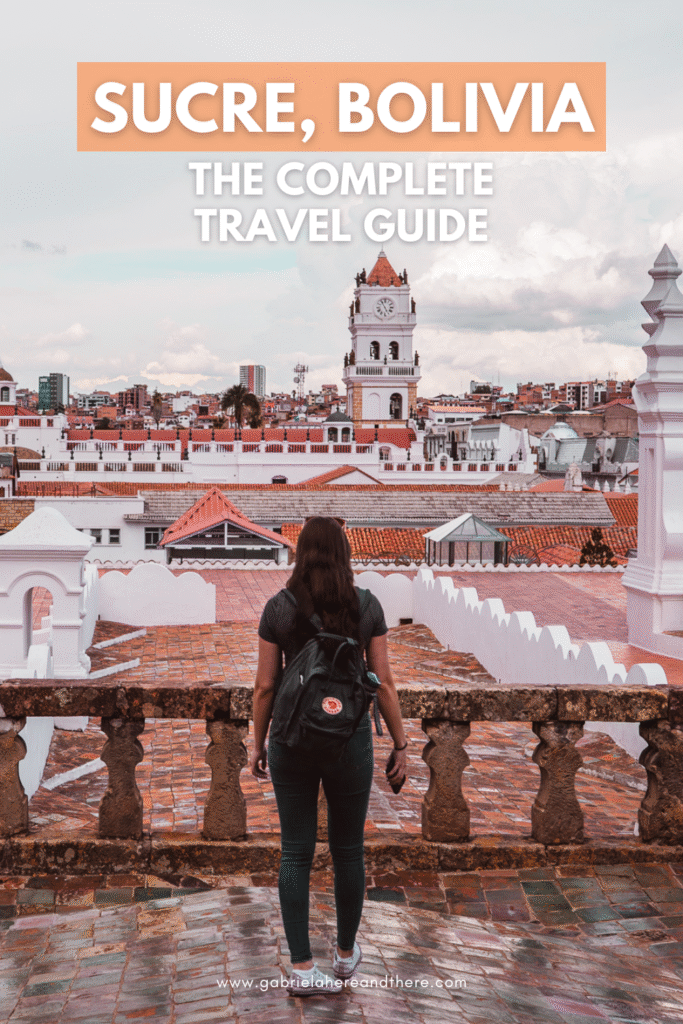
After Peru, I continued to Bolivia and made Sucre my first stop — and I fell in love with this city, so I wanted to put together this very extensive Sucre travel guide.
Most people who visit Bolivia only visit the capital city La Paz and the Uyuni salt flats. But Sucre definitely needs to be on your list — it’s a beautiful white city and, in my opinion, so underrated.
If you’re visiting my blog for the first time — welcome! I’ve been traveling solo for over 16 years and I’ve now visited every single country in South America, so there’s a lot more content from this continent coming up. I was traveling in South America as a digital nomad, so I often spent more time in cities because I actually needed to work. This gave me more time to get to know each place beyond just the tourist highlights.
Here’s everything you need to know to plan your visit to Sucre.
Table of Contents
Sucre Travel Guide
🇧🇴 Planning a trip to Sucre and short on time?
🏨 Where to Stay in Sucre (Quick Picks)
- Budget: CasArte Takubamba B&B — beautiful building, rooftop terrace, breakfast included
- Mid-range: El Jardin de Su Merced B&B — beautiful courtyards, terraces, breakfast included
- Luxury: Parador Santa Maria La Real — stunning colonial mansion, sauna, hot tub, restaurant
🦕 Best Tours & Experiences in Sucre
- Sucre Walking Tour: From Tunnels to Colonial Towers
- Crater of Maragua & Inca Trails Full-Day Trek
- Uyuni Salt Flats Tour from Sucre
🚌 Book your bus from La Paz to Sucre
🚌 Book your bus from Uyuni to Sucre
📶 Get an eSIM for Bolivia before arrival
🛡️ Get travel insurance for Bolivia (SafetyWing)
How I Ended Up in Sucre
My visit to Sucre was kind of spontaneous. I had spent some time in Peru, hoping to travel through the country overland by bus and then cross the border into Bolivia and end up in La Paz. I hadn’t really planned my Bolivia itinerary yet, other than knowing I wanted to see La Paz and the Uyuni salt flats.
The universe had other plans, though, as nationwide protests started across Peru, blocking all the main roads. My planned overland trip got cut short when I only made it as far as Paracas, a small town a few hours from Lima. After being stuck there for a week, I decided to return to Lima and buy flights to Bolivia instead. The overland trip through Peru would have to wait for another time.
This change of plans did let me choose which city I wanted to fly into, though. Instead of La Paz, I did some research and ended up picking Sucre. It became my next base as a digital nomad, and I continued working remotely from there.
Why Visit Sucre, Bolivia?
Most Bolivia itineraries follow the same loop: arrive in La Paz, take a night bus or flight to Uyuni, do the salt flats, fly home. Sucre gets skipped. And that’s a shame, because it’s arguably the most pleasant city in the country to actually spend time in.
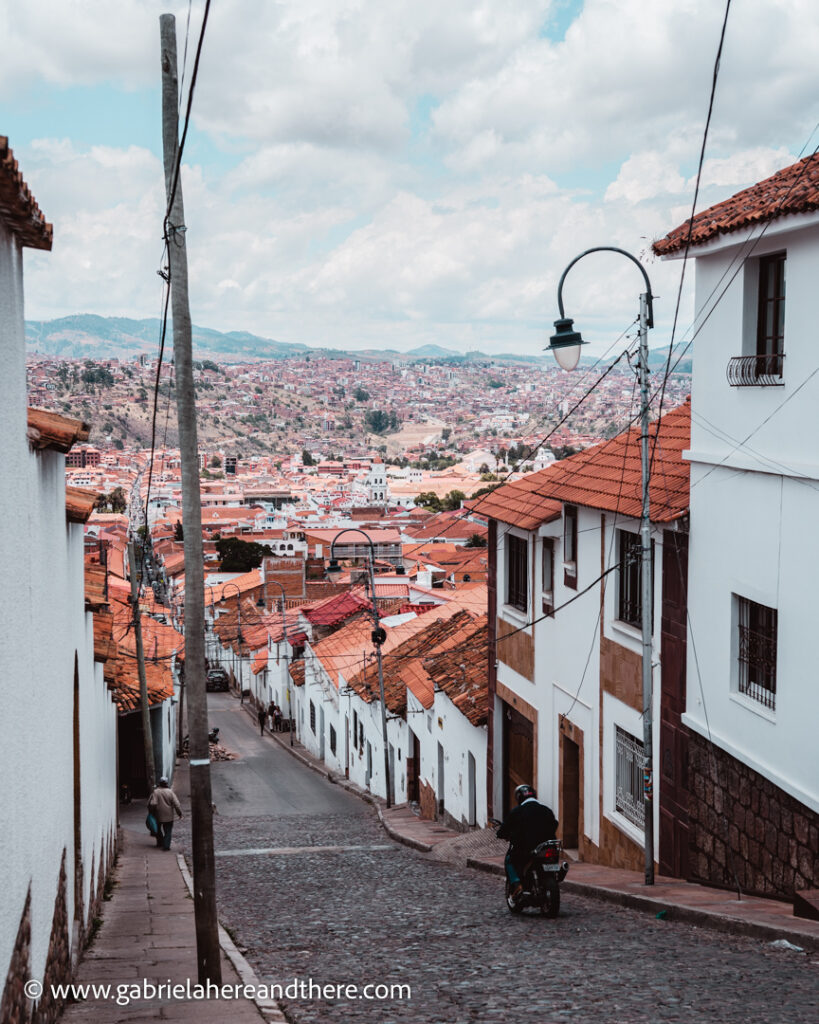
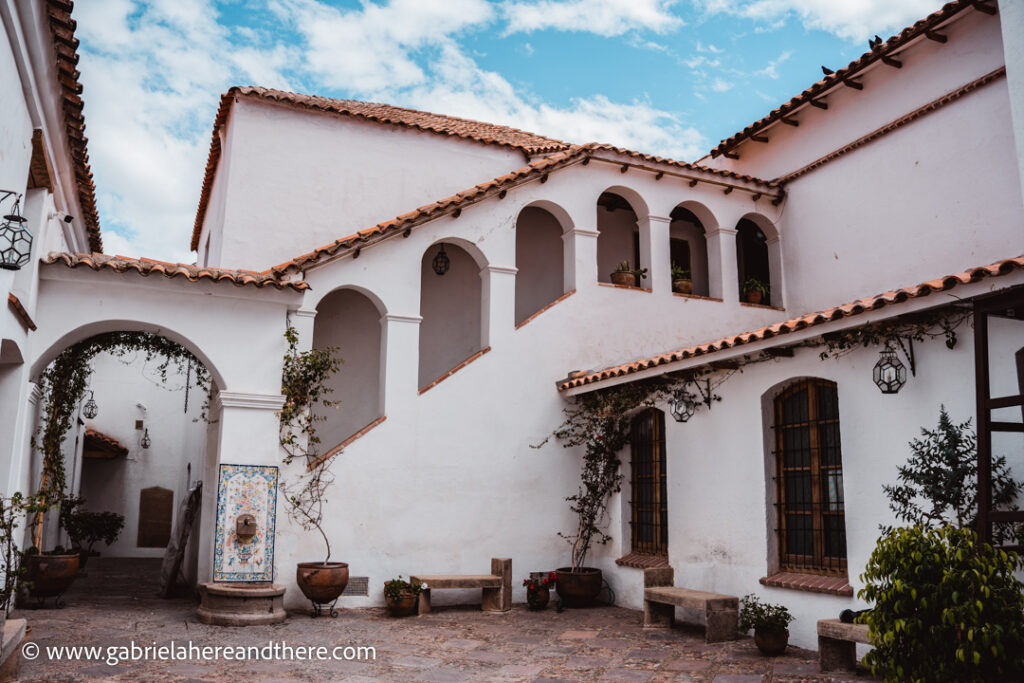
Here’s what sets it apart: Sucre is beautiful, genuinely safe (yes, even as a solo female traveler I felt safe!), walkable, and at a manageable altitude — at least compared to La Paz. The historic center is a UNESCO World Heritage Site, lined with old white colonial buildings with strikingly orange roofs.
And for anyone planning a Uyuni salt flats trip: from Sucre you can travel to Uyuni during the daytime, which means you can skip the overnight buses. I’d heard plenty of stories about people getting robbed on the overnight bus from La Paz to Uyuni, which is a popular tourist route, so this was a huge plus for me. More on how to get from Sucre to Uyuni below.
I also stayed in Sucre as a digital nomad and found it to be a great base — reliable WiFi, safe streets, and very affordable prices.
A Brief History of Sucre
Sucre was founded in 1538 by Spanish conquistadors under the name La Plata. It was very much a Spanish colonial city, and those Andalusian-style white buildings and narrow streets were built during that era.
It quickly grew into one of the most important cities in colonial South America — largely because of the nearby Potosí silver mines. Sucre was where the money was managed, the laws were written, and the church built its finest buildings. Spanish royalty and wealthy families preferred to stay in Sucre because of its milder climate.
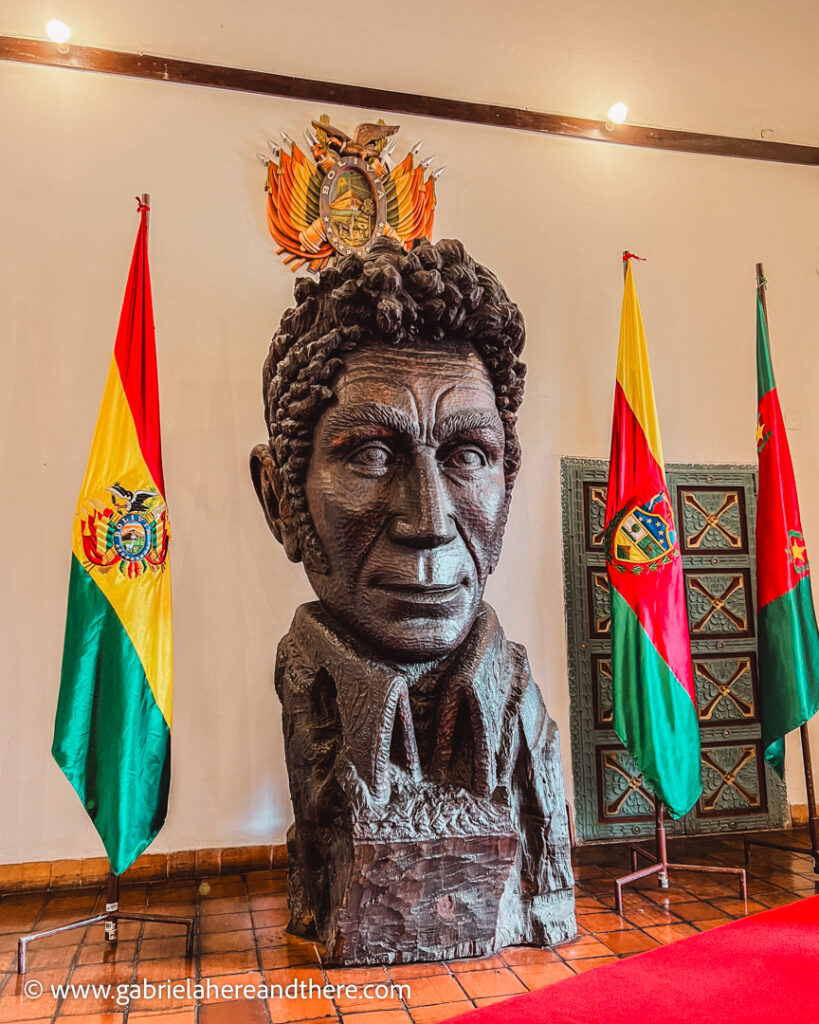
Bolivia declared independence from Spain in 1825, and Sucre became the new nation’s capital. It was renamed in honor of Antonio José de Sucre, the Venezuelan general who led the decisive battle that secured Bolivian independence.
Today, Bolivia has a somewhat unusual setup: Sucre is the constitutional (judicial) capital, home to the Supreme Court, while La Paz functions as the seat of government and executive capital. This split came about after political upheaval in the late 19th century, and it means Sucre retains a formal, civic identity that feels distinct from other Bolivian cities.
The entire historic center was declared a UNESCO World Heritage Site in 1991 — which explains why the white buildings are so well preserved and why the city feels so architecturally cohesive.
You can learn more about Sucre’s history at the Freedom House (Casa de la Libertad) museum — more about that in the things-to-do section below.
When Is the Best Time to Visit Sucre?
Sucre has a mild, semi-arid climate year-round — sometimes called an “eternal spring.” Most people will tell you to visit during the dry season, but I visited during the wet season and had no real issues with the weather. Sometimes there would be an afternoon thunderstorm, but they were over pretty quickly and didn’t affect my sightseeing much.
Dry season (May–October) is generally considered the best time to visit. Days are sunny and warm (18–22°C / 64–72°F), nights are cool to cold (dropping to around 5°C / 41°F in June and July), and there’s almost no rain.
Wet season (November–April) brings afternoon thunderstorms and more cloud cover, but I also had completely clear, sunny days during this period. The landscape turns green and lush, which is beautiful.
For Sucre specifically, the wet season is still very manageable — it rarely rains all day, usually just a couple of hours in the afternoon, and the city stays fully accessible. I’d say Sucre is an all-year-round destination.
How to Get to Sucre, Bolivia
By Plane
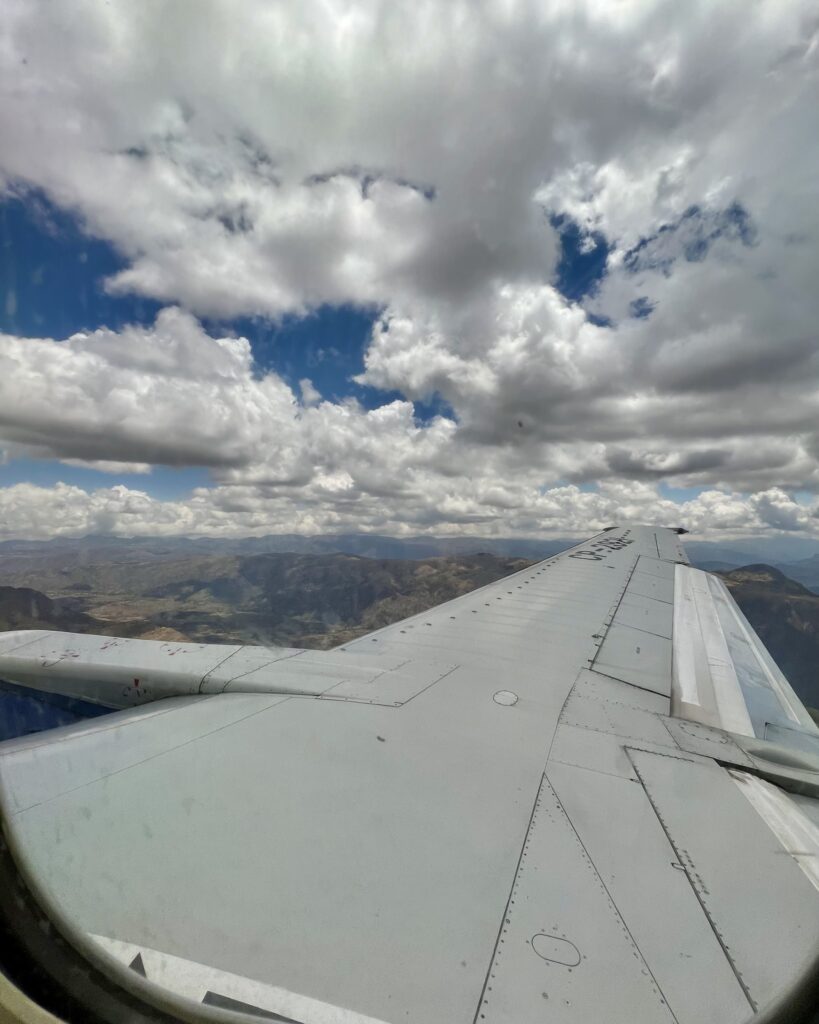
Sucre’s airport is Alcantarí International Airport (SRE), located about 35 km from the city center. Boliviana de Aviación operates domestic routes from La Paz, Santa Cruz, and Cochabamba. Flights are quite cheap and well worth it if you’re short on time.
There are no direct international flights to Sucre — you’ll connect through La Paz or Santa Cruz. I flew from Lima with a layover in Santa Cruz (Viru Viru Airport).
Heads up: Flights departing from Viru Viru Airport get canceled a lot due to weather conditions, so be prepared for delays. Mine was delayed by four hours because it was too windy.
From the Sucre airport, you can take either a private taxi or a more affordable shared taxi to the city. I went with the shared option, and the drive through the high-altitude desert was stunning — I even spotted some llamas on the way.
By Bus from La Paz
Overnight buses run between La Paz and Sucre in roughly 11–14 hours. You can book bus tickets online in advance here.
Bus from La Paz to Sucre: You can book bus tickets online in advance here.
By Bus from Uyuni or Potosí
If you’re coming from Uyuni and want to travel during the daytime, you’ll need to change buses in Potosí. Take a bus from Uyuni to Potosí, then a shared taxi or bus on to Sucre. Potosí is only around 3 hours from Sucre, and the ride is a spectacular, winding journey through the altiplano that’s well worth doing in daylight. This is also the route I did in reverse when leaving Sucre.
Alternatively, you can take a direct overnight bus from Uyuni to Sucre. You can book tickets online here.
Bus from Uyuni to Sucre: Book tickets online here.
How to Get from Sucre to Uyuni (Salt Flats)
Sucre is much closer to Uyuni than La Paz, and you can travel there in a single day. The way I did it was to take a shared taxi to Potosí first, and then a bus from Potosí to Uyuni.
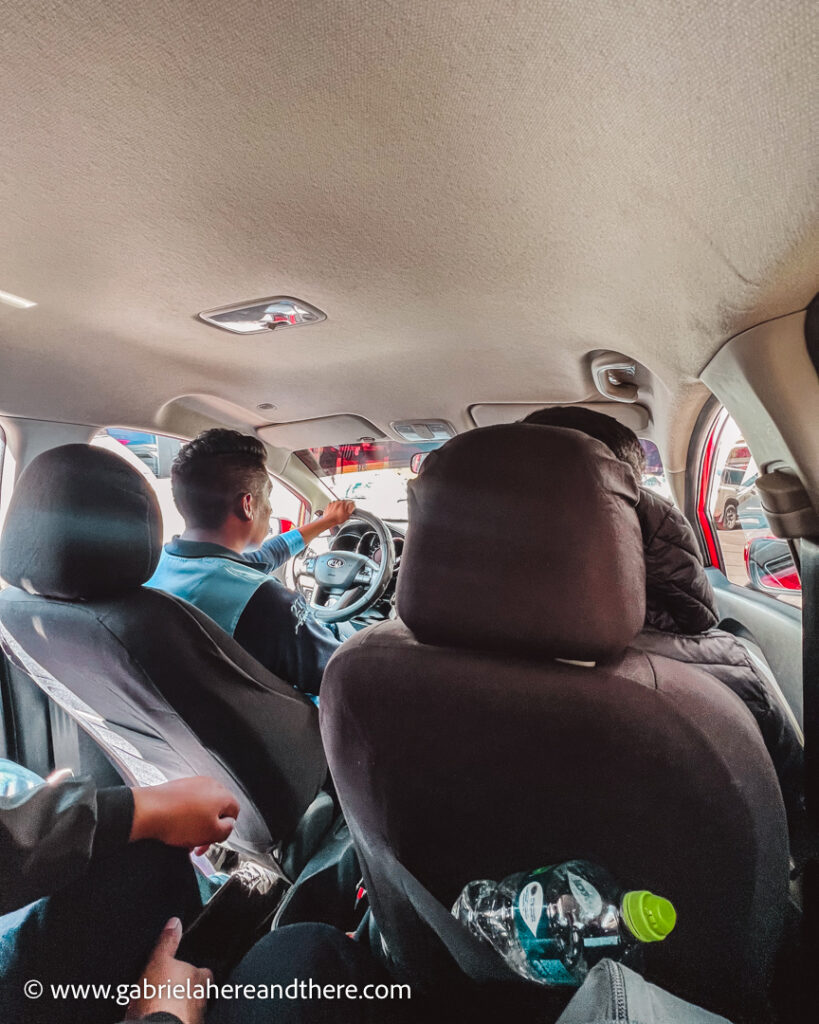
The shared taxi was just a regular car — I shared the ride with locals, which is the cheapest option. Private taxis are available too, but they cost more. The drive to Potosí was beautiful: high-altitude landscape and llamas and vicuñas grazing by the roadside.
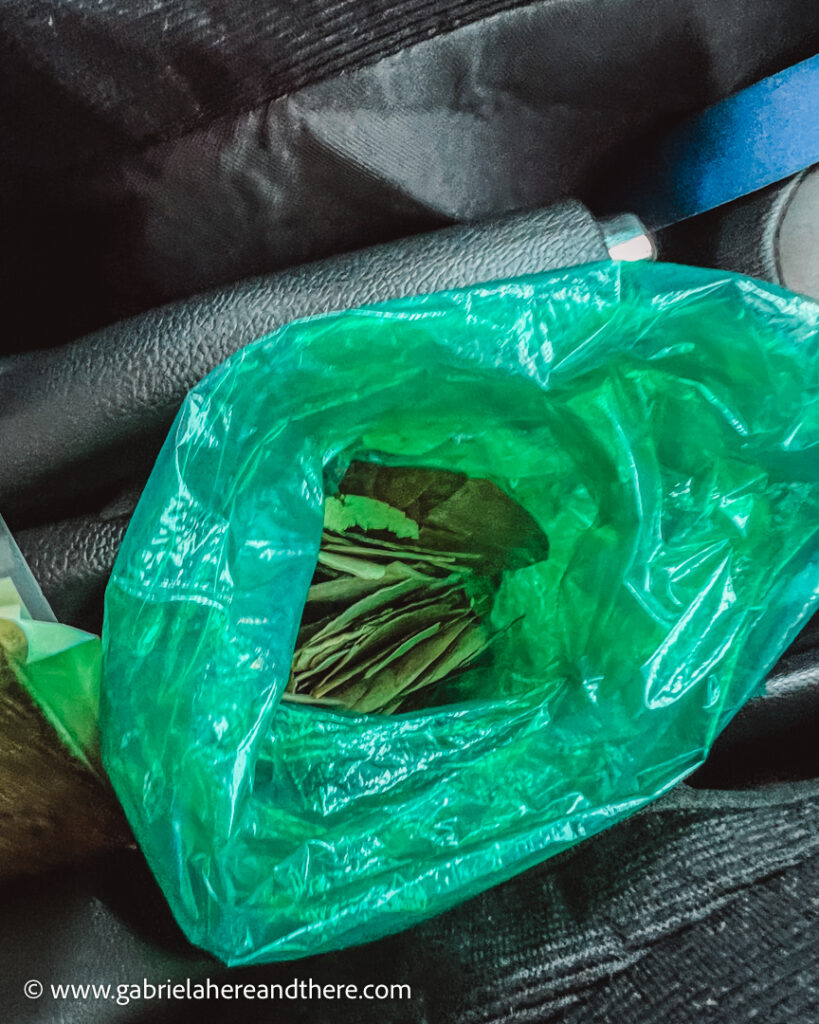
As we got closer to Potosí I started to feel the altitude (Potosí sits at 4,090 m). My driver pulled out some coca leaves and I got to try them for the first time — chewing them really helped with the altitude.
The shared taxi dropped me right at the Potosí bus station, where there are direct buses to Uyuni. I bought a ticket for the next departure and made it to my hotel in Uyuni just before sunset.
If you’re doing the salt flats and you have a choice between routing through Sucre or La Paz, route through Sucre. It’s a better city to spend time in anyway, and the Uyuni connection is far more pleasant.
From Sucre, there is also an option for a direct overnight bus. This is a great option if you would like to save time and start your Uyuni salt flats tour already the following morning. You can book this bus online here.
Bus from Sucre to Uyuni: Book this bus online here.
Book a Uyuni Tour from Sucre
If you’d rather not deal with the logistics yourself, there are also reasonably priced tours that include the overnight bus from Sucre and the full Uyuni experience. Since you’ll need to book a tour to visit the salt flats anyway, this can make things a lot simpler:
Tour from Sucre to Uyuni salt flats: Book a 2-day Uyuni tour from Sucre
How to Get Around Sucre
The historic center is entirely walkable — nearly everything of interest is within a 20-minute walk of Plaza 25 de Mayo. For places a bit further out, like Cal Orcko or Glorieta Castle, you’ll need a taxi.
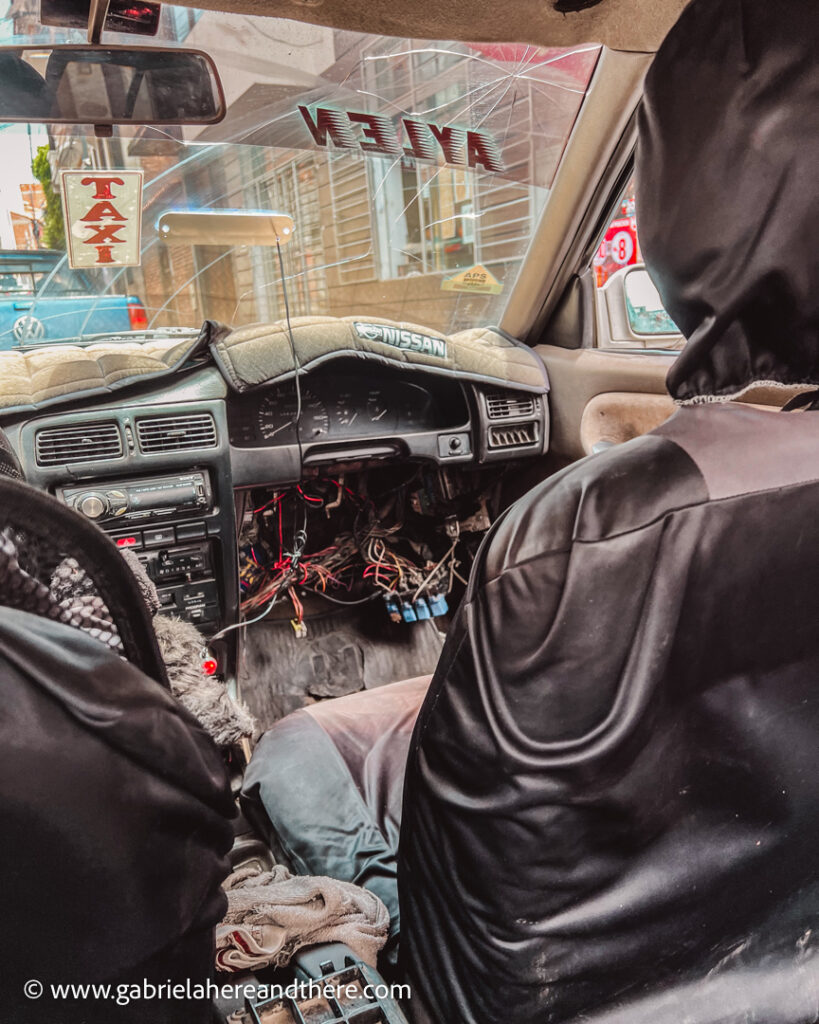
Taxis are cheap and easy to find. There is no Uber in Sucre, so I just went with the old-school way of hailing taxis on the street. I never had any problems getting one, and I felt safe taking them as a solo female traveler. Some of the cars looked a bit beaten up, but other than that it was fine.
Bus number 4 also runs to Glorieta Castle if you prefer public transport.
Things to Do in Sucre
1. Wander the Historic Center
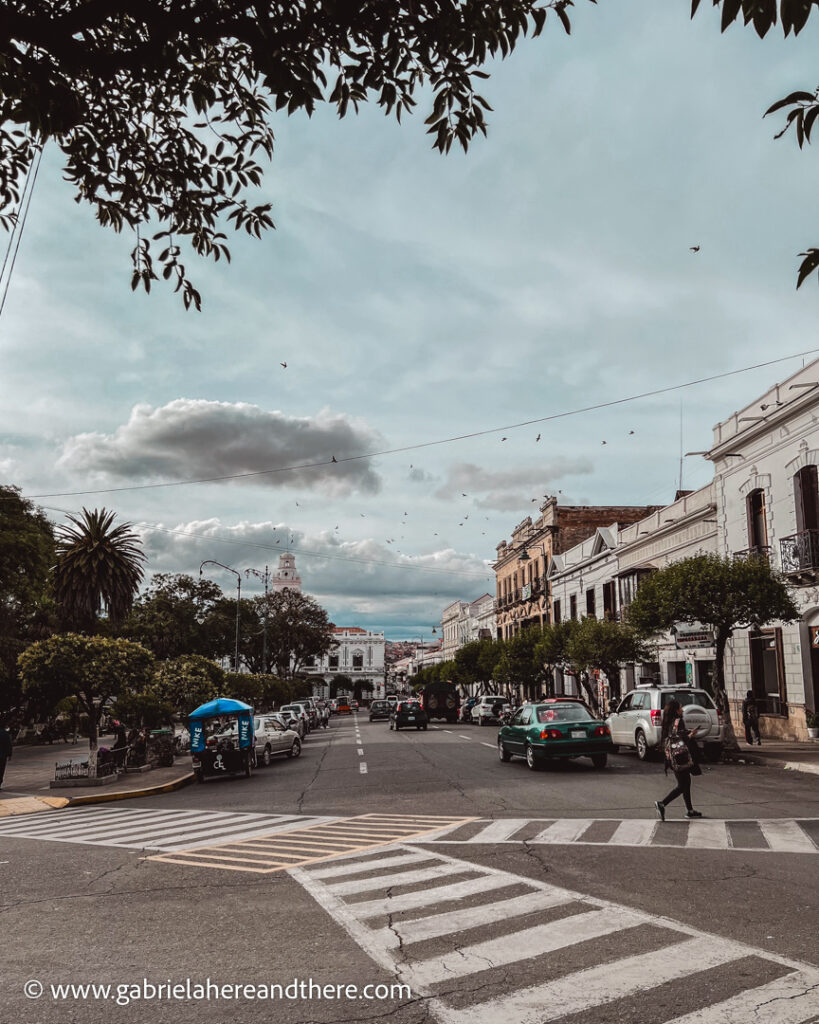
My favorite thing to do in Sucre was honestly just walking around the historic center. This is the main attraction, and it doesn’t cost a thing.
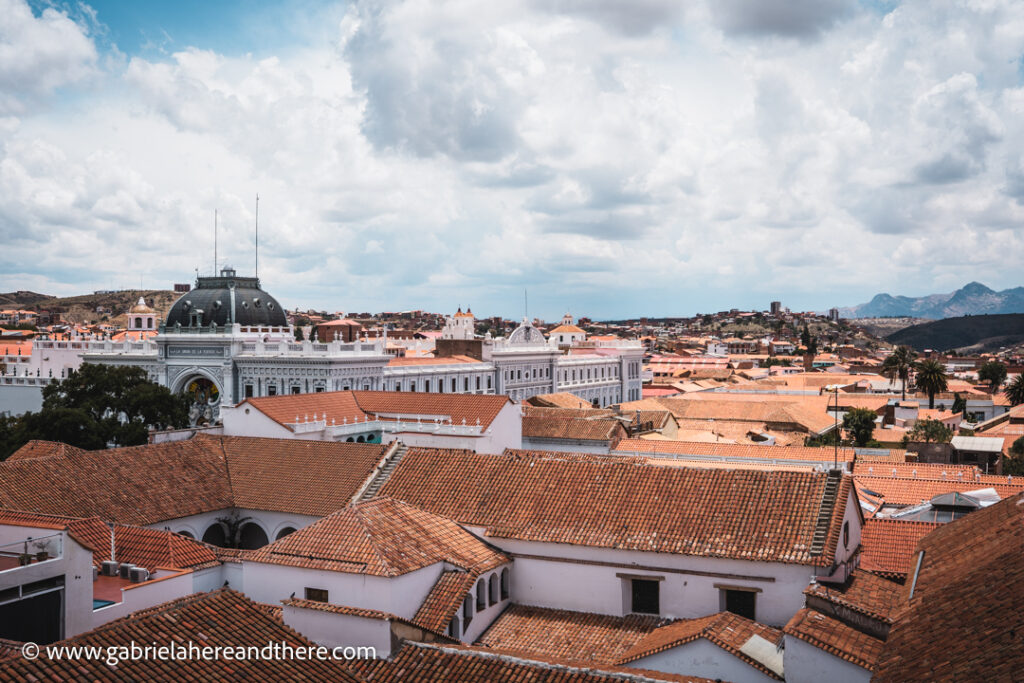
Plaza 25 de Mayo, the tree-lined central square, is a good place to start — most of the main attractions are right on it or very close by. I could spend hours wandering the narrow cobblestone streets lined with white buildings and orange roofs. The city is endlessly photogenic and definitely one of the most picturesque in Bolivia.
Sucre walking tour: If you want a local guide to walk around with you and learn more about the city’s history and hidden gems, you can book a walking tour here.
2. Church of Saint Philip of Neri (Templo de San Felipe Neri)
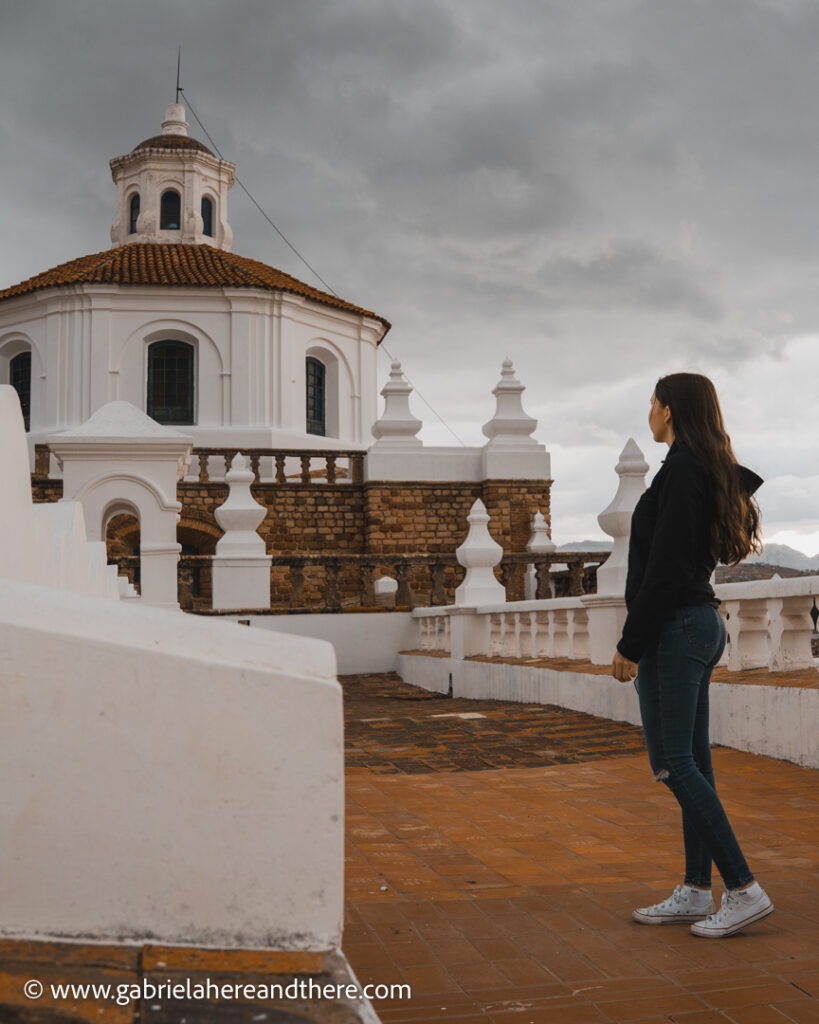
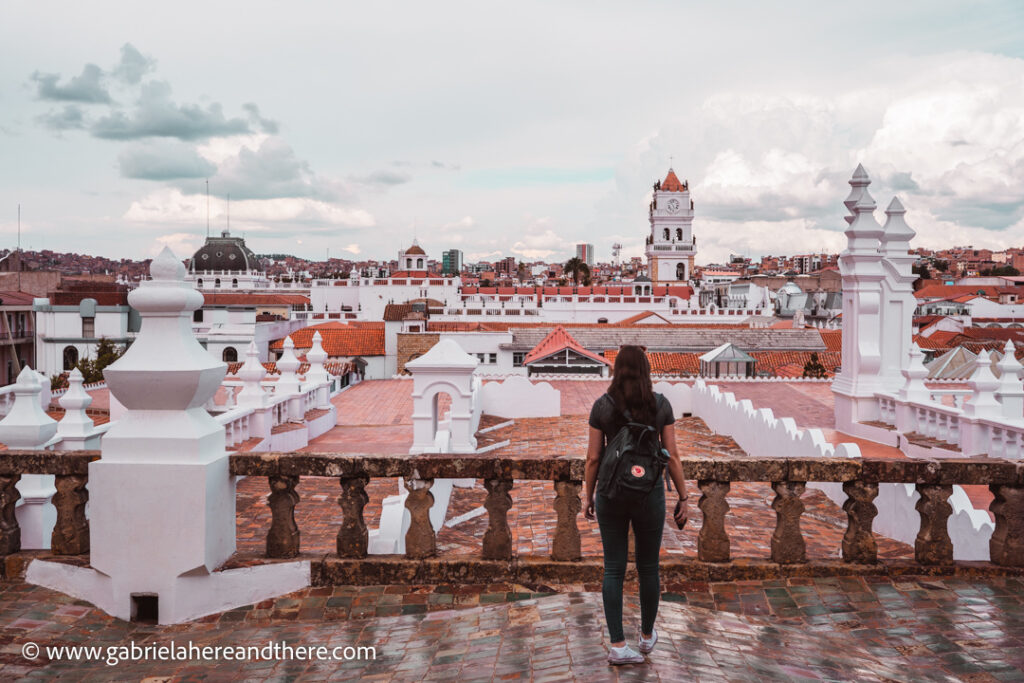
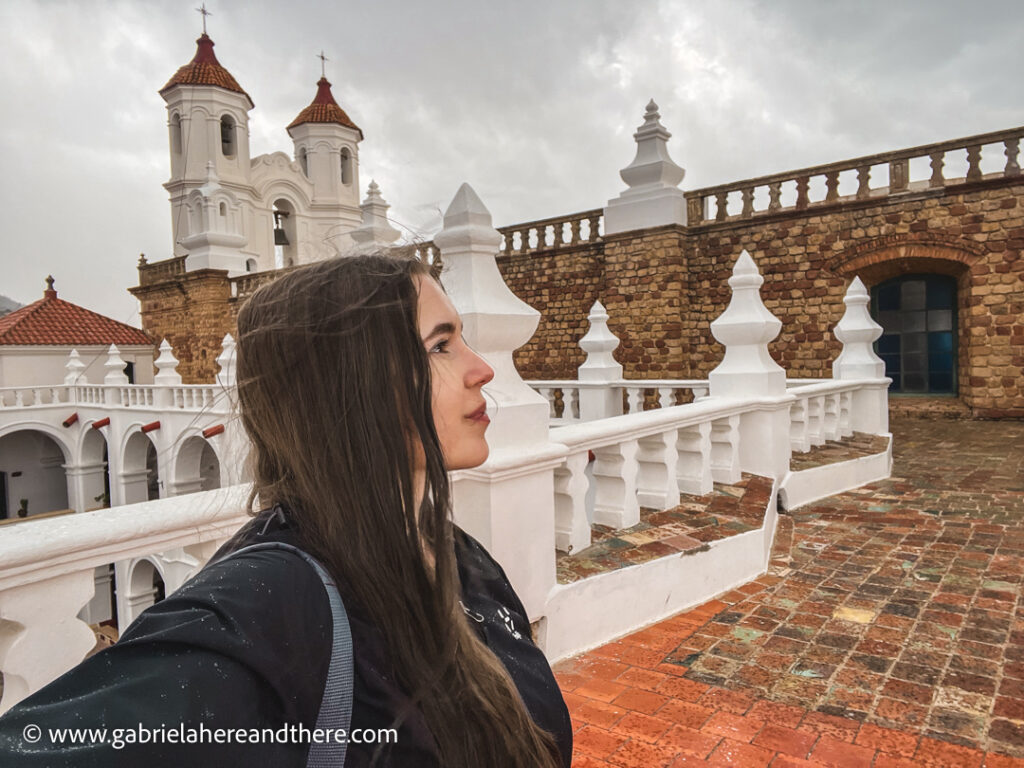
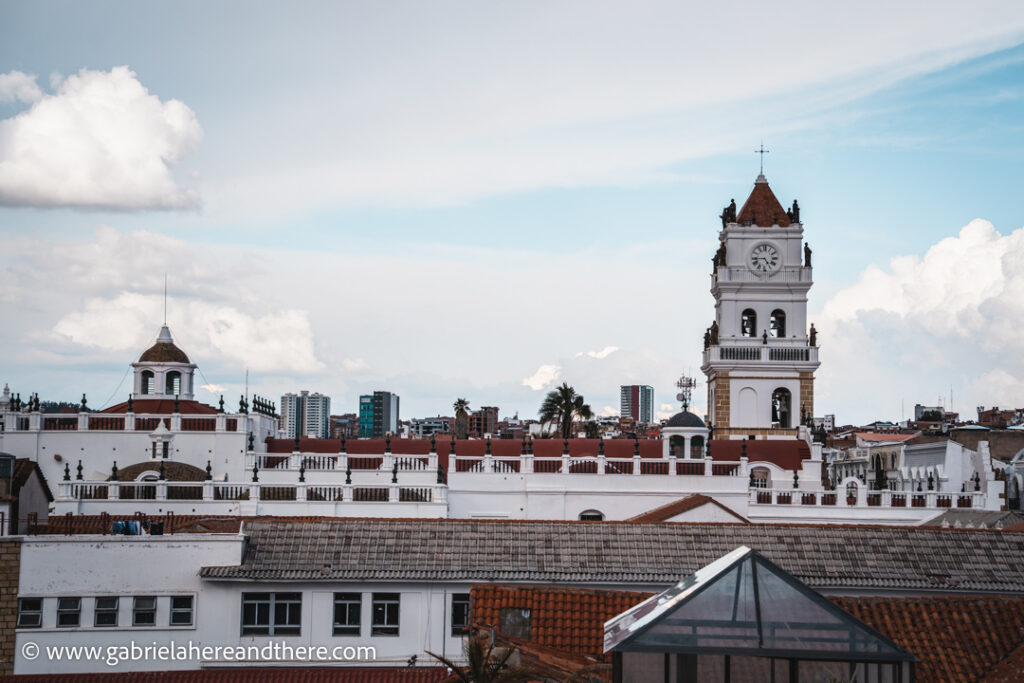
Besides just walking around the city, this is the top attraction in town. The church itself is a fine example of colonial baroque architecture, but the real reason to come here is the rooftop. Climb up and you get one of the best elevated views of the city — a panorama of white domes, terracotta tiles, and the surrounding green hills.
Entry is cheap and the crowds are minimal. I loved this place so much that I came back several times, and I got my best photos of Sucre from up here.
3. Casa de la Libertad (Freedom House)
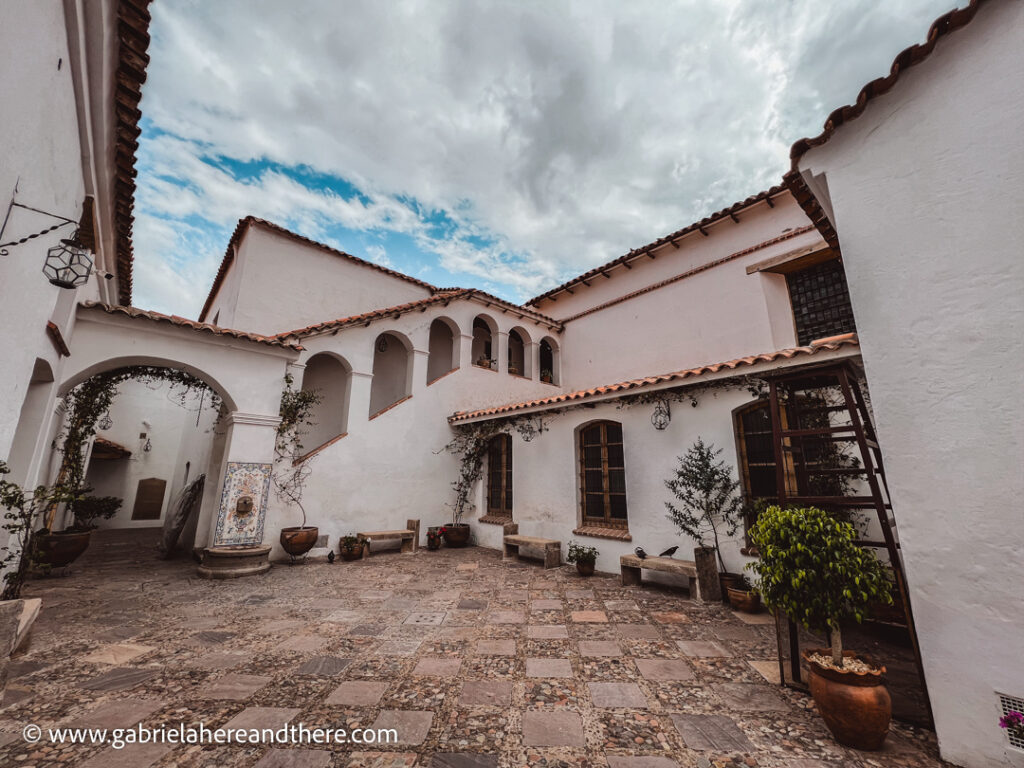
Bolivia’s most historically significant building, and the site where the country’s Declaration of Independence was signed in 1825. The museum inside is well laid out, with exhibits on the independence movement and portraits of South American liberators.
It’s a great place to learn more about Sucre’s history, and the building itself is beautiful. Definitely worth a visit.
4. Monasterio de la Recoleta, Plaza Pedro de Anzúrez, and Viewpoint
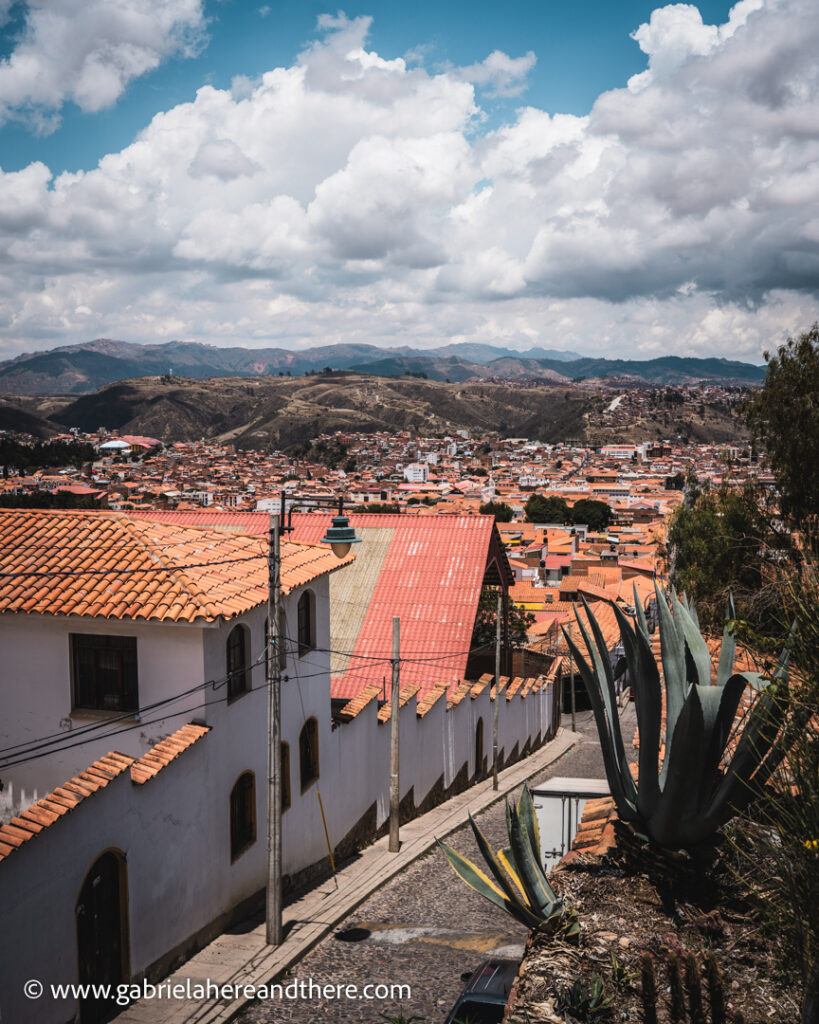
The hillside neighborhood of La Recoleta is where Sucre gets quiet and residential. The Monastery of La Recoleta dates to 1601 and has beautiful cloistered courtyards.
But the main draw for most visitors is the viewpoint right next to the monastery — one of the best spots in the city to see Sucre’s sea of white and terracotta rooftops stretching across the valley. I got some really lovely photos from here.
5. Church of St. Francis of Assisi (Iglesia de San Francisco)
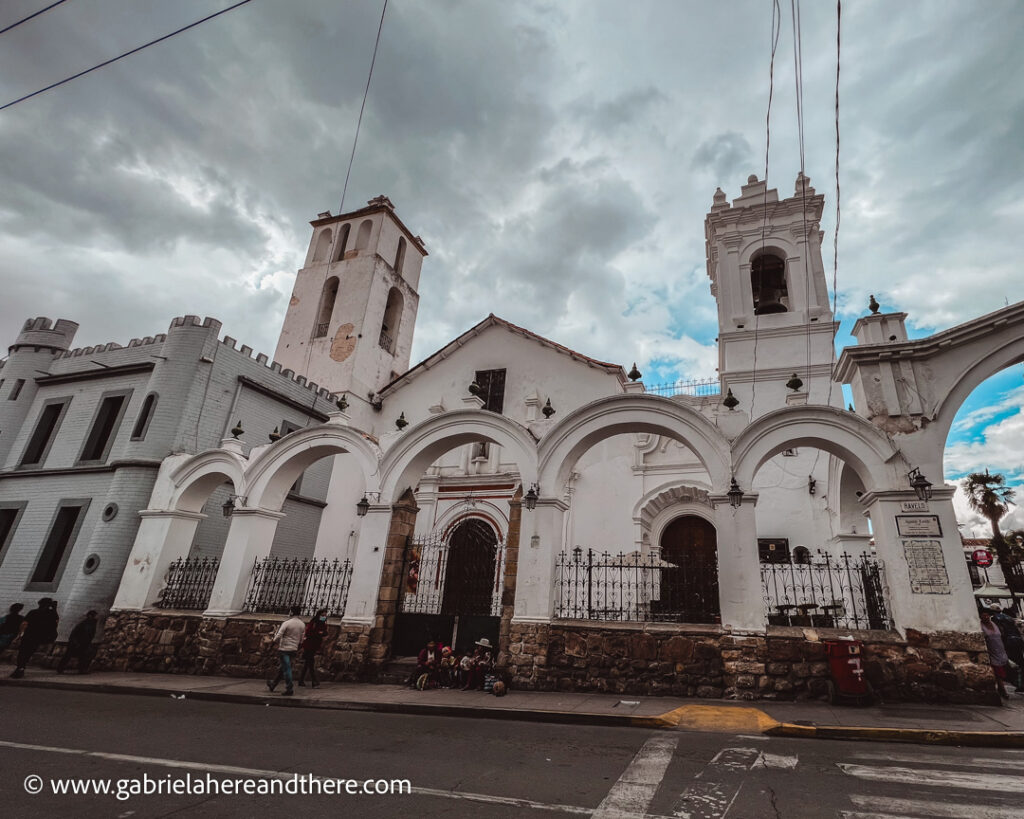
There are many beautiful churches in Sucre, but this one is definitely worth a visit. One of the oldest in the city, dating to the 16th century, it has a calm, cool interior that makes for a nice stop.
6. Iglesia de San Miguel
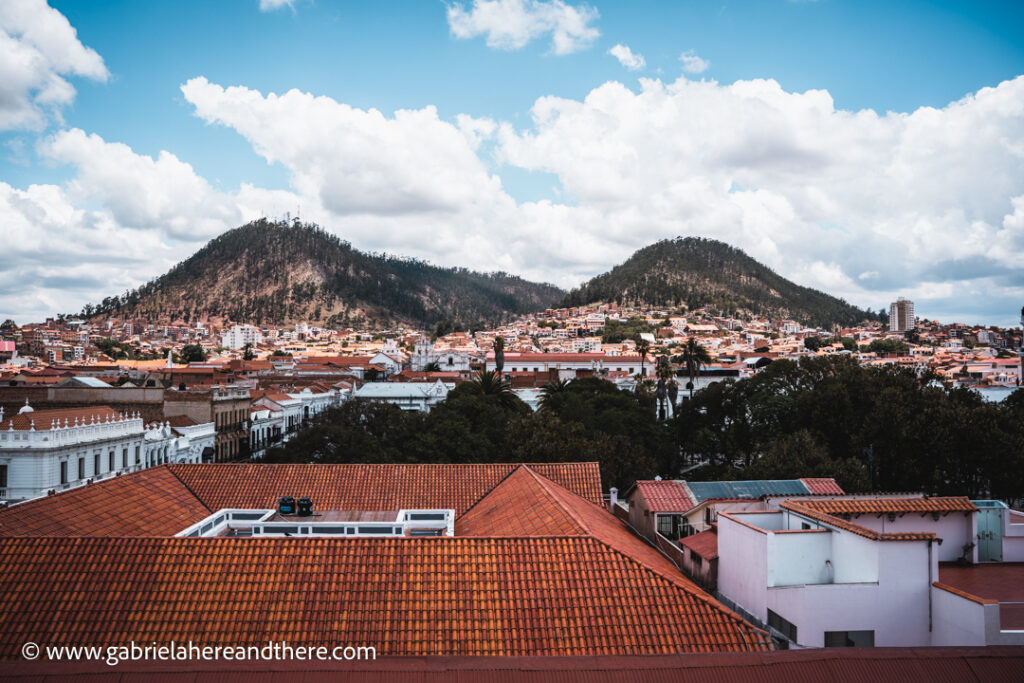
Iglesia de San Miguel is a beautiful colonial church right in the historic center — but the real reason to visit is the cafe at the top, where you can sit with a coffee and enjoy some of the best views over the city.
7. Mercado Negro (Black Market)
Don’t let the name put you off — it’s not actually a black market! This is a lively, totally legal local market near the center, selling everything you can think of. It’s where locals actually shop, which makes it a far more authentic experience than the touristy craft markets.
I came here because I needed to buy some warm clothes for Uyuni.
8. Glorieta Castle (Castillo de la Glorieta)
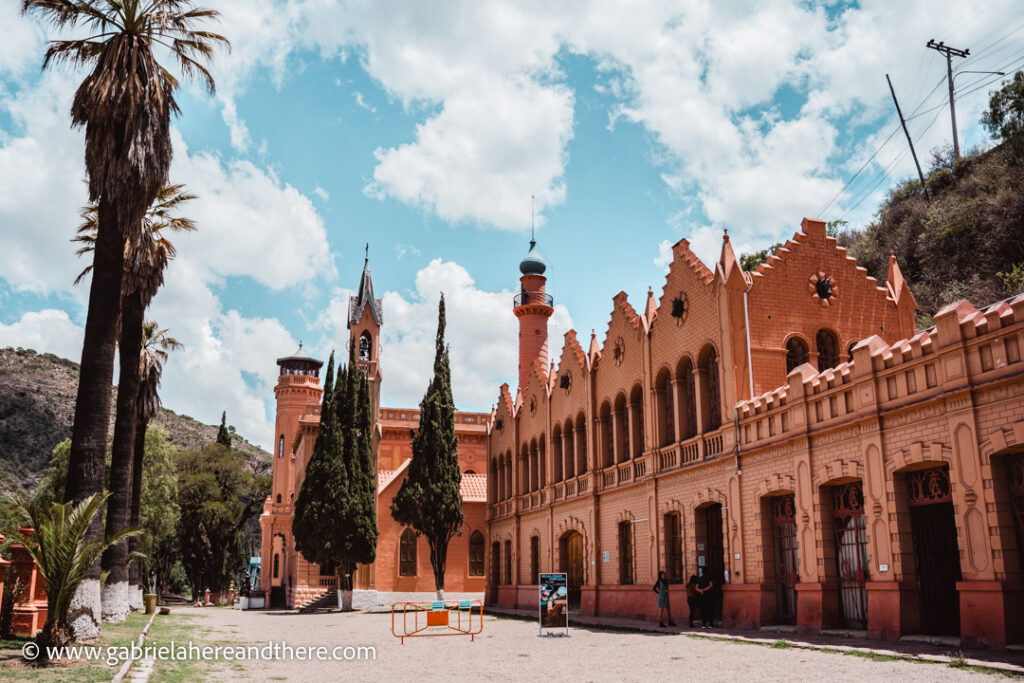
A beautiful and genuinely fascinating castle about 3 km from the center — a 19th-century mansion built by a wealthy local couple. The wife apparently fell in love with many different architectural styles during their travels, which explains why the building is an extraordinary mashup: an Arabic-style tower, a Russian minaret with a cupola, French architectural details, and even one tower modeled on London’s Big Ben. It sounds like a weird combination — and architecturally it is — but that’s exactly what makes it worth seeing.
Foreigners pay a slightly higher entrance fee, but it’s still very reasonable. For some reason I got charged the local price — maybe speaking Spanish was enough to convince the ticket seller I was Bolivian.
You can take bus number 4 from the city center. I took the bus going there and hailed a taxi from the main road on the way back.
9. Dinosaur Footprints at Cal Orck’o
This is one of Sucre’s stranger attractions — a dinosaur park. At Cal Orck’o you can find the world’s largest collection of dinosaur footprints: more than 5,000 of them, dating back 68 million years. At 1.5 km long, it’s one of the largest and most diverse dinosaur tracksites in the world.
Next to the footprints there’s also a park with life-size dinosaur models and a viewpoint overlooking the cliff. The site is about 5 km from the center, accessible by taxi or as part of a guided tour.
10. Crater of Maragua (Day Trip)
If you have more time in Sucre, you can do a full-day trip to the Crater of Maragua, where you can walk along a 12th-century Inca trail. This tour includes a stop at the dinosaur footprints as well.
Book the Crater of Maragua day trip: This is one of the most popular day trips from Sucre, combining a trek through the crater with a walk along ancient Inca trails. You can book the full-day Crater of Maragua and Inca Trails tour here.
11. Take a Spanish Class
Sucre has a reputation as one of Bolivia’s best cities for learning Spanish — the local accent is considered one of the clearest and most neutral in South America, which makes it genuinely good for beginners. I saw lots of language schools around the center, and it’s an affordable place to stay long-term. Even a week of intensive classes can get you to survival-level Spanish, which will make the rest of your Bolivia trip significantly easier.
Where to Stay in Sucre: Best Hotels for All Budgets
Sucre has a solid range of accommodation from budget hostels to boutique hotels, all clustered in or near the historic center.
Budget · B&B
CasArte Takubamba B&B
A beautifully converted colonial home four blocks from the main square, with an art gallery, a sunny courtyard, and a rooftop terrace. Breakfast is included and WiFi is reliable. One of the most-loved budget stays in Sucre. Dorms and private rooms available.
Budget · B&B
Casa Verde Hostal
A charming B&B in a lovely old building just a short walk from Plaza 25 de Mayo. Private rooms only, with a tranquil courtyard and a year-round outdoor swimming pool — unusual at this price point. Breakfast is included.
Mid-range · Hotel
Hotel Villa Antigua
A well-maintained hotel in a colonial mansion in the heart of the historic center. Clean and comfortable with a solid range of amenities.
Mid-range · B&B
El Jardin de Su Merced B&B
A beautiful garden-style hotel with great views, lovely courtyards and terraces, and breakfast included. Really good reviews on Booking.com.
Luxury · Boutique Hotel
Mi Pueblo Samary Hotel Boutique
A stunning colonial mansion three blocks from Plaza 25 de Mayo, decorated with local artwork and colorful tapestries. Rooms have private balconies overlooking the interior patios, and the rooftop terrace has some of the best views in Sucre.
Luxury · Best luxury option
Parador Santa Maria La Real
The most upscale option on this list. A stunning historic colonial building right in the center, with a sauna and a hot tub, massage services, a restaurant. If you’re splurging anywhere in Bolivia, this is a solid choice.
All of the above are centrally located — Sucre is small enough that location barely matters as long as you’re in the historic core.
Where to Eat in Sucre (Including Vegan and Vegetarian Options)
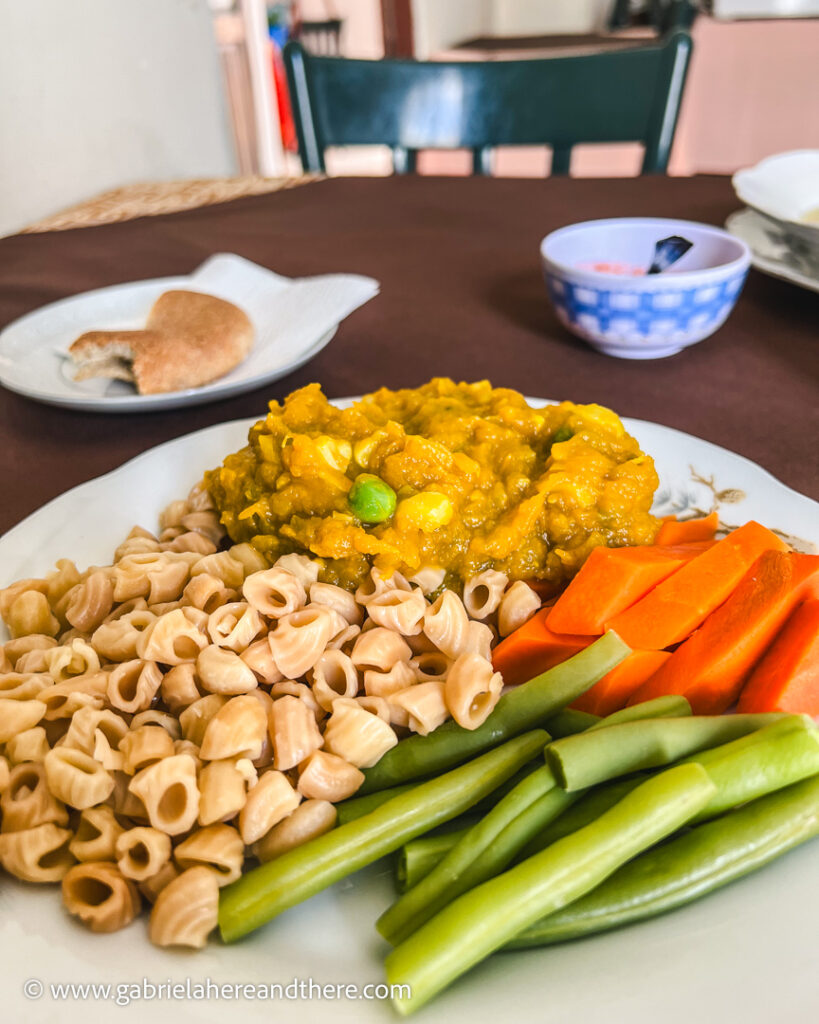
Sucre has a better food scene than most Bolivian cities, and it’s one of the more vegan-friendly places in the country. My personal take is that it’s still a low bar by global standards — I didn’t find the food particularly memorable, especially after coming from Peru — but you won’t be living on plain rice and bread.
For vegans and vegetarians looking for a cheap local lunch, I recommend checking out Doña Franca — they have a set lunch menu for just a couple of dollars. Right next door, El Germen is another great plant-based option.
There’s now also a fully vegan restaurant called Ayni Cacaoteria Cultural Vegana, which has five-star reviews on Google Maps — definitely try this if you’re vegan. It wasn’t open when I visited, but the reviews look excellent.
I also recommend checking out Prem Vida Store for vegan products and specialty items.
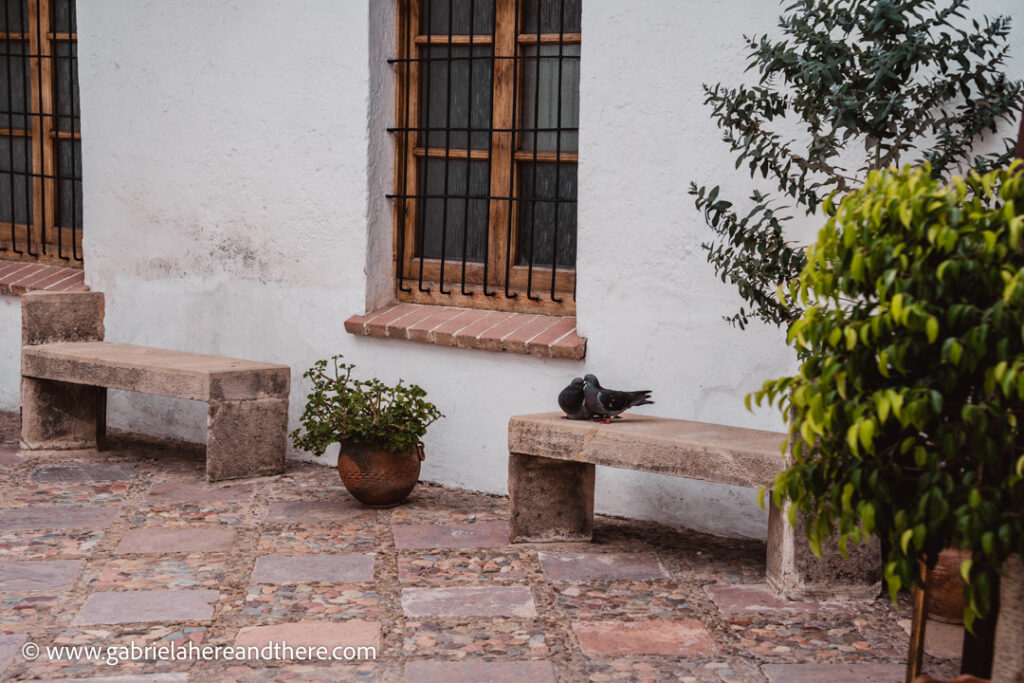
And not really a vegan or vegetarian restaurant, but I’d recommend visiting Salteñeria El Patio — it’s just a really beautiful place. The atmosphere is wonderful and the setting is stunning: a historic building with a gorgeous courtyard.
I was in Sucre long enough to try lots of different restaurants, and as a vegan I managed to find plenty of options — but I still wouldn’t say any of them were particularly memorable culinary experiences.
Is Sucre Good for Digital Nomads?
Sucre is a genuinely underrated remote work base — safe, walkable, and very affordable.
Cost of living is very low, even by South American standards. A nice private room runs $15–30/night, and a set lunch at a local restaurant is $2–3.
WiFi: I never had any problems with WiFi here, and my local SIM card worked well too. You can either buy a local SIM on arrival or get an e-SIM before you fly, so you have internet the moment you land.
Co-working: I didn’t use any proper co-working spaces, but several cafes worked fine as informal spots. I usually just worked from my apartment, which was perfectly fine.
The altitude is also much more manageable than in La Paz, which matters more than you’d think when you actually need to sit at a desk and be productive.
How Many Days Do You Need in Sucre?
2 days: The historic center, Casa de la Libertad, the San Felipe Neri rooftop, and maybe one other sight a bit further away. You’ll see the highlights but it’ll feel rushed.
3–4 days: The sweet spot for most travelers. Add the dinosaur footprints, Glorieta Castle, and some time to just walk around without rushing.
1 week+: Ideal if you’re combining sightseeing with Spanish classes, working remotely, or using Sucre as a base for day trips. I did this and had a great time!
Is Sucre Safe to Visit?
Sucre is one of the safest cities in Bolivia — and as a solo female traveler, I never once felt unsafe here. The historic center is walkable and I felt comfortable even in the evenings.
Standard city precautions apply: keep your phone in your pocket in busy markets, don’t flash expensive camera gear, and avoid poorly lit side streets late at night. But compared to most Latin American cities of a similar size, Sucre is genuinely relaxed.
The most common issue travelers face isn’t crime — it’s altitude. If you’re arriving from a lower elevation, plan a gentle first day.
Sucre Bolivia FAQ
Is Sucre safe for solo female travelers? Yes — it’s one of Bolivia’s safer cities for solo female travel. The historic center is walkable and I never felt unsafe. Standard city precautions apply.
Is Sucre worth visiting? Absolutely. It’s one of South America’s most beautiful old colonial cities, and far less crowded than better-known destinations like Cusco or Cartagena.
How many days do I need in Sucre? Three to four days is the sweet spot for most travelers — enough to see the main sights and maybe do a day trip. If you want to take Spanish classes, work remotely, or just take it slow, stay longer. I did and loved it!
Is Sucre good for vegetarians and vegans? Better than most Bolivian cities. El Germen, Doña Franca, and the newer Ayni Cacaoteria Cultural Vegana are all worth trying. Honest caveat: the food is decent but not particularly memorable if you’ve just come from Peru.
Can I get to Uyuni directly from Sucre? Yes — there is an overnight bus directly from Sucre to Uyuni. Alternatively, you can take a shared taxi from Sucre to Potosí and then a bus from Potosí to Uyuni.
What altitude is Sucre? 2,810 m (9,220 ft) — lower than La Paz (3,640 m) and Potosí (4,090 m), which makes it a far more comfortable place to acclimatize.
Do I need to worry about altitude sickness in Sucre? It varies from person to person. I definitely noticed the altitude when I landed at the airport (which sits at around 3,104 m, slightly higher than the city itself), but I adjusted quickly. Take it easy on arrival day and you should be fine.
Is Sucre good for digital nomads? Yes — it’s affordable, safe, walkable, and genuinely pleasant to spend time in. WiFi worked reliably for me throughout, and a local SIM or e-SIM covers any gaps.
Have you been to Sucre? I’d love to hear what you thought — drop a comment below.
🌍 Visiting Every Country — Support My Work
I’m visiting every country in the world, and my travels are entirely self-funded. I focus on unusual, off-the-beaten-path destinations that don’t always get much coverage — which is exactly why I create detailed guides like this.
If you found this post helpful, buying me a coffee is a simple way to support my work and helps me keep creating in-depth travel guides to less-visited places. Thank you for your support ❤️
Visiting Bolivia soon? Pin this guide for later.