
I traveled overland across Uzbekistan by crossing the border from Osh, Kyrgyzstan, and then continued by train through Tashkent, Samarkand, Bukhara, and Khiva, before returning to Tashkent on an overnight sleeper train.
Along the way, I discovered some of the most beautiful places in Uzbekistan — from turquoise-tiled madrasas and iconic Silk Road architecture to perfectly preserved old towns that feel like stepping back in time.
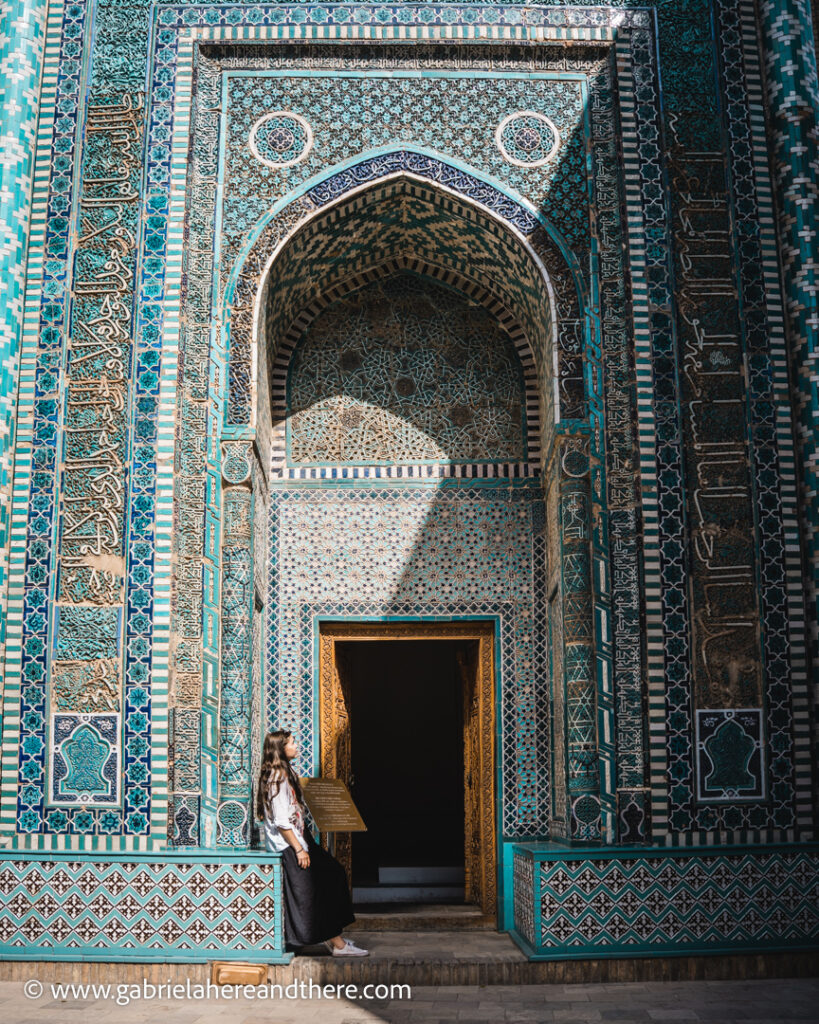
In this Uzbekistan travel guide, I’m sharing my exact route, the best places to visit in Uzbekistan, and practical tips on how to get around — so you can easily plan your own Uzbekistan itinerary, whether you have one week, 10 days, or more.
If you’re planning to explore more of Central Asia, you might also like my Tajikistan travel guide.
Table of Contents
How to Get to Uzbekistan From Neighboring Countries
Most travelers fly into the capital, Tashkent, but if you’re backpacking around Central Asia, you’ll likely enter Uzbekistan overland from Kyrgyzstan or Tajikistan, which are two of the most common routes.
From Kyrgyzstan
The main border crossing is near Osh. You can take a taxi from Osh to the border, cross on foot, and then continue your journey on the Uzbek side.
From there, you have two main options:
- Take a shared taxi all the way to Tashkent
- Take a taxi to the nearby city of Andijan, where you can catch a train to Tashkent
I actually tried both methods during my Central Asia trip, because I crossed back into Kyrgyzstan later on.
From Tajikistan
The main border crossing from Tajikistan is at Panjakent. From there, it’s a short and easy drive to Samarkand, which is the closest major city on the Uzbek side and a perfect place to start your Uzbekistan route.
How to Get Around Uzbekistan
The easiest and most convenient way to travel around Uzbekistan is by train. The railway network connects all major tourist cities — including Tashkent, Samarkand, Bukhara, and Khiva — and the trains are generally comfortable, affordable, and reliable.
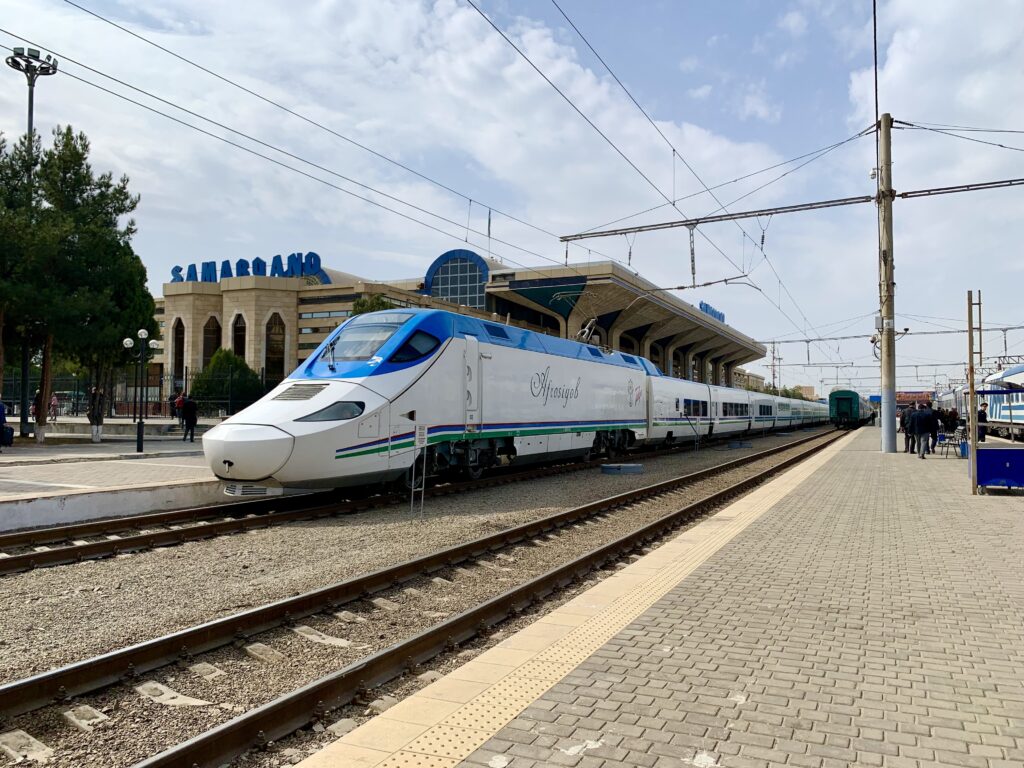
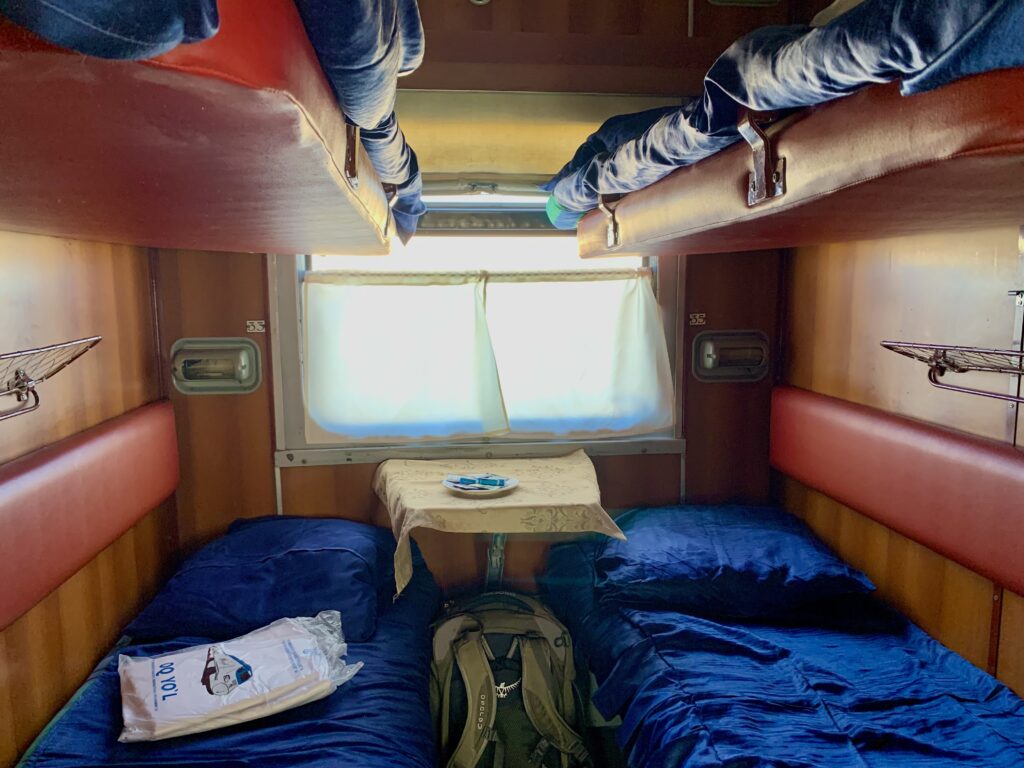
Most train journeys between the main cities are relatively short. The only longer trip is between Khiva and Tashkent, which is usually done on an overnight train. A lot of travelers choose to fly this route instead, but I personally love train journeys like this — and taking the old Soviet-style sleeper train ended up being a fun experience on its own.
You can book train tickets online on the official website, or at the station — but it’s best to book ahead for popular routes.
If you’re short on time, you can also visit Samarkand and even Bukhara as a day trip from Tashkent. This is a great option if you don’t want to deal with train schedules, or if you only have a couple of days in Uzbekistan but still want to see some of the most iconic Silk Road architecture in the country. A guided day tour is also an easy way to fit a lot into one day, especially if you prefer having transport and a local guide arranged in advance.
✅ Book a Samarkand day trip from Tashkent here
✅ Book a Bukhara day trip from Tashkent here
The Most Beautiful Places to Visit in Uzbekistan
Tashkent
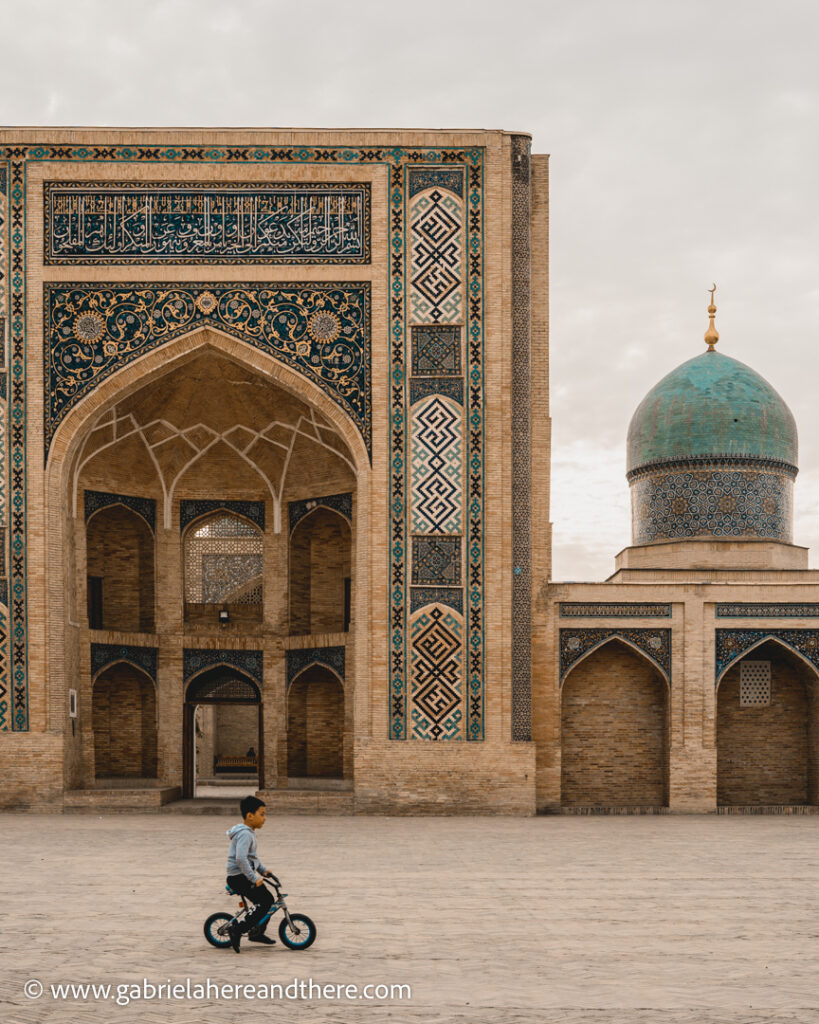
While Tashkent may not be as visually striking as Samarkand or Bukhara at first glance, it’s still well worth visiting. The capital offers a fascinating mix of Soviet architecture, Islamic landmarks, and modern Uzbekistan, making it a great introduction to the country.
I was working remotely throughout Central Asia, and I actually found Tashkent to be a really nice base for getting work done and keeping normal routines — like going to CrossFit classes and settling into a daily rhythm before moving on to the more touristy cities.
Hazrati Imam Complex
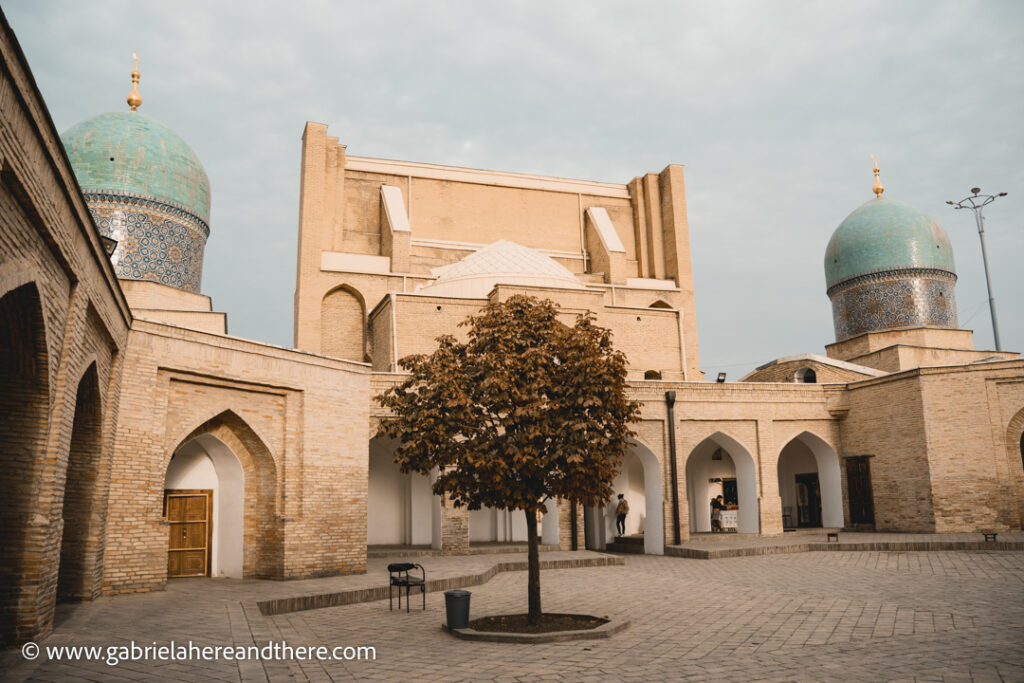
The Hazrati Imam Complex is one of Tashkent’s most important religious sites. It includes several mosques, madrasas, and courtyards, and it’s best known for housing the Uthman Quran, believed to be one of the oldest Qurans in the world.
The main highlights here are the Hazrat Imam Mosque and the Telyashayakh Mosque, where the Quran is kept. Photography of the manuscript itself isn’t allowed, so I don’t have photos of it — but it was genuinely fascinating to see in person.
Minor Mosque
The Minor Mosque is a relatively modern mosque, completed in 2014, and it really stands out with its bright white marble exterior. Located near a canal, it’s especially beautiful in the evening when it’s illuminated and reflected in the water.
Museum of Applied Arts
Housed in a former diplomat’s mansion, the Museum of Applied Arts showcases traditional Uzbek craftsmanship, including ceramics, embroidery, wood carving, metalwork, and carpets. The building itself is just as impressive as the collection, with beautifully decorated ceilings, intricate details, and quiet courtyards.
Tashkent Tower
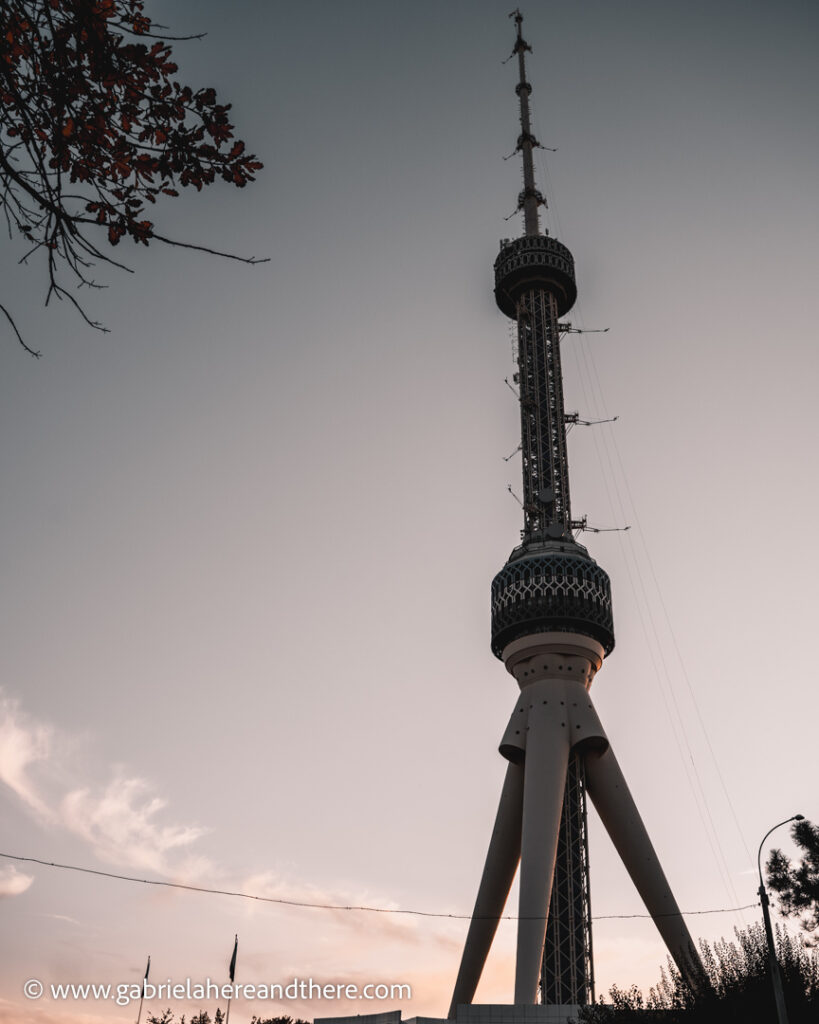
For panoramic views over the city, head to Tashkent Tower, the tallest structure in Central Asia.
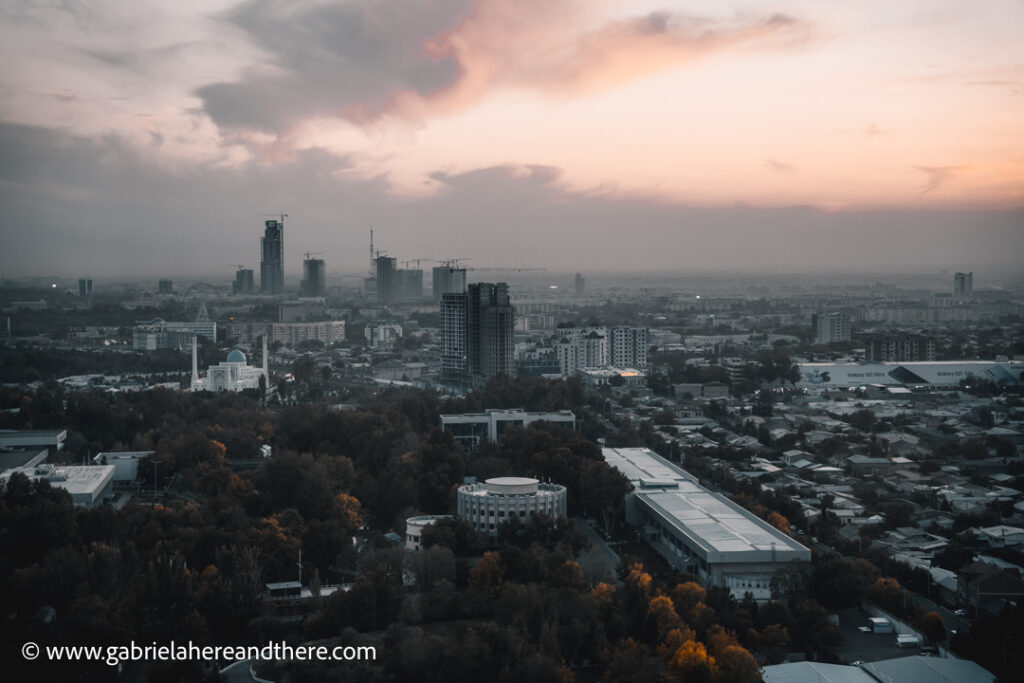
I visited just before sunset to catch the golden-hour views, and it was absolutely stunning.
Ko‘kaldosh Madrasah
One of the largest madrasas in Tashkent, Ko‘kaldosh dates back to the 16th century. It has survived earthquakes and various reconstructions over the years, and it remains an important historical landmark near the Chorsu Bazaar area.
Tashkent Metro
The Tashkent Metro is an attraction in its own right. Each station has its own unique design, featuring chandeliers, mosaics, marble columns, and Soviet-era artwork. I didn’t take any photos at the time because I’d read online that photography wasn’t allowed — but later I found out the rules have changed, and you can now take photos inside the metro.
Where to Stay in Tashkent
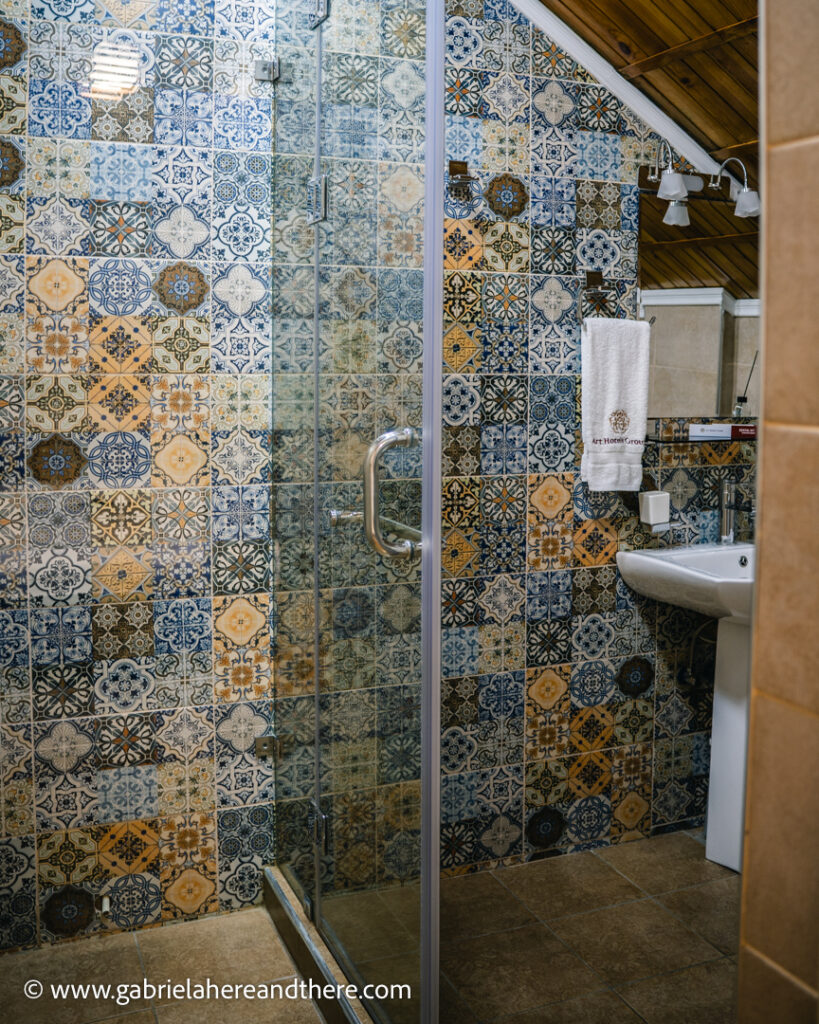
I stayed at ECO ART Hotel, which was conveniently located above a vegan restaurant — a huge plus for me, since vegan food options in Uzbekistan can be quite limited. I was also working remotely during my stay, and the hotel was a really comfortable base. The rooms were well set up for working, with a desk and chair, and everything felt clean and quiet.
These are the hotels I personally recommend in Tashkent (including the one I stayed at) — based on location, comfort, reviews and overall value:
🏨 Where to Stay in Tashkent
Budget:
ECO ART Hotel – a clean and quiet budget-friendly stay that’s great for working remotely, with a desk in the room and a vegan restaurant downstairs (a huge plus in Uzbekistan).
Mid-range:
Sofiya Tashkent Hotel – a great-value mid-range option with a cosy feel and a calm atmosphere, ideal if you want a comfortable base in the city.
Luxury:
InterContinental Tashkent by IHG – a modern 5-star hotel with high-end facilities and an excellent central location, perfect if you want a more luxurious stay in Tashkent.
Tashkent Tour Options
If you don’t have much time in the city, or you want to learn more about the history and architecture, joining a guided tour is a great way to explore Tashkent.
If you want an easy way to see the highlights in one day, these are my top tour picks in Tashkent:
⭐ Best Tours in Tashkent
Classic City Tour (Day or Night)
The best all-round option for first-time visitors, with hotel pickup included. Covers Amir Timur Square, Independence Square, Khast Imam, Chorsu Bazaar, and a ride on the Tashkent Metro.
👉 Book the Classic City Tour here
Historical City Highlights Walking Tour
A great choice if you prefer exploring on foot. This 4-hour guided walk covers the main sights and some of Tashkent’s most beautiful metro stations.
👉 Book the walking tour here
City Tour + Pro Photography (Lunch & Dinner Included)
Perfect if you want sightseeing + great photos in one day. Includes a full city tour with professional photos, plus lunch and dinner.
👉 Book the photo tour here
Samarkand
From Tashkent, you can continue by train to Samarkand, one of Uzbekistan’s most famous Silk Road cities. The journey takes around 2 hours on the Afrosiyob high-speed train — or if you’re short on time, you can also visit Samarkand on a full-day tour from Tashkent.
Personally, I found Samarkand to be the least charming city after Tashkent — even though my Instagram photos from here turned out to be some of the most beautiful I took in Uzbekistan. The main sights are quite spread out, and the city didn’t have the same atmosphere as Bukhara and Khiva.
That said, I still truly enjoyed my time here, and wandering around Samarkand with my camera was so much fun.
Here are the most beautiful places to visit in Samarkand:
Shah-i-Zinda
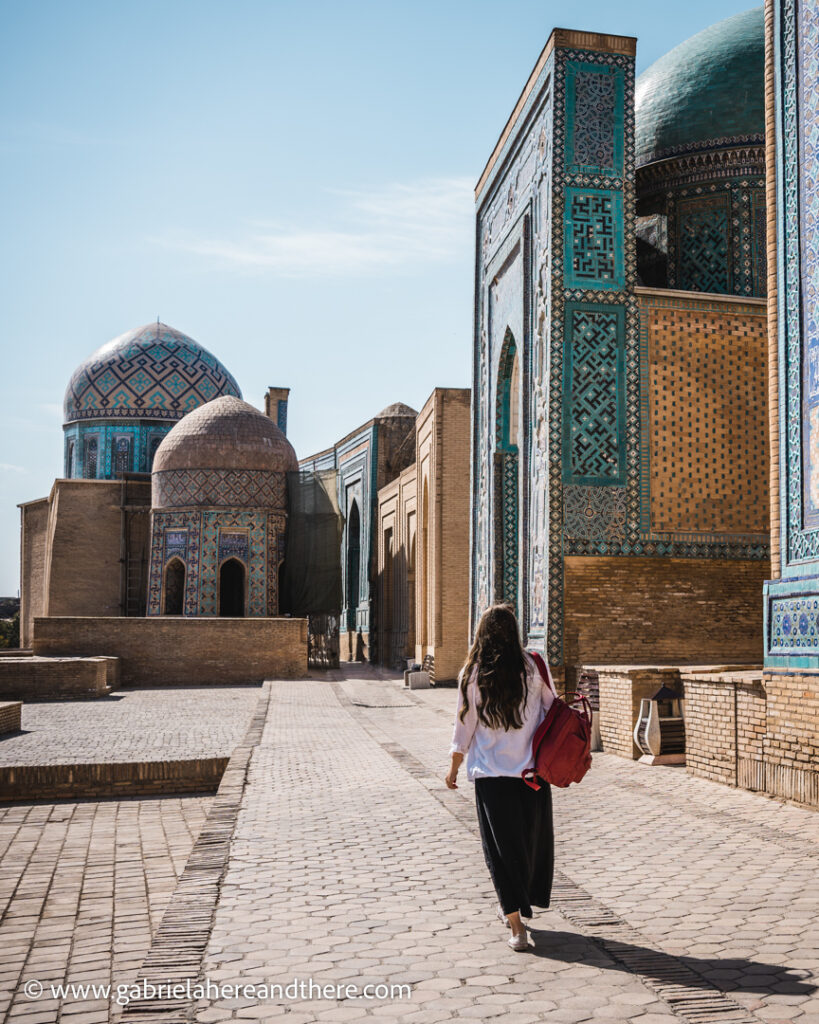
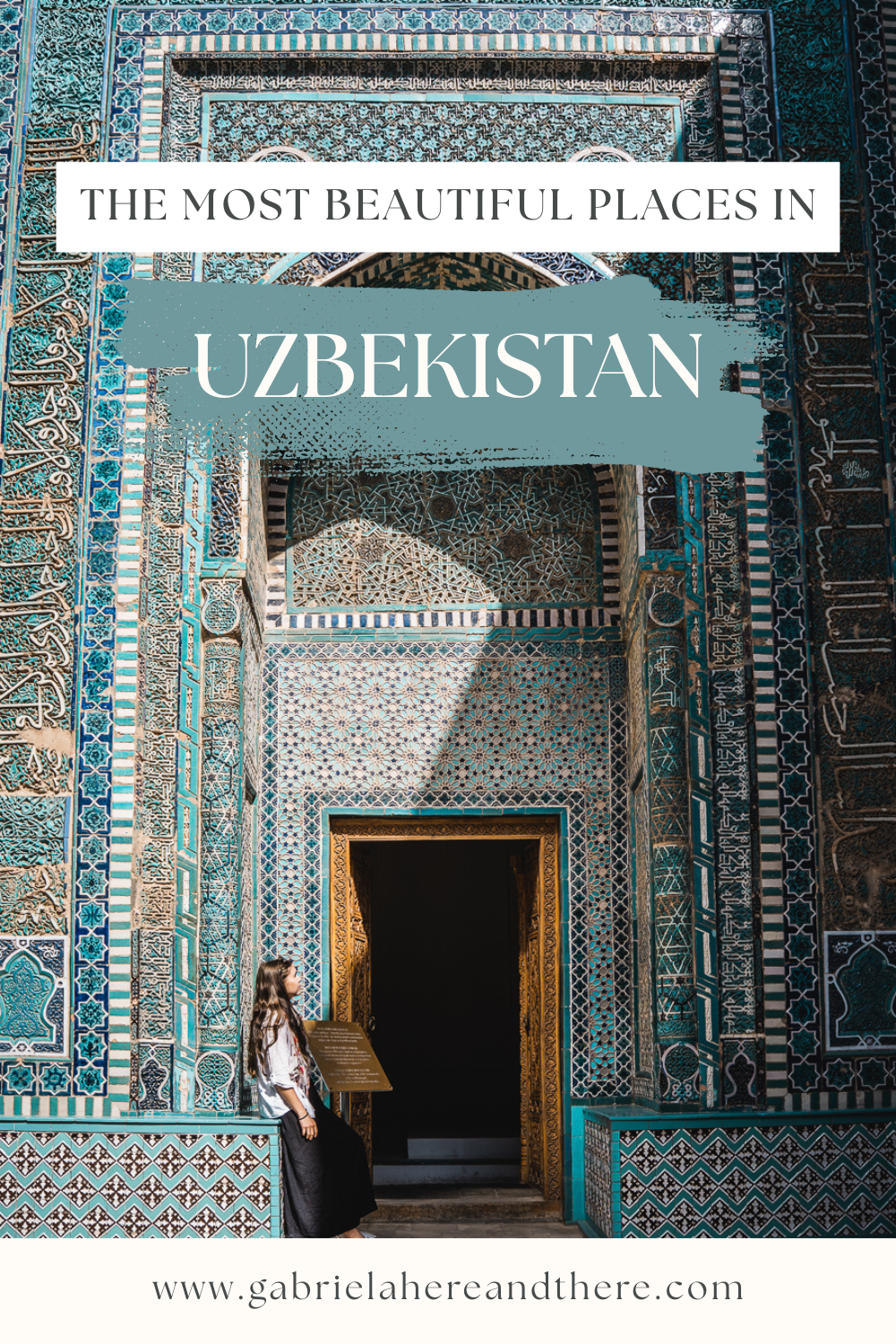
Shah-i-Zinda is a stunning necropolis made up of mausoleums decorated with intricate blue tilework. Many of the tombs date back to the 11th–15th centuries and are connected to Timur’s family and nobles.
This is easily one of the most photogenic places in Uzbekistan, and I spent a long time here photographing all the stunning details.
Registan Square
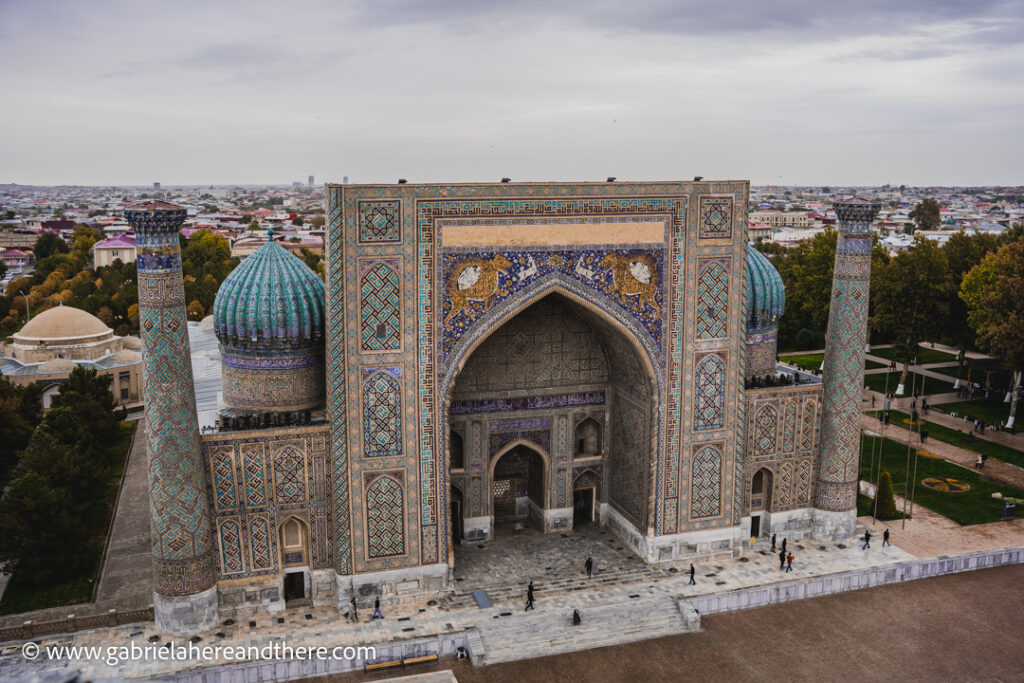
Registan Square is Samarkand’s most iconic landmark and one of the most beautiful squares in Central Asia. It’s surrounded by three impressive madrasas — Ulugh Beg, Sher-Dor, and Tilya-Kori — all richly decorated with mosaics, tilework, and Arabic calligraphy.
When I was there, it was possible to climb up the minaret of the Ulugh Beg Madrasa for incredible views over Registan Square. I’m not sure if this is always open (and it’s not exactly advertised), but if it’s available during your visit, it’s absolutely worth it.
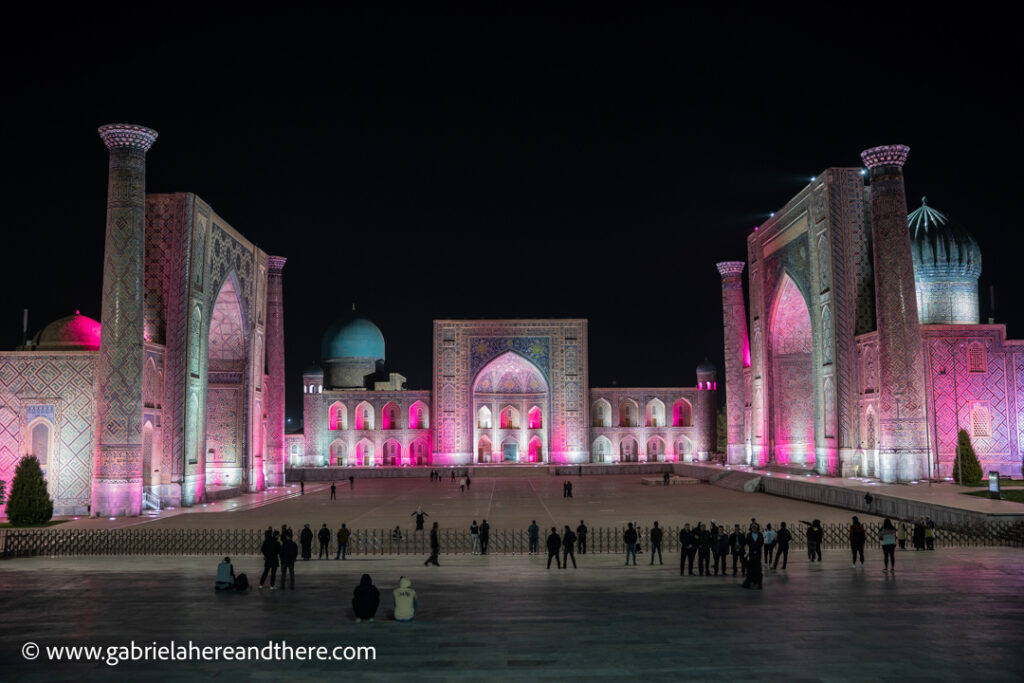
In the evening, there’s also a light show at Registan Square, which shouldn’t be missed. It creates an amazing atmosphere and is perfect for photos, as the madrasas are lit up in different colors.
Ulugh Beg Madrasa
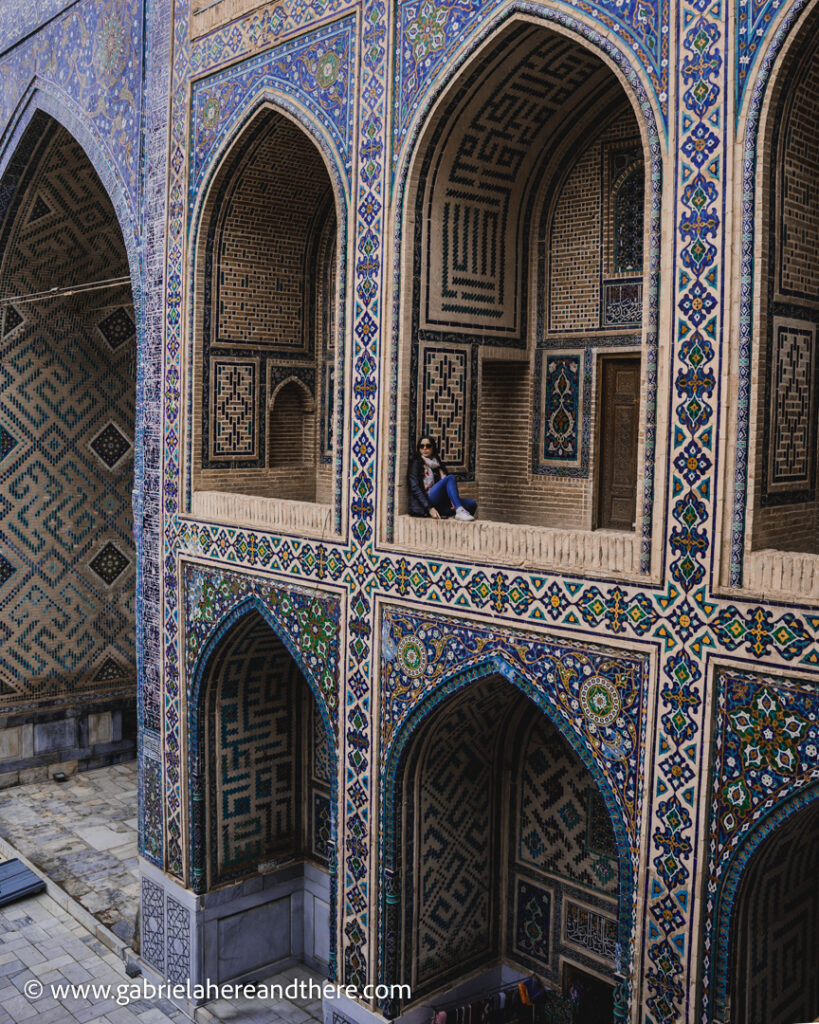
Built in the 15th century by the astronomer-king Ulugh Beg, this madrasa once served as an important center of learning. Its façade still dominates Registan Square today, and the courtyard inside is just as impressive. This is where I took some of my favorite photos in Samarkand.
Tilya-Kori Madrasa
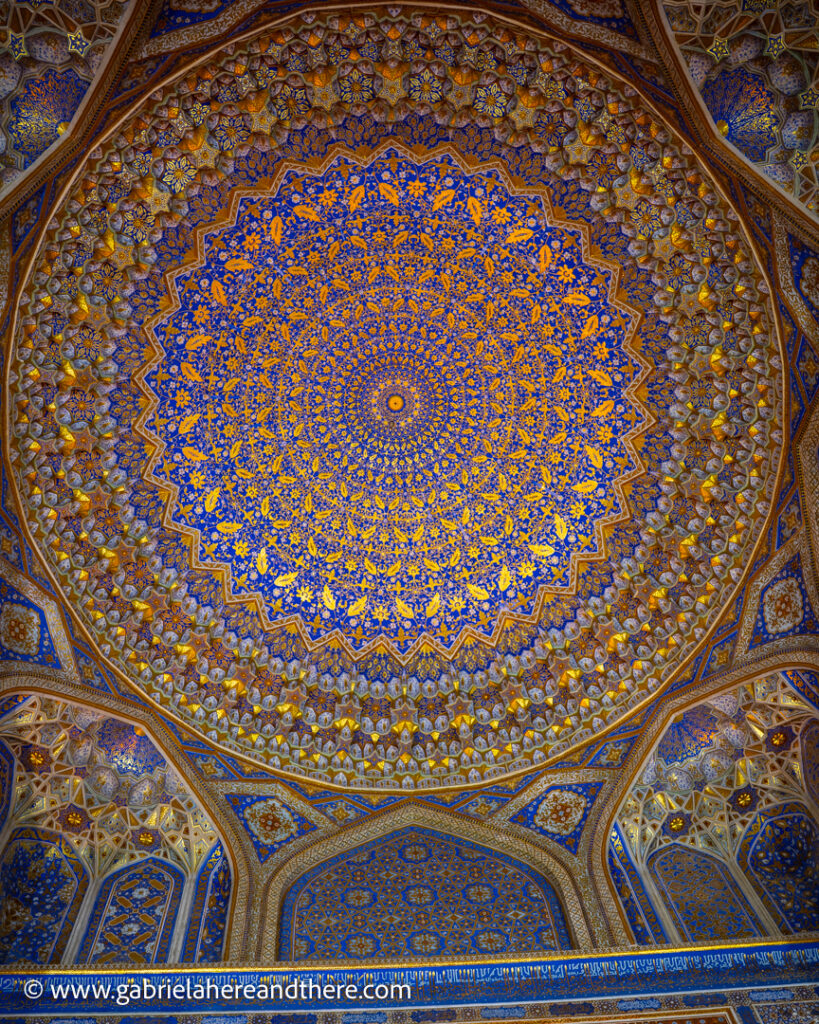
If you want to see the most impressive interior at Registan Square, head into Tilya-Kori Madrasa — especially the prayer hall. The details here are unbelievably ornate, and the golden elements and tilework are absolutely breathtaking.
Amir Timur Mausoleum (Gur-e-Amir)
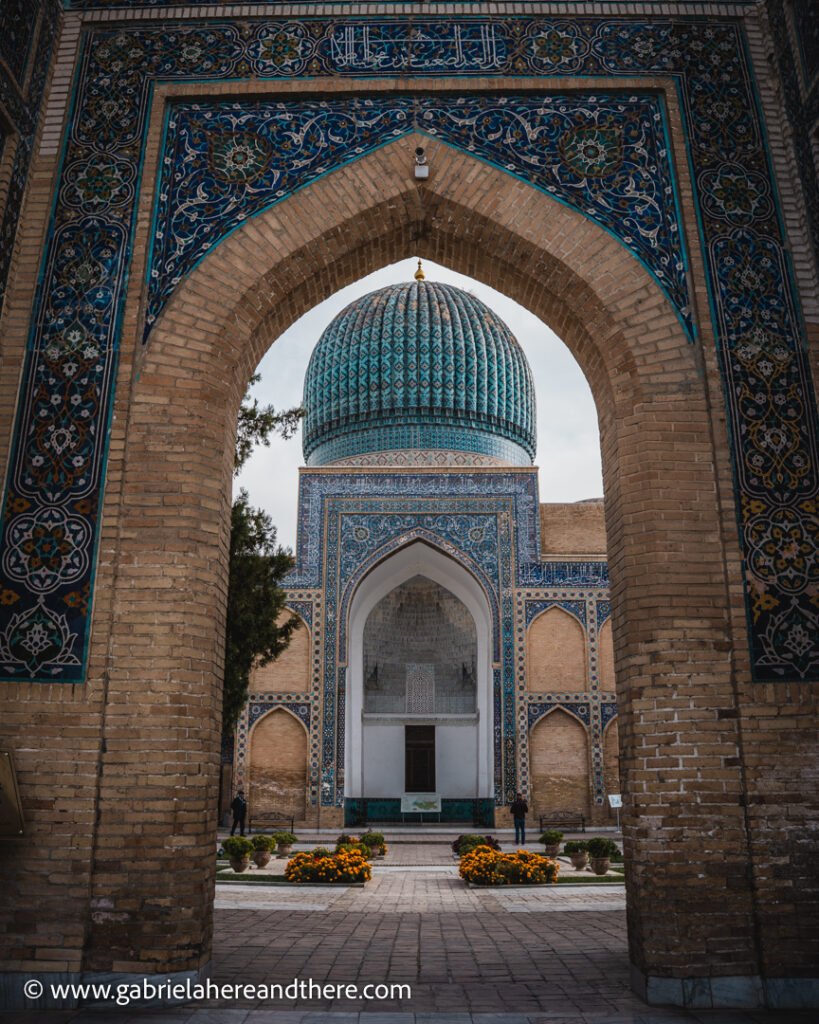
This mausoleum is the final resting place of Amir Timur (Tamerlane) and his family. The blue ribbed dome is iconic, but the interior is even more impressive — filled with rich colors and beautiful gold detailing. It’s one of the most important historical sites in Samarkand and a must-visit.
Bibi-Khanym Mosque
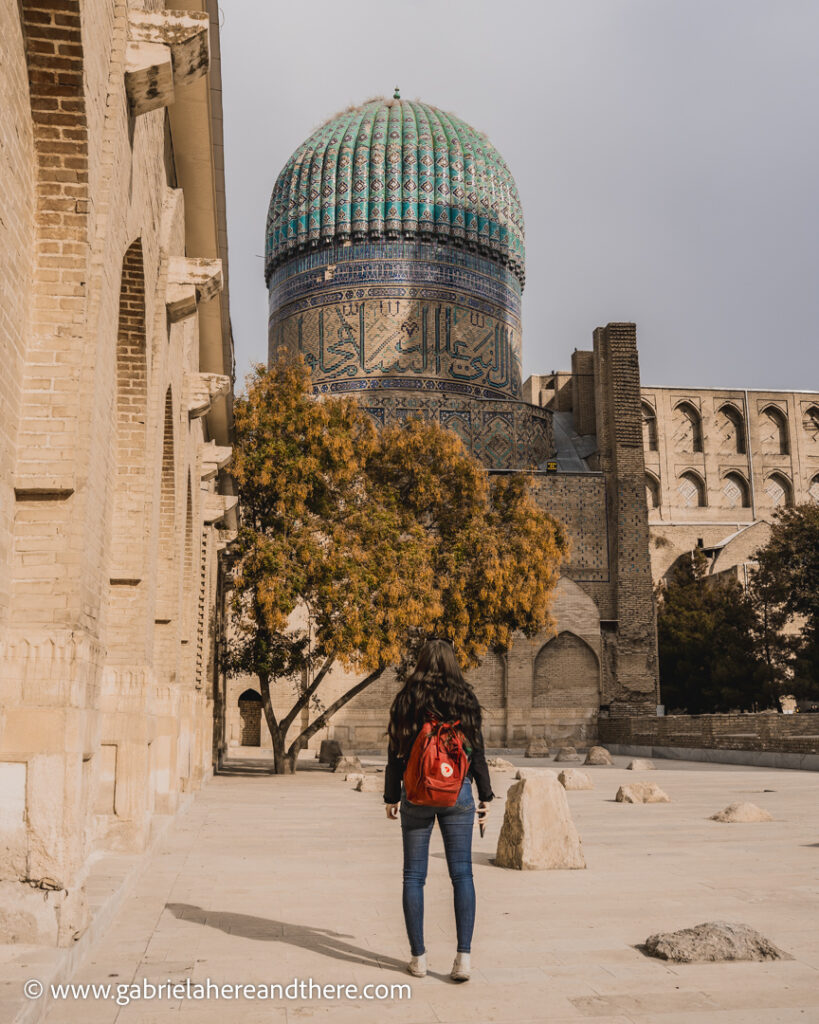
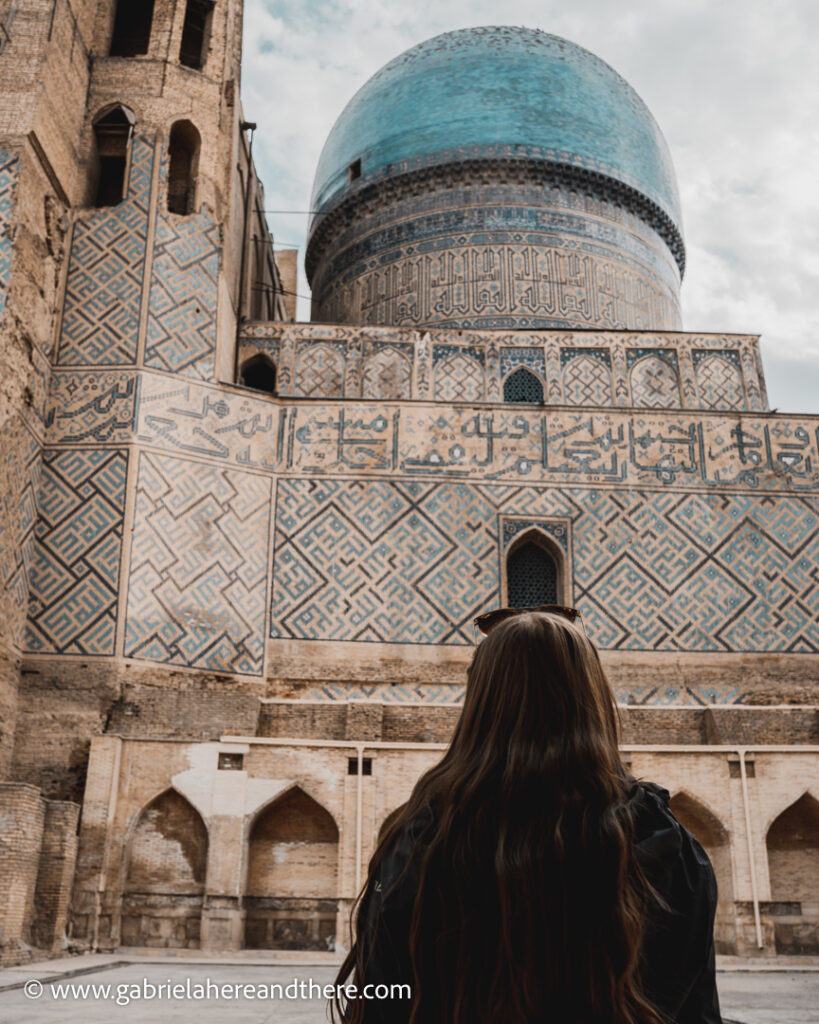
Once one of the largest mosques in the Islamic world, Bibi-Khanym Mosque was built to honor Timur’s wife. Although parts of it are in ruins today, the scale is still enormous, and it’s easy to imagine how grand it must have been at its peak.
If you have extra time in Samarkand, you can also consider a day trip to the Seven Lakes in neighboring Tajikistan. The lakes are located near Panjakent, just across the border, and make a great adventure if you want to see mountains and nature after exploring Silk Road cities. Most travelers visit with a driver or guided tour due to the remote location and mountain roads. I’ve written a detailed guide about how to visit the Seven Lakes, including transport tips, which you can read here: How to Visit the Seven Lakes in Tajikistan.
Where to Stay in Samarkand
I stayed at Jahongir Guesthouse, just a short walk from Registan Square. The rooms are beautifully decorated, and the location is perfect for sightseeing — especially if you want to be close to the main attractions and go out for photos early in the morning or in the evening.
🏨 Where to Stay in Samarkand (my picks)
Budget: Registan Hostel – a simple and affordable option with a great location near Samarkand’s main sights. Perfect if you’re travelling on a budget and want to stay central.
Mid-range: Jahongir Guesthouse – my personal choice in Samarkand. Beautiful traditional décor, comfortable rooms, and walking distance to Registan.
Luxury: Silk Road by Minyoun – a high-end stay with a resort-style feel, ideal if you want more comfort, facilities, and a more “treat yourself” experience.
Samarkand Tour Options
Samarkand is a great city to explore with a guide, especially if you want to learn more about the Silk Road history and the meaning behind the architecture (and also save time getting between the main sights).
⭐ Best Tours in Samarkand (my recommendations)
Cheapest / Best Value: Samarkand Historical Monuments Guided Walking Tour
A great-value option that covers the main highlights in one go, including Registan Square, Gur-e-Amir, Bibi-Khanym Mosque, Shah-i-Zinda, and Siyob Bazaar.
➡️ Book this tour
Private Option: Samarkand Private Full-Day Tour
Perfect if you want a more relaxed pace and a flexible itinerary. You’ll see Samarkand’s most iconic sights with your own guide — and it’s also great if you want help taking photos.
➡️ Book this tour
Bukhara
From Samarkand to Bukhara, it’s around a 1.5–2 hour train ride, depending on the train type — or if you’re short on time, you can also visit Bukhara on a full-day tour from Tashkent.
Bukhara, in my opinion, is the city with the most charm and atmosphere in Uzbekistan. I could easily spend hours wandering the streets aimlessly. The historic sights are also much closer to each other than in Samarkand, which makes exploring on foot incredibly easy and enjoyable.
Here are the most beautiful places to visit in Bukhara:
Po-i-Kalyan Complex
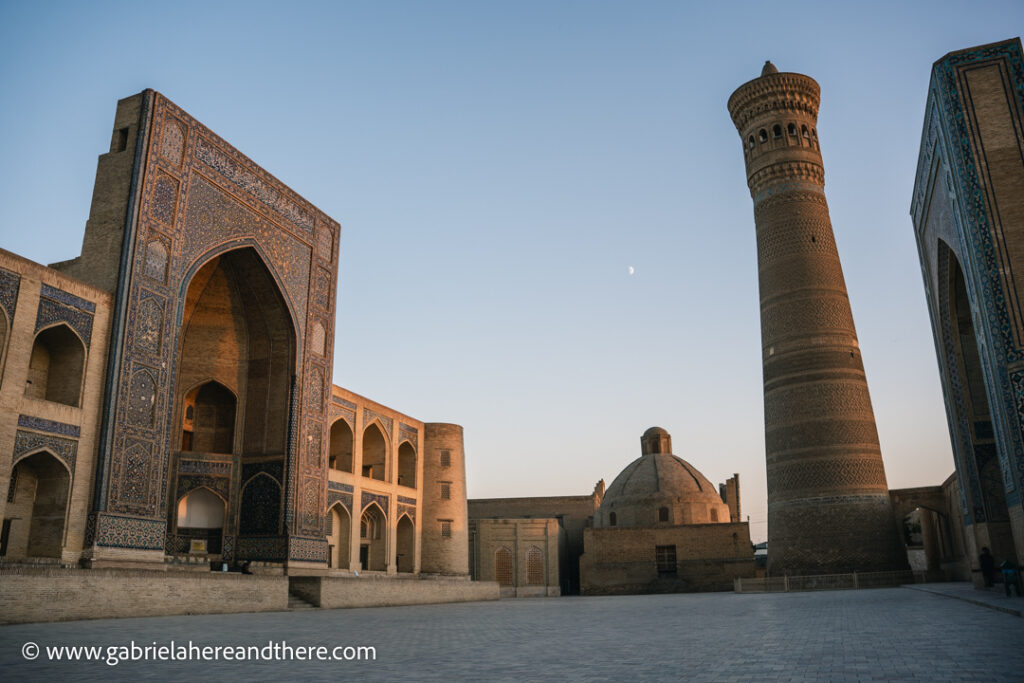
Po-i-Kalyan is the historical and spiritual heart of Bukhara. This impressive complex includes the Kalan Mosque, Kalan Minaret, and Mir-i-Arab Madrasa, and it has dominated the city skyline for centuries. It’s one of the most iconic sights in Uzbekistan and looks especially beautiful in the early morning or at sunset.
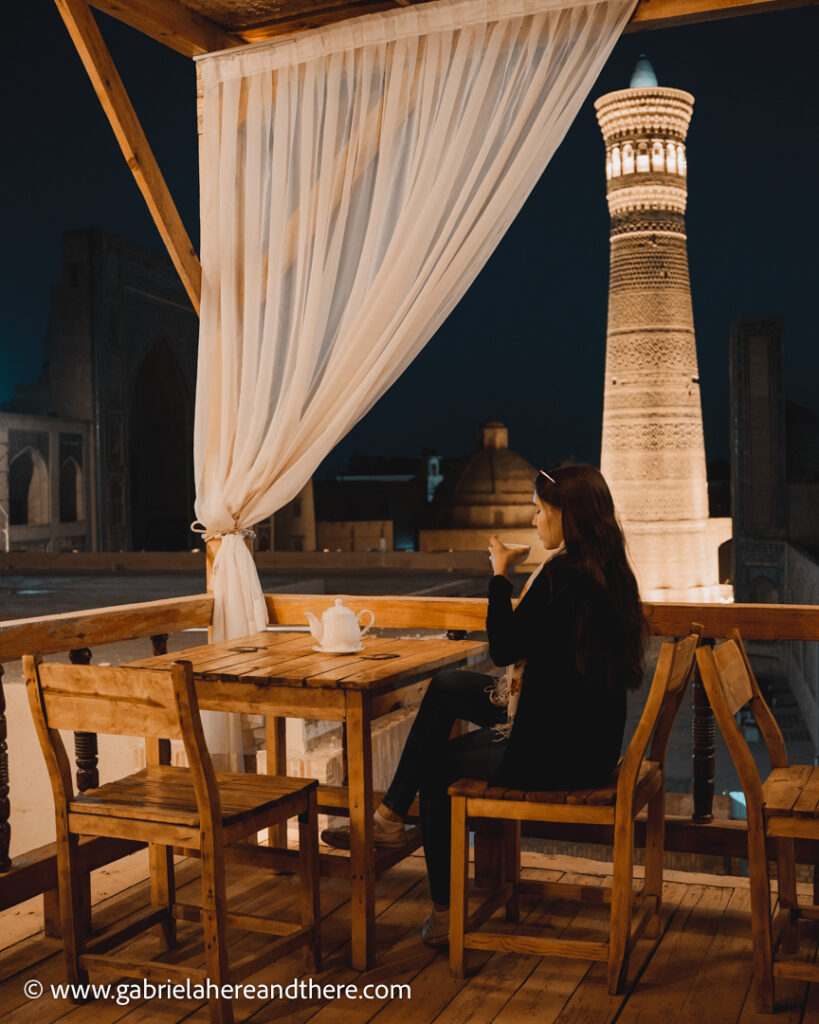
Right next to the complex, there are also a few nice restaurants and cafés where you can sit and enjoy beautiful views of Po-i-Kalyan — like in the photo above.
Mir-i-Arab Madrasa
Built in the 16th century, Mir-i-Arab Madrasa is still an active religious school today, making it one of the few madrasas in Central Asia that continues its original purpose. Its turquoise domes are one of Bukhara’s most recognizable features.
Kalan Minaret
The Kalan Minaret dates back to the 12th century and once served as a landmark for caravans approaching the city. Standing at nearly 47 meters tall, it’s one of the finest surviving examples of Islamic architecture in Central Asia.
Ark of Bukhara
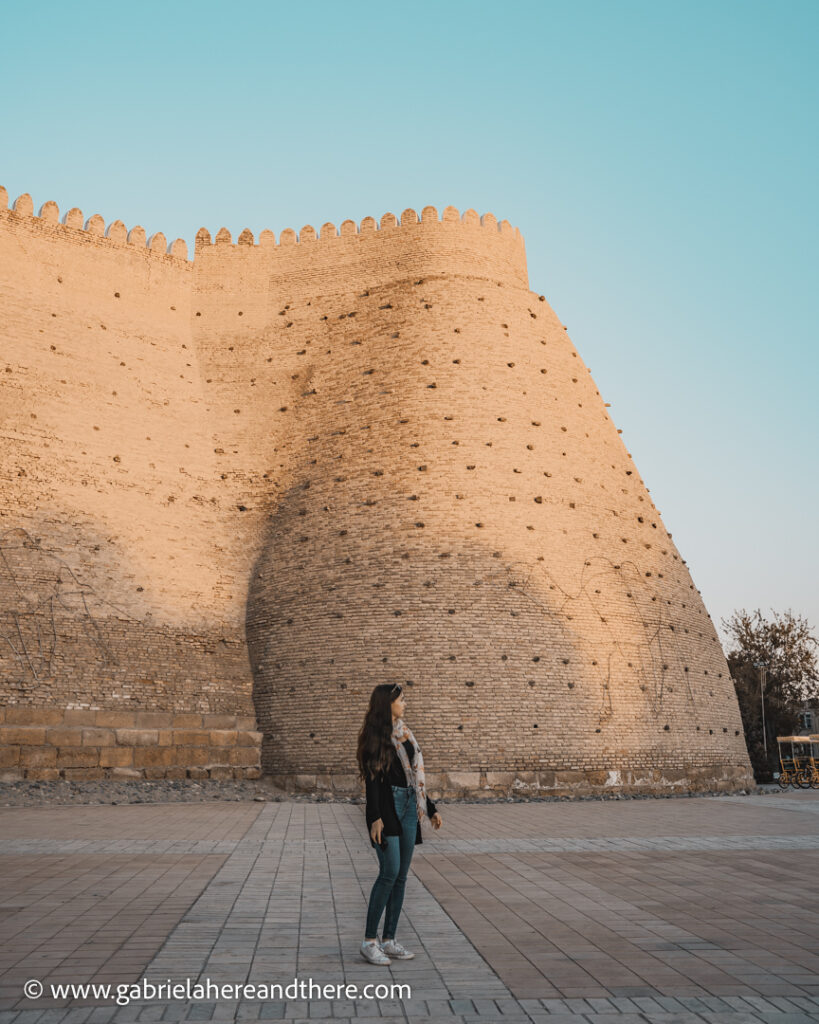
The Ark of Bukhara is a massive fortress that housed the rulers of the city for centuries. Inside, you’ll find courtyards, museums, and viewpoints overlooking the old town. It’s a great place to learn more about Bukhara’s political history.
Bolo Hauz Mosque
Located opposite the Ark, Bolo Hauz Mosque is famous for its beautifully carved wooden columns reflected in a long pool. It’s one of the most photogenic spots in Bukhara, especially in the morning light.
Bukhara Tower (Bukhara TV Tower)
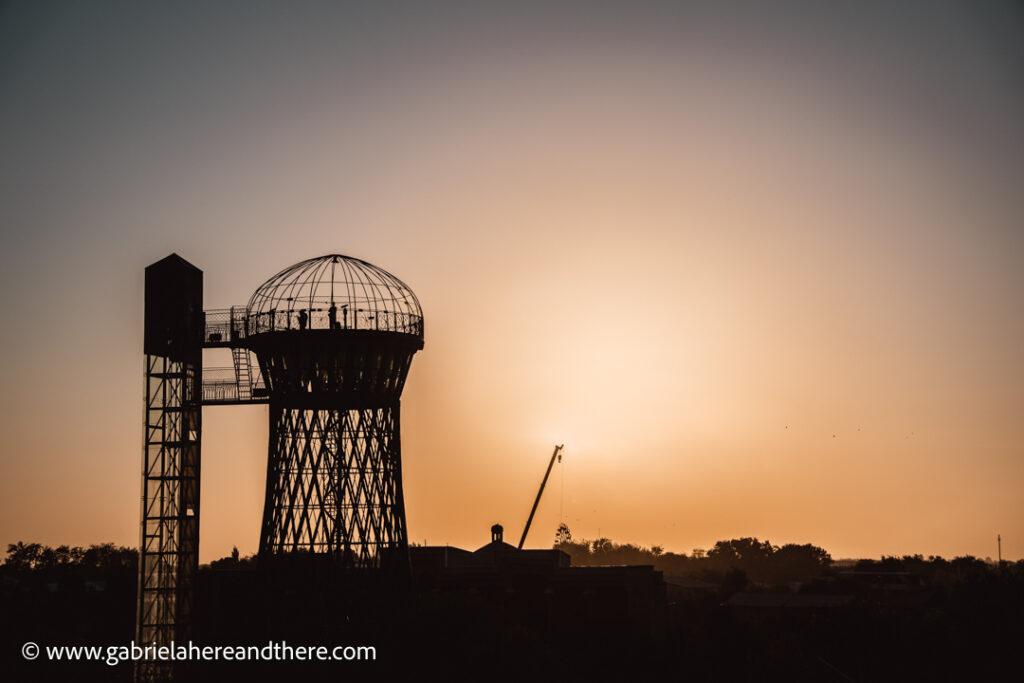
Often referred to as Bukhara Tower, this modern structure offers panoramic views over the city and its surroundings. While it’s not historic like the other landmarks, it creates an interesting contrast to the old town.
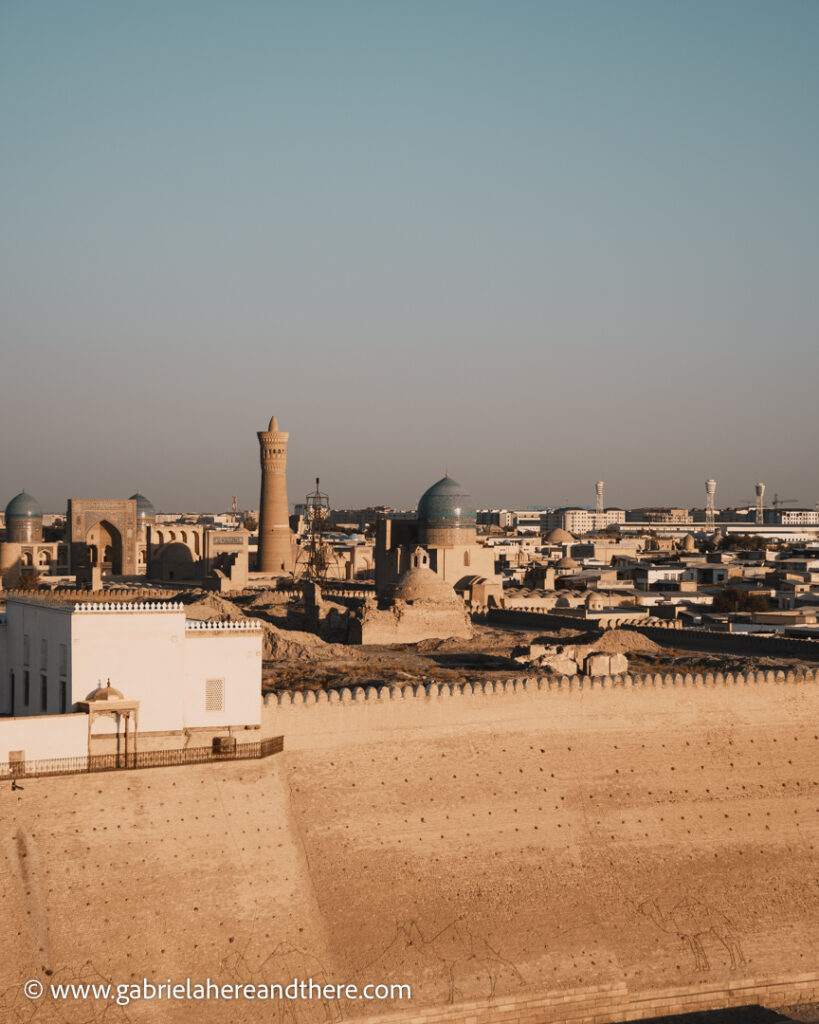
I visited just before sunset to see the city in golden hour light.
Ulugh Beg Madrasa
Built in the 15th century by Ulugh Beg, a ruler and astronomer, this madrasa is one of the oldest in Bukhara. Its simple but elegant design reflects its original purpose as a center of learning.
Divan-Beghi Khanaka
Part of the Lyabi-Hauz ensemble, Divan-Beghi Khanaka was built as a lodging place for Sufi dervishes. The surrounding square, with its pool and shaded areas, is a lively spot to relax and people-watch.
Chor Minor Monument
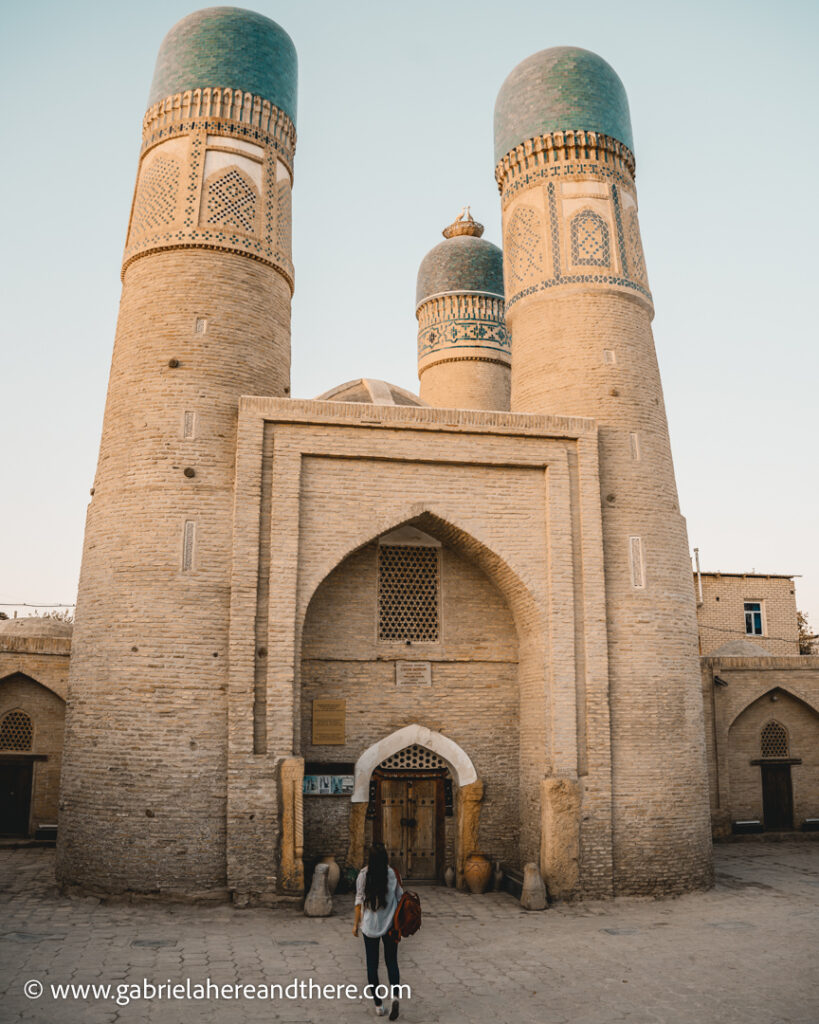
Chor Minor is one of Bukhara’s most unique landmarks, featuring four small turquoise-domed towers. One quirky detail here is the stork’s nest at the top — it’s not real, but it still makes for a fun photo.
Toki-Sarrofon
Toki-Sarrofon is one of Bukhara’s historic trading domes, where merchants once exchanged currency and precious metals along the Silk Road. Today, it’s filled with small shops selling souvenirs, textiles, and handicrafts.
Medrese Khodzha Gaukushon
This lesser-visited madrasa offers a quieter experience compared to the main tourist sites. It’s a great stop if you want to explore beyond the highlights and see a more local side of Bukhara.
Bukhara Market
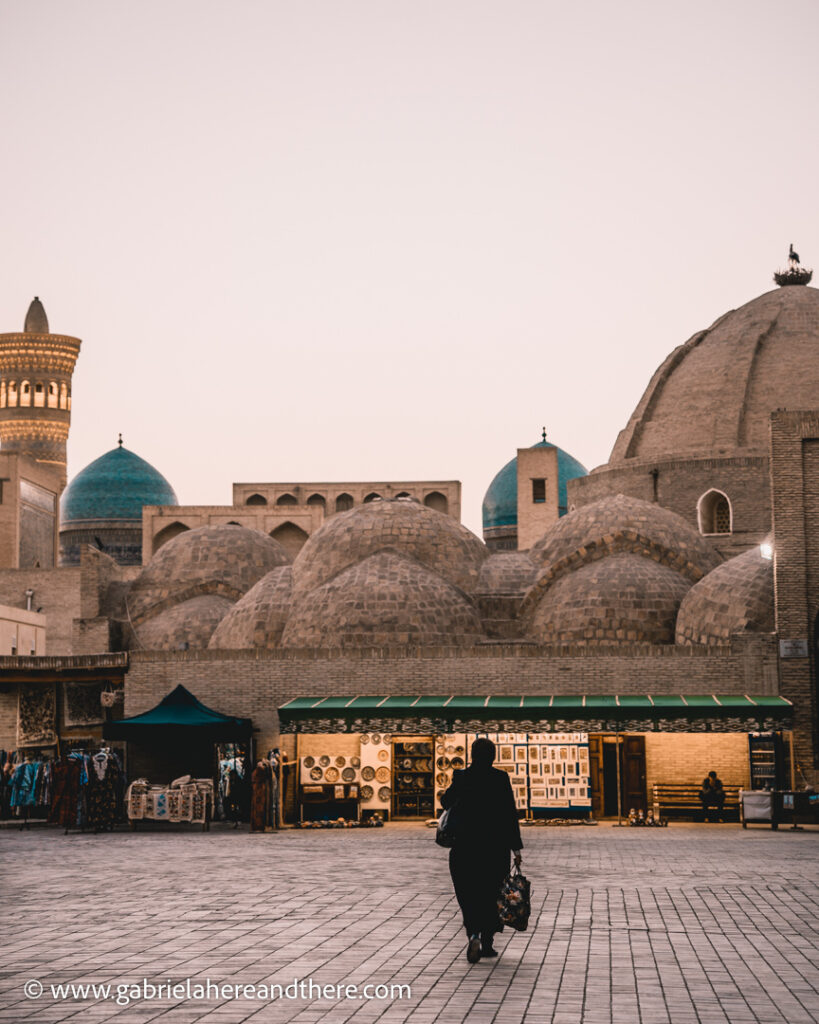
Bukhara market is also really worth visiting — not just for shopping, but for the architecture too. The covered trading domes and old brick passageways are beautiful, and walking through them feels like stepping back into the Silk Road era.
Magoki Attori Mosque and Carpet Museum
Magoki Attori is one of the oldest mosques in Central Asia, built partly below ground level. Today, it also houses a small carpet museum where you can learn about traditional Uzbek carpet weaving.
Ko‘kaldosh Madrasa
Ko‘kaldosh Madrasa is another historic madrasa that played an important role in Bukhara’s educational and religious life. It’s less crowded than some of the main attractions, which makes it a peaceful stop.
Ayvan Restaurant
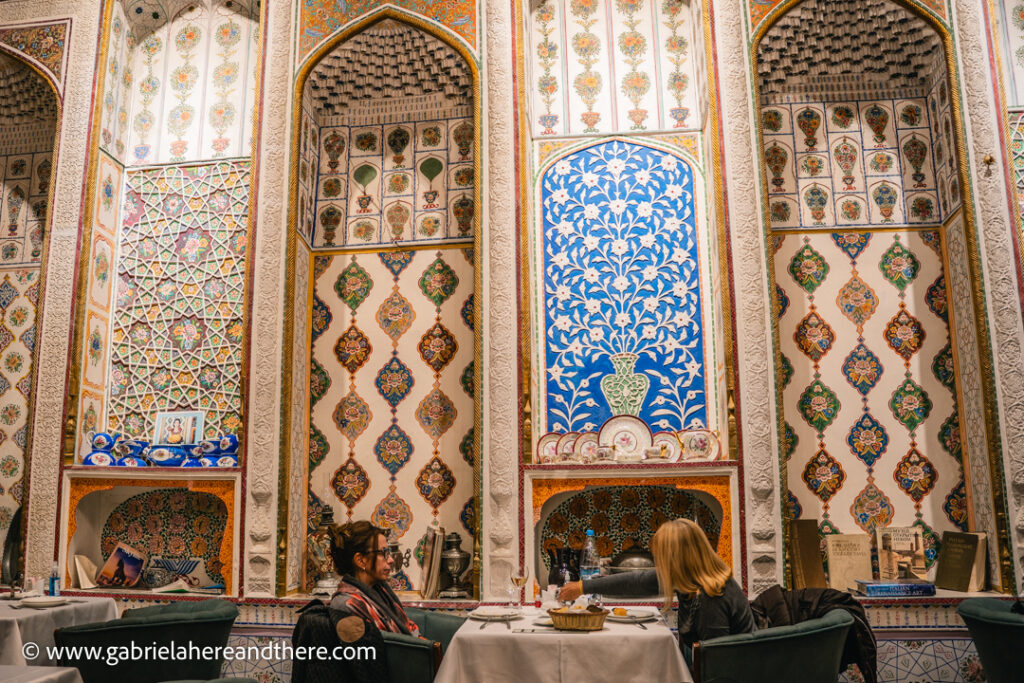
Ayvan Restaurant is a popular place to take a break from sightseeing. It’s located near the historic center and has a beautiful interior. I have to be honest — the food wasn’t anything special — but I mostly went for the architecture and the overall experience.
As you can see, there are tons of beautiful places in Bukhara, and the best part is that they’re all very close to each other. One of the best ways to see the city is by joining a guided walking tour, which really helps bring the history of the Silk Road to life.
Where to Stay in Bukhara
I stayed at Kavsar Boutique Hotel, which is centrally located and very comfortable. The interior design is beautiful and fits perfectly with the historic atmosphere of the city, making it a great base for exploring Bukhara on foot.
🏨 Where to Stay in Bukhara (my picks)
Budget: Shom Hotel with Terraca – a great-value stay with a traditional feel, and a terrace where you can relax after sightseeing (and enjoy the atmosphere of the old town).
Mid-range: Porso Boutique Hotel – a cosy boutique hotel in a fantastic location, with beautifully decorated common areas that really match Bukhara’s historic charm.
Luxury: Wyndham Bukhara – a comfortable upscale hotel with modern facilities, ideal if you want more space, amenities, and an easy stay after long sightseeing days.
Tour Options in Bukhara
Bukhara is one of those cities that’s amazing to wander on your own — but a guided tour really helps bring the Silk Road history to life and makes the architecture even more interesting.
⭐ Best Tours in Bukhara (recommended)
Budget Option (Small Group): Bukhara Walking Tour with a Small Group
The best budget-friendly way to see Bukhara’s main highlights with a professional guide. You’ll explore places like Lyabi-Hauz, the trading domes, Po-i-Kalyan, and some of the city’s most beautiful mosques and madrasas.
➡️ Book this walking tour
Private Option: Best of Bukhara – All Day Private Old Town Tour
A great upgrade if you want a more flexible pace and a private guide. You’ll cover Bukhara’s UNESCO-listed old town, including Lyabi-Hauz, Kalan Minaret, Bolo Hauz Mosque, and the historic bazaars — plus hotel pickup is included.
➡️ Book this tour
Khiva
Khiva is incredibly charming and feels like a living open-air museum. This is a walled city, and it honestly doesn’t matter where you walk — it’s beautiful everywhere. Wandering through Khiva is easily one of the highlights of any Uzbekistan itinerary, and it’s definitely worth traveling all the way here.
From Bukhara to Khiva, there are fewer trains running. The train from Bukhara to Khiva takes around 6 hours.
If the train schedules don’t suit you, or if you’d like to stop at some of the ancient desert fortresses along the way, you can book a private transfer here: Bukhara to Khiva Transfer via Ancient Fortresses.
Good news for train travel: a high-speed rail service between Tashkent and Khiva is expected to launch in 2026 using new Hyundai Rotem electric trains. This will significantly reduce the journey time from around 14 hours to about 7.5 hours, making it much easier to connect Khiva with Samarkand, Bukhara, and Tashkent.
Here are the most beautiful places to visit in Khiva:
Itchan Kala
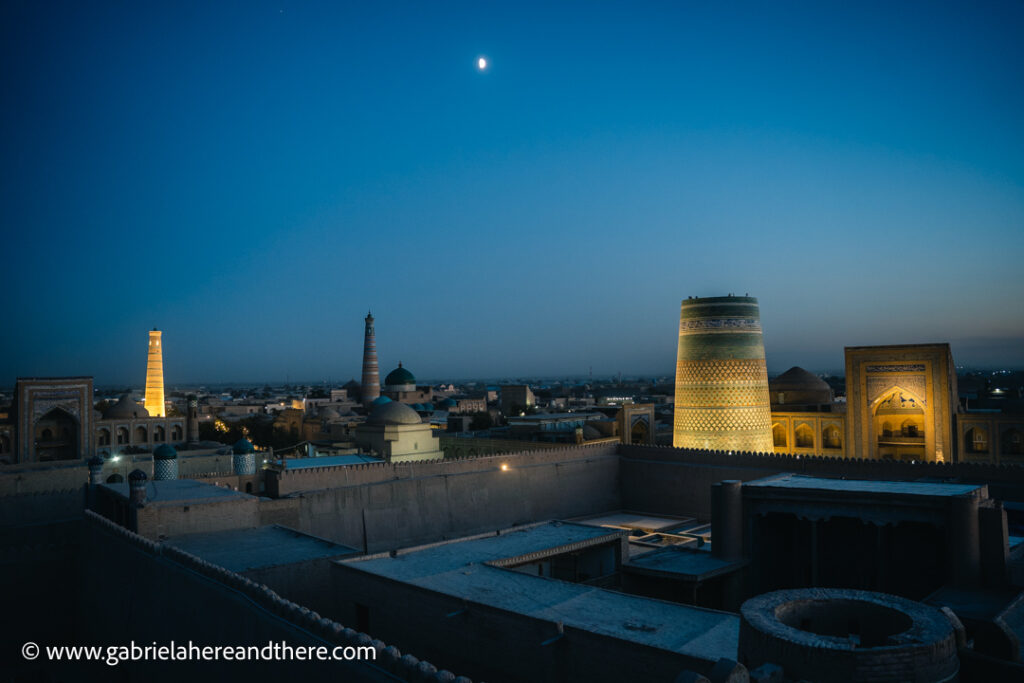
Itchan Kala is the historic inner city of Khiva and a UNESCO World Heritage Site. This walled area contains most of Khiva’s major landmarks, including mosques, madrasas, palaces, and minarets. If you’re visiting Khiva as a tourist, you’ll most likely stay inside this area as well.
Kalta Minor Minaret
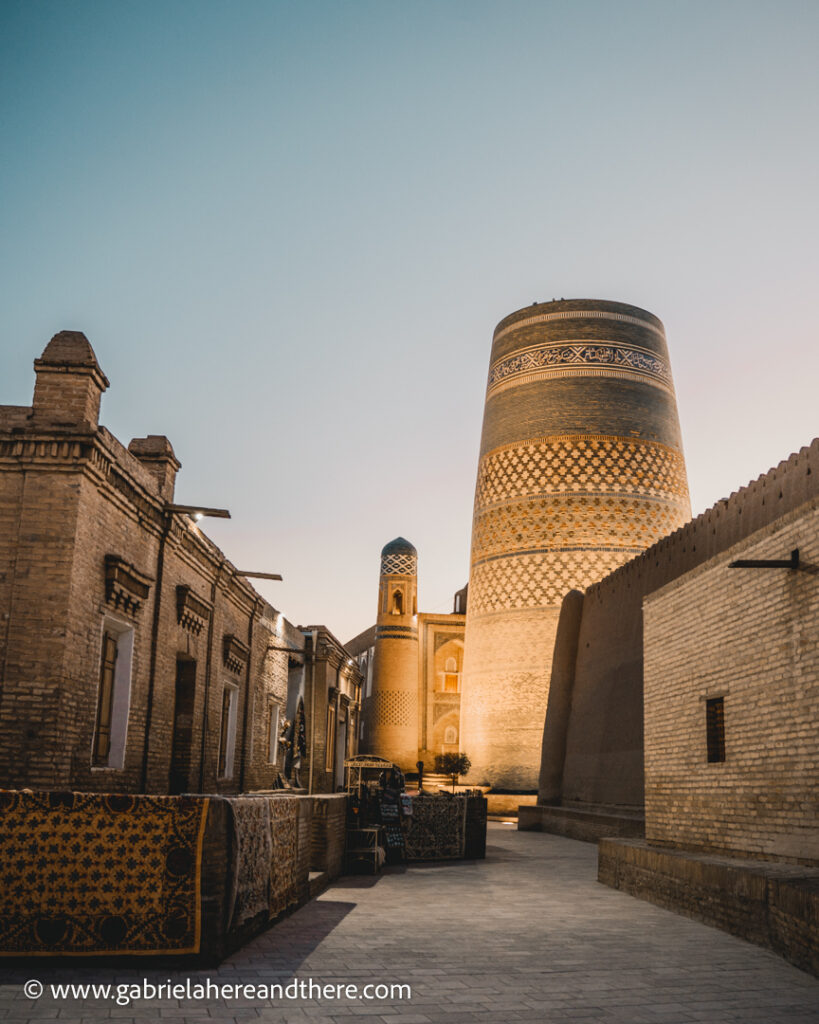
Kalta Minor Minaret is one of Khiva’s most recognizable landmarks. Unlike most minarets, it was never completed, which is why it’s unusually short and wide. Its bright turquoise tiles make it stand out dramatically against the surrounding architecture.
I have so many photos of this minaret — during sunrise, sunset, daytime, and nighttime — and it looked stunning at every time of day.
Islam Khoja Minaret
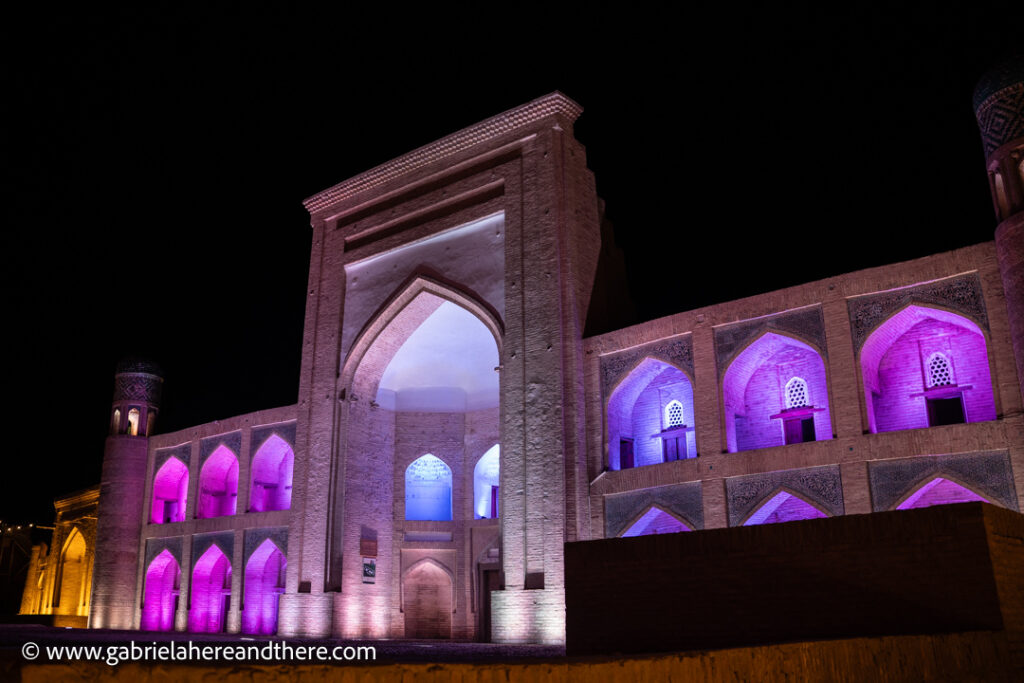
The Islam Khoja Minaret is the tallest structure in Khiva and offers some of the best views over the old city. You can’t miss it while you’re here, because it completely dominates the skyline.
Kuhna Ark
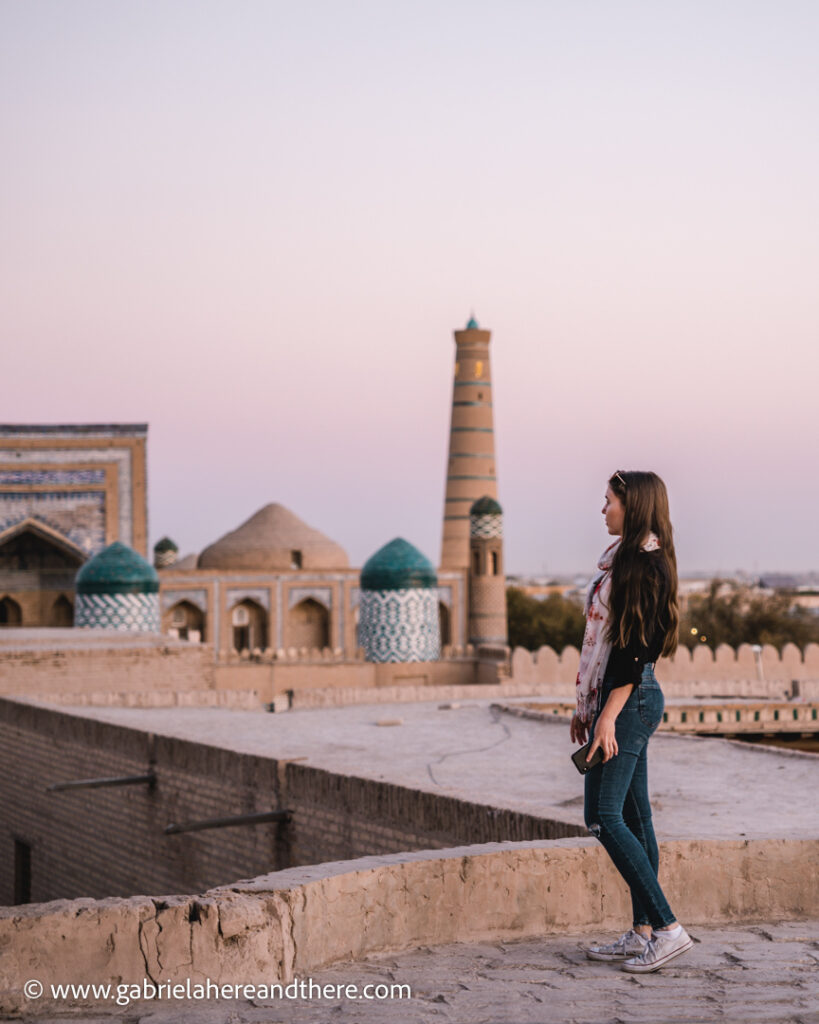
For some of the best views in Khiva, head to the Kuhna Ark watchtower. From here, you get incredible panoramic views over the old city. I visited several times just before sunset, and it was beautiful every single time.
Juma Mosque
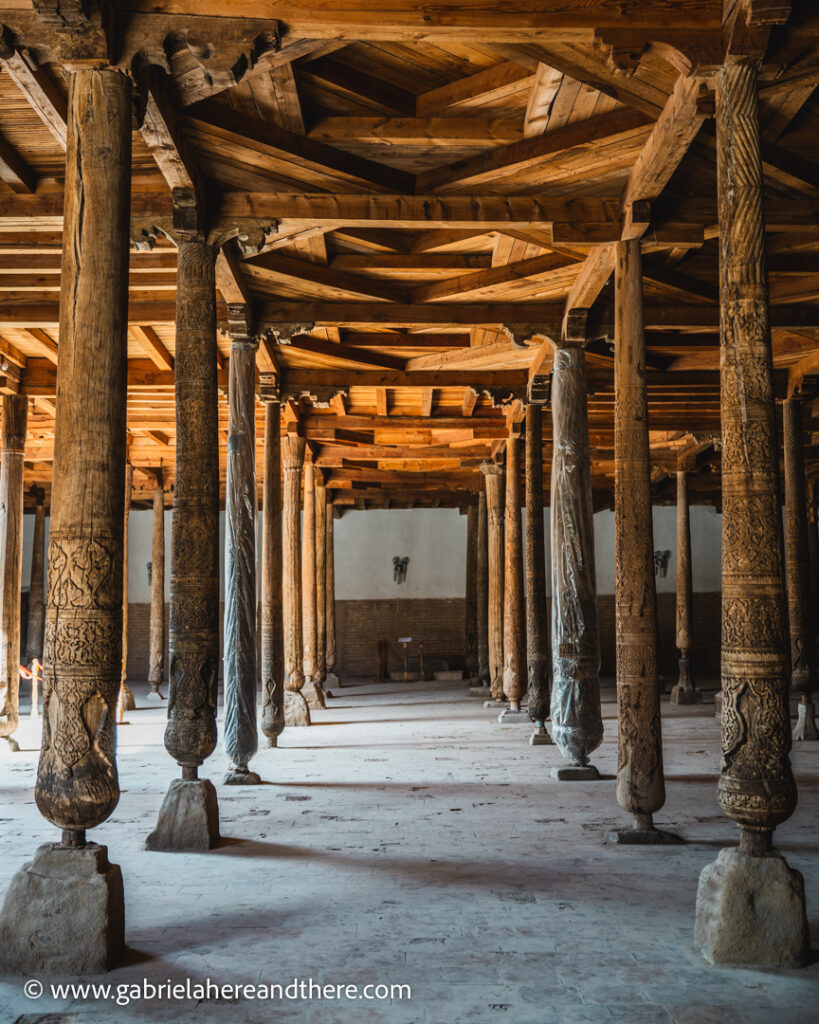
Juma Mosque is one of the most unique mosques in Central Asia. Its interior is supported by 218 wooden columns, many of which date back several centuries. Each column has a slightly different design, making this mosque unlike any other in Uzbekistan.
Pahlavan Mahmoud Mausoleum
This beautifully decorated mausoleum is dedicated to Pahlavan Mahmoud, a poet, philosopher, and local hero of Khiva. The interior is richly decorated with tiles and is one of the most important pilgrimage sites in the city.
The Walls of Khiva
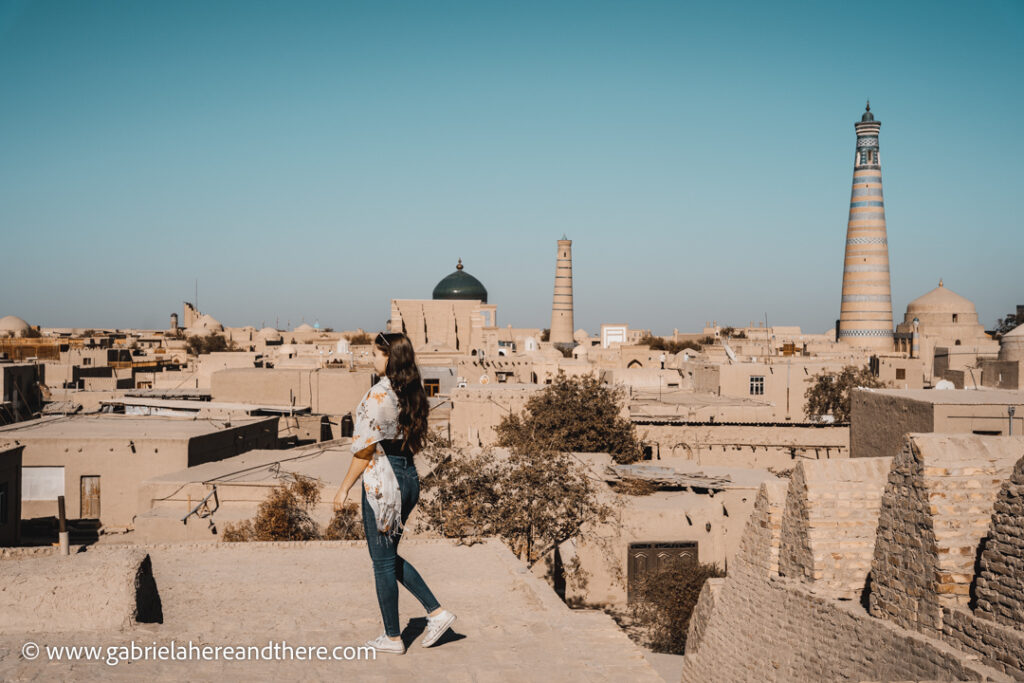
One of the best things to do in Khiva is to climb up onto the city walls. There are several access points with proper staircases, and from the top you’ll get stunning panoramic views over Itchan Kala and the surrounding desert landscape. Sunrise and sunset are especially beautiful from here.
I didn’t plan it — I just stumbled on a great viewpoint while wandering around — but it ended up being one of my favorite photo spots in Khiva.
Where to Stay in Khiva
I stayed at Meros B&B Khiva, and the main reason I chose it was the rooftop terrace. It’s an excellent place to watch the sunset or wake up early for sunrise, as I did.
There happened to be another photographer staying at the same hotel, and we kept running into each other at all the same spots around the city — including on the rooftop at sunrise. I guess photographers really do think alike and always know where to be for the best light!
My top tip for booking a hotel in Khiva is to stay inside the walled city (Itchan Kala), so you can walk everywhere. If you can, choose a place with a rooftop terrace — the views at sunrise or sunset are absolutely beautiful.
🏨 Where to Stay in Khiva (top picks)
Budget: Sarzamin Guest House – a highly rated, family-run guesthouse with a warm and local feel, perfect if you want a great-value stay inside the old town.
Mid-range: Khiva Siyovush Hotel – a great option inside the walled city (Itchan Kala), with beautiful views and an excellent location for exploring Khiva on foot.
Luxury: Farovon Khiva Hotel – the most luxurious option on this list, with modern facilities and extra comfort. It’s located outside the walled city, but it’s a great choice if you want a more upscale hotel experience.
Tour Options in Khiva
Khiva is compact and easy to explore on your own, but a guide makes the history much more interesting — and the nearby desert fortresses are well worth a half-day trip.
⭐ Best Tours in Khiva
Best for First-Timers: Khiva Historical City Highlights Guided Walking Tour
A great 4-hour walking tour through Itchan Kala (UNESCO), covering highlights like Islam Khoja Minaret, Juma Mosque, and Pahlavan Mahmoud Mausoleum.
👉 Book the Khiva walking tour here
Best Day Trip: Half-Day Tour from Khiva to the Old Fortresses
If you want to see something beyond Khiva, this tour takes you out into the desert to visit ancient fortress ruins like Ayaz Kala, Topraq-Kala, and Kyzyl Kala. It’s one of the most photogenic experiences in the region — and since pickup is included, it’s an easy add-on to your Khiva stay.
👉 Book the Old Fortresses day trip here
If you want to see more Uzbekistan photos and short videos from this trip, you can find them on my Instagram: @gabrielahereandthere
🌍 Visiting Every Country — Support My Work
I’m visiting every country in the world, and my travels are entirely self-funded. I focus on unusual, off-the-beaten-path destinations that don’t always get much coverage — which is exactly why I create detailed guides like this.
If you found this post helpful, buying me a coffee is a simple way to support my work and helps me keep creating in-depth travel guides to less-visited places. Thank you for your support ❤️
Liked the post? Pin it or share it!
1 comment
I have never thought of visiting Uzbekistan but your thoughtful and insightful guide has made me reconsider this. It looks like a beautiful country that is bustling with culture and history.