
The Chernobyl disaster, which occurred in 1986 in the Ukrainian Soviet Socialist Republic, remains the most catastrophic nuclear accident in history. Following the explosion, radioactive particles were released into the atmosphere, spreading across much of Europe.
Ever since I learned that it was possible to visit the Chernobyl power plant, I’ve been eager to go. I’ve always been fascinated by worst-case scenarios—like what might happen if every nuclear bomb on Earth were detonated. That’s a scary thought for sure.
So, while I was in Kyiv, Ukraine this summer, I decided to book a tour of Chernobyl. I went with Solo East Travel and was thoroughly satisfied with the experience. They even offer student discounts, which was a nice bonus.
The tour began at 8 a.m. when our small group—just eight people, thanks to a quieter travel day—squeezed into a minibus. On the drive from Kyiv to Chernobyl, we watched a documentary about the disaster. It was both informative and eye-opening, setting the tone for what was to come.

Our first stop was the town of Chernobyl and the surrounding 30-kilometre Exclusion Zone, the area evacuated after the meltdown. Surprisingly, some residents—mostly elderly individuals—have since returned to live in their former homes. At this stage, things still felt relatively normal, with people visibly living and working in the zone.


We then entered the more restricted 10-kilometre zone and visited an abandoned kindergarten on the way to the reactors. As you can see in the photos, the atmosphere was eerie, almost haunting. Interestingly, the dosimeter readings near the kindergarten were significantly higher than those near the reactor—likely because the soil tends to retain more radiation.


Next, we arrived at Reactor No. 4. In one of the photos, you can see the massive steel arch designed to enclose the reactor and contain any remaining radiation. It’s a chilling yet impressive feat of engineering.


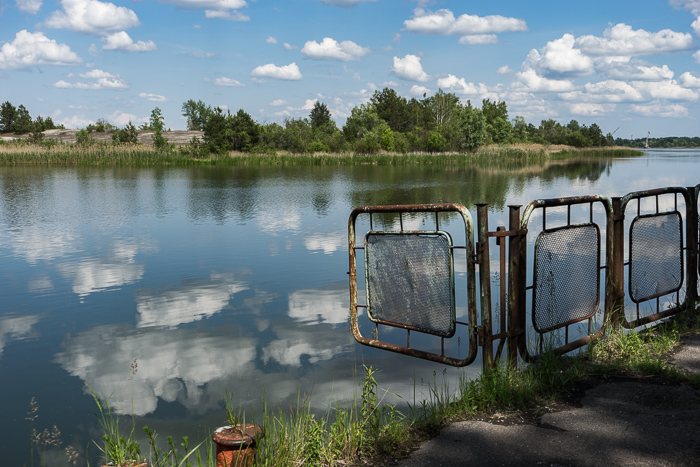
After the reactor visit, we explored Pripyat—the infamous ghost town. We wandered through its most iconic ruins: the abandoned amusement park, school, and swimming pool. Each place told its own silent story of sudden evacuation and lost normalcy.

Our final stop was back in the town of Chernobyl for a late lunch. Before exiting the Exclusion Zone, we were required to pass a radiation screening. Thankfully, we all cleared it. Our guide told us that in all his years working there, only one visitor ever failed the test.
Tips for the tour:
The tour spans the entire day, and food isn’t offered until the very end—around 5 p.m. I hadn’t anticipated that, so by midday I was starving and had also run out of water. I highly recommend eating a big breakfast and packing snacks and plenty of water.
That said, the late lunch was excellent. They serve a hearty, safe meal (no radiation worries!), and you can request a special diet. I had a delicious vegan plate of potatoes and mushrooms.
Note: proper clothing is mandatory—sleeveless tops, open shoes, shorts, and skirts are prohibited. Your clothes serve as a barrier against potential radioactive dust, and our guide pointed out that some contaminated soil patches still remain.
🌍 Visiting Every Country — Support My Work
I’m visiting every country in the world, and my travels are entirely self-funded. I focus on unusual, off-the-beaten-path destinations that don’t always get much coverage — which is exactly why I create detailed guides like this.
If you found this post helpful, buying me a coffee is a simple way to support my work and helps me keep creating in-depth travel guides to less-visited places. Thank you for your support ❤️
Pin to share:

Chernobyl should never be forgotten. It stands as a stark reminder that while technological advancement often aims to improve our lives, it also holds the potential to create irreversible damage when things go wrong.
5 comments
This is incredible, thank you so much for sharing! I’ve always been really fascinated with what happened in Chernobyl, and as you said, it’s important to remember what can go wrong when we are too ambitious.
Yes, it was definitely an interesting and eye-opening experience!
Hello Gabriela!
Many thanks for interesting reviews about your excursion to Chernobyl.
Sorry for the spelling, I’m writing this text using Google Translate. My everyday language is Russian.
I have not yet visited the Exclusion Zone. But interesting reports and post apocalyptic species look very picturesque. It is very surprising that the most interesting reports are obtained from foreigners. Although the cost of a one-day tour for residents of Ukraine is much cheaper – about 30-40 dollars. As for the cost for foreigners, I found the cost of 110 USD.
I am amazed by the phenomenon of wildlife development, which surprisingly takes precedence over the traces of the catastrophe, arranged for 30 years not by sensible people. For example, the restored bear population.
Can you somehow tell or comment on this aspect of life in the vicinity of Pripyat?
Thank you in advance for your response and for interesting publications.
Thank you for your comment! Yes, it was an interesting experience. I actually asked my guide what happened to the plants etc. and he replied that there was only a small area called Red Forest where the trees died. But yes, after that everything has grown back and there are also some animals living there.
I really want to visit Chernobyl as I’ve always been fascinated with abandoned places! I can’t wait to go 😀 Loved this post!
Shannon x
http://www.shanylou.co.uk
instagram.com/shanyloublog