
São Tomé and Príncipe is a true hidden gem in Africa—a paradise island like no other. This two-island nation, located in West Africa, is a former Portuguese colony and the second-smallest country on the continent.
For travelers seeking somewhere off the beaten path but still safe, laid-back, and welcoming, this is the perfect destination. It’s a place where you can hike through untouched jungle, swim in turquoise waters, taste some of the world’s finest chocolate, and learn about centuries of history—all without the crowds found in other island destinations.

Before visiting São Tomé and Príncipe, I was expecting it to be a little bit similar to Comoros, another small less-known island nation in Africa. But I couldn’t have been more wrong. The vibe is completely different—more organized, more tourist-friendly, and incredibly lush. There are good hotels, several tour companies, and a general feeling of safety and warmth (not that I didn’t feel safe in Comoros—I did, but it’s just a completely different vibe).

Traveling around the country, I kept wondering how it’s possible that so few people know about this place. I was amazed by its beauty and by how friendly and warm the locals were. This is truly a dream destination for nature lovers!
If you’re interested in visiting other island nations in Africa, also check out my guides to Seychelles and Comoros for some more travel inspiration.
Table of Contents
São Tomé & Príncipe Travel Guide
My São Tomé & Príncipe recommendations 🇸🇹
🏨 Hotels:
Budget:
Hotel Central – central location, friendly owner (I stayed here)
Sweet Guest House – popular with backpackers, great value
Mid-range:
Emoyeni Gardens – quiet, green setting with a pool
Luxury:
Club Santana Beach Resort – beachfront, activities included (I stayed here — my personal favorite!)
🚤 Tours & Experiences:
Scuba diving in São Tomvé
Boat trip to Ilhéu das Rolas (Equator Island)
Getting In

Citizens of EU countries, as well as nationals of several other countries in Europe, Africa, Asia, the Middle East, and the Americas, can enter São Tomé and Príncipe visa-free for stays of up to 15 days.
This visa-free access includes travelers from EU countries and from countries such as the United Kingdom, Norway, Switzerland, Iceland, and Vatican City in Europe; Angola, Cape Verde, Guinea-Bissau, Equatorial Guinea, Mozambique, Gabon, Rwanda, and Morocco in Africa; Japan, South Korea, Kuwait, Qatar, the United Arab Emirates, East Timor, Russia, and Turkey in Asia and the Middle East; and Brazil, Canada, the United States, and St. Kitts and Nevis in the Americas.
As entry requirements can change, it’s always a good idea to double-check the latest visa rules before traveling, especially if you’re not traveling on an EU or U.S. passport.
Flights to São Tomé and Príncipe
In 2026, TAP Air Portugal operates direct flights from Lisbon to São Tomé on Wednesdays, Fridays, Saturdays, and Sundays. The flight includes a short stop in Accra, but passengers going to São Tomé remain onboard.
TAAG Angola Airlines also operates flights from Luanda to São Tomé on Mondays, Wednesdays, and Fridays. I personally combined Angola and São Tomé on the same trip, flying from Angola to São Tomé and then out of São Tomé to Lisbon.
There are also additional connections from Accra (Ghana) and Libreville (Gabon), which can be useful if you’re already traveling elsewhere in West or Central Africa.
Flying from the USA:
Most travelers fly via Lisbon with TAP Air Portugal, or connect through a major African hub such as Accra or Luanda.
Getting Around

The country is made up of two main islands: São Tomé and Príncipe. I only had the chance to explore the larger island, São Tomé, but next time I would definitely include Príncipe as well. Regular daily flights connect the two islands, making it easy to visit both.
On São Tomé, there are minibuses available, but they aren’t the most efficient option for sightseeing. Instead, I recommend renting a car, arranging transportation through your hotel, or joining a guided tour. Yellow taxis are also available, but they’re not always the best choice for full-day trips, especially if you want to reach remote areas where a 4×4 is more suitable. The main station for taxis and buses is located next to the central market in the capital city.
History in a Nutshell

The islands of São Tomé and Príncipe were uninhabited until they were discovered by the Portuguese, who established a settlement there in 1493. Sugar cultivation soon followed, with enslaved people brought from the African mainland to work on the plantations. In the early 19th century, coffee and cocoa were introduced, and before long, plantations—known as roças—owned by Portuguese landlords spread throughout the country.
When traveling in São Tomé and Príncipe, you’ll likely visit several of these historic roças and learn more about the country’s past and its long tradition of coffee and cocoa farming. Cocoa remains the most important crop today. The islands gained independence from Portugal in 1975.
Languages

Portuguese is the official language of São Tomé and Príncipe, but I also noticed that many people spoke some French. Most of the tourists I met were either Portuguese or French as well. Getting by with only English can be a bit challenging—even in hotels, staff don’t always speak it fluently. Another widely spoken language is Forro, a Portuguese-based Creole, though Portuguese remains the official and most commonly used language.
Currency
The official currency in São Tomé and Príncipe is the dobra, which is only available within the country.
There are ATMs that accept international Visa cards. However, they can be unreliable, so the safest option is to bring enough cash in euros and exchange it locally. Euros are widely accepted at hotels and for many tourist services, and you can exchange them for dobras at hotels, banks, or exchange offices. In some cases, euros are accepted directly without exchanging.
U.S. dollars are less commonly used, and if you do exchange them, the rate is usually worse than for euros. Credit cards are accepted only in a few higher-end hotels, so it’s best not to rely on them.
Where to Stay
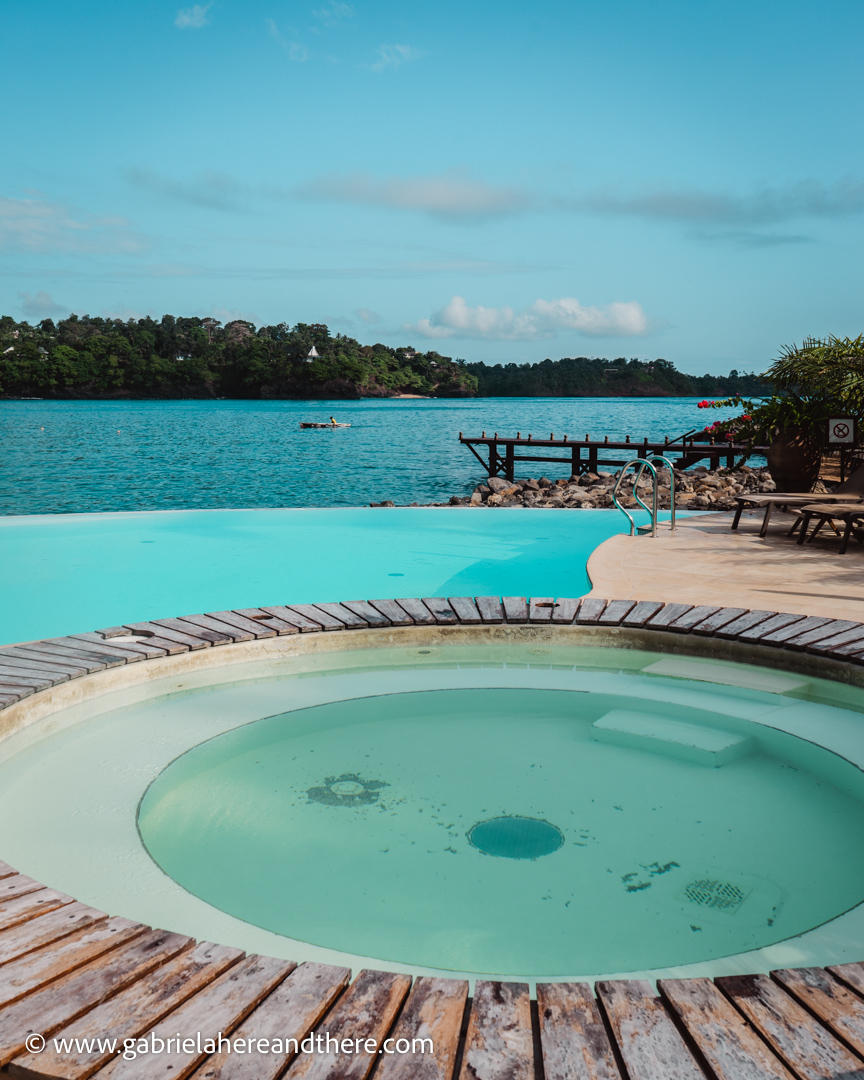
I stayed in two different areas during my trip: São Tomé (the capital city) and Santana, which is located a little further south.
In the capital, there are plenty of nice guesthouses to choose from. My first choice was Sweet Guest House, a very popular budget option with clean and comfortable rooms. Almost every traveler I met before traveling to São Tomé recommended this place. Unfortunately, I booked too late and it was already full—so if you’d like to stay here, make sure to reserve in advance on Booking.com.
Instead, I stayed at Hotel Central, and I was very happy with my choice. As the name suggests, the location is right in the heart of the city, making it easy to walk around and explore. The owner, a lovely Portuguese lady, personally picked me up from the airport and welcomed me warmly with hugs. Even though she didn’t speak English, she was always kind and helpful, and we managed to communicate using Google Translate.
You can book Hotel Central on Booking.com.

The next place I stayed in was Club Santana, a beautiful resort about a 25-minute drive from the capital. It’s the perfect spot for travelers who want to relax but also enjoy a variety of activities, as the hotel offers everything from hiking trips to water sports and organized excursions.
One of the biggest advantages of staying at Club Santana is that it’s also the starting point for some of São Tomé’s best experiences. The on-site Atlantic Diving Center offers scuba diving for both beginners and certified divers, while full-day boat trips to Ilhéu das Rolas depart directly from the hotel, making logistics very easy. You don’t need to stay at Club Santana to book these experiences, as they can also be reserved online in advance.
Book the experiences:
🚤 Boat trip to Ilhéu das Rolas & the Equator
🤿 Scuba diving with Atlantic Diving Center

The hotel features a range of bungalows in different sizes, two restaurants, a pool bar, a spa, a swimming pool, and a private beach. The location is stunning—set on a tropical shoreline with lush green forests all around.
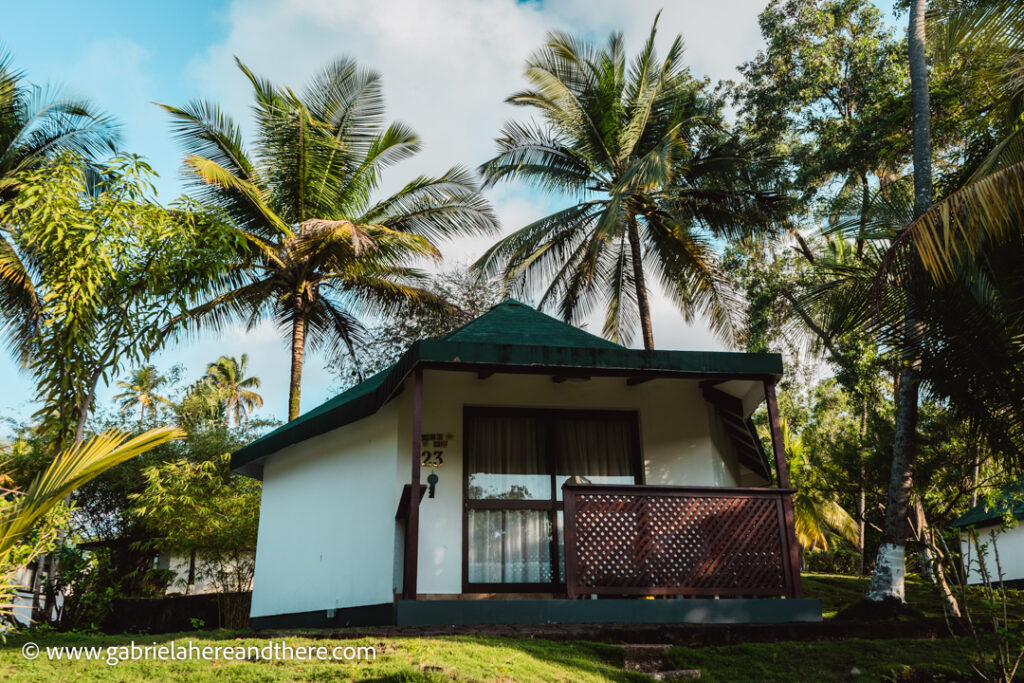
Every bungalow faces the sea, and from the breakfast restaurant, you can enjoy breathtaking views of the ocean.
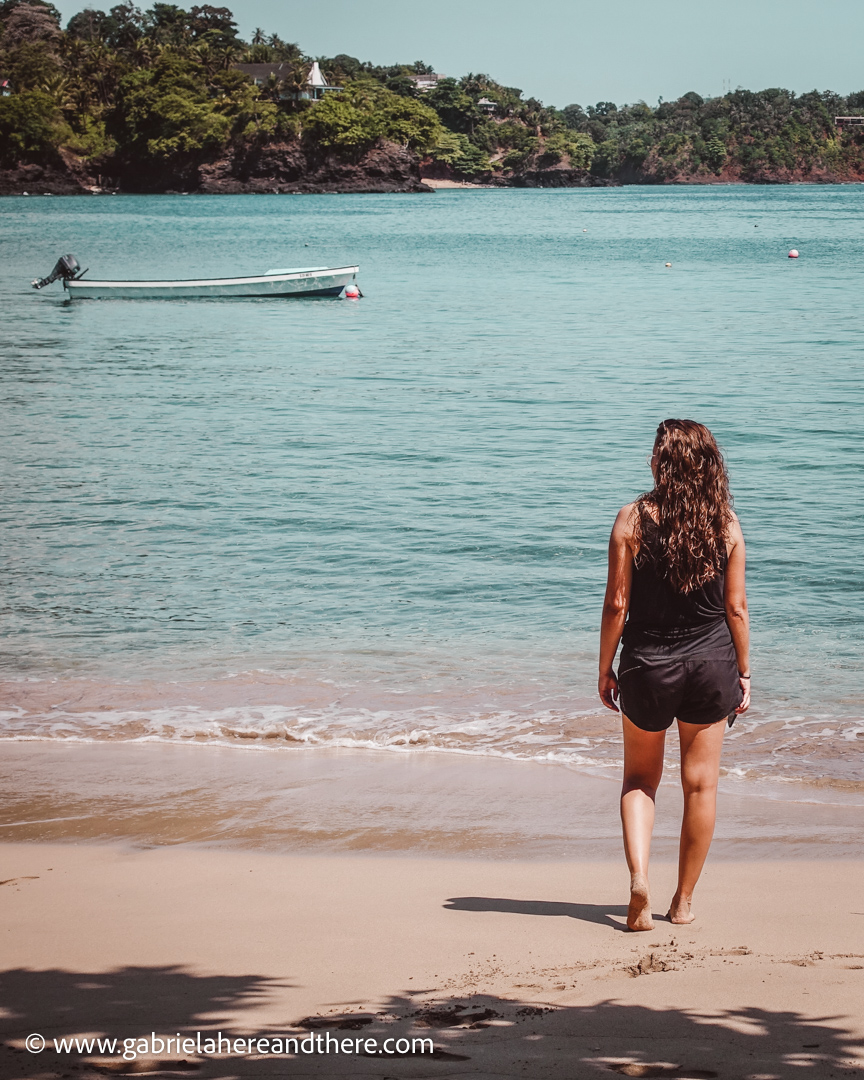
What I really loved about Club Santana was the wide variety of free activities included in the stay. Every morning, there’s an organized walk that takes you to some of the most beautiful spots around the resort. They also provide a boat trip to a nearby island, where you can snorkel using free gear from the dive shop next door—I highly recommend this, as the island is stunning and the snorkeling is fantastic. In addition, guests can use paddleboards, a small catamaran, and kayaks free of charge.
The hotel even organizes a complimentary tour to the center of the island to visit a plantation and a waterfall, along with free shuttle transfers to both the capital city and the airport.

Stays at Club Santana are usually half-board, meaning breakfast and dinner are included. This worked perfectly for me since I spent my days exploring and relaxed at the resort in the evenings. The breakfast buffet was always excellent, featuring plenty of locally sourced ingredients and great vegan options. On my first night, dinner was served as a buffet at the beach restaurant, complete with drinks and live dance performances. The vegan options were again very good, with beans, lentils, lots of vegetables, and even guacamole. After that, dinners were served in the breakfast restaurant, where you could choose a starter, main course, and dessert from a set menu. The food was tasty every night, though personally, I preferred the buffet for the wider variety of choices.
You can book Club Santana on Booking.com.
Safety

People always ask me about safety when it comes to any country in Africa, but I have to say that there is absolutely nothing to worry about in São Tomé and Príncipe! It’s such a small, peaceful country that incidents are extremely rare. Because of its size, it almost feels like everyone knows everyone. Of course, it’s still wise to use common sense and have good travel insurance, as you would anywhere.
The only dangerous animal on the islands is the black cobra, but they usually avoid humans, so encounters are very unlikely. I only saw one—and it was already dead on the road. Be careful when hiking though!
For female travelers, I’d like to note that, unlike in many other African countries where I felt the need to cover up more (not only in Muslim countries but also in places where women typically wear long skirts), this wasn’t the case in São Tomé and Príncipe. I always try to observe how local women dress and follow their example, and here I was happy to see that women wore whatever they wanted—miniskirts, shorts, and tops were all perfectly fine.
Places to See and Things to Do in São Tomé Island
I’ve divided the recommended sights and activities into three areas: the south, the north, and the center of the island.
North of the Island
São Tomé — The Capital City


The capital city is a very charming place, a little like a miniature Havana, with old colonial buildings and a feeling that time has stood still. Be sure to check out São Sebastião, a fortress built in 1566 that now also serves as a museum. Fun fact: I’ve also visited another fort with the same name in Mozambique, which was also colonized by Portugal.
Claudio Corallo — Chocolate Tasting

São Tomé and Príncipe is famous for its cacao production, and it’s impossible to visit the islands without learning more about cacao beans and how they’re processed. This is also where some of the best chocolate in the world is made, and if you want to taste it yourself, I highly recommend visiting the Claudio Corallo chocolate factory. While the plantation itself is located on Príncipe, there’s a factory in the capital city where tours and tastings are held on Mondays, Wednesdays, and Fridays. It’s a popular activity on the island, so you’ll need to buy your ticket in advance—or, if you’re staying at Club Santana, they can arrange it for you.

I was fascinated to learn how Claudio Corallo, the man behind it all, dedicated years to finding the perfect conditions for cultivating cacao beans and reducing their natural bitterness. The tour begins with tasting a raw cacao bean, followed by samples of the finished chocolates, where you can truly notice how much milder and smoother the beans are compared to typical ones. All the chocolates are made with the purest ingredients, and since no milk is added, everything is naturally vegan. After the tasting, you’ll also have the chance to purchase the chocolates to take home.
Even Further North…
If you want to explore even further north, it’s best to rent a car or join a tour. Highlights in this area include the Blue Lagoon, the Fernão Dias Pier (site of the Batepá massacre), several historic roças, and the largest bridge in the country.
Center of the Island
Obo National Park
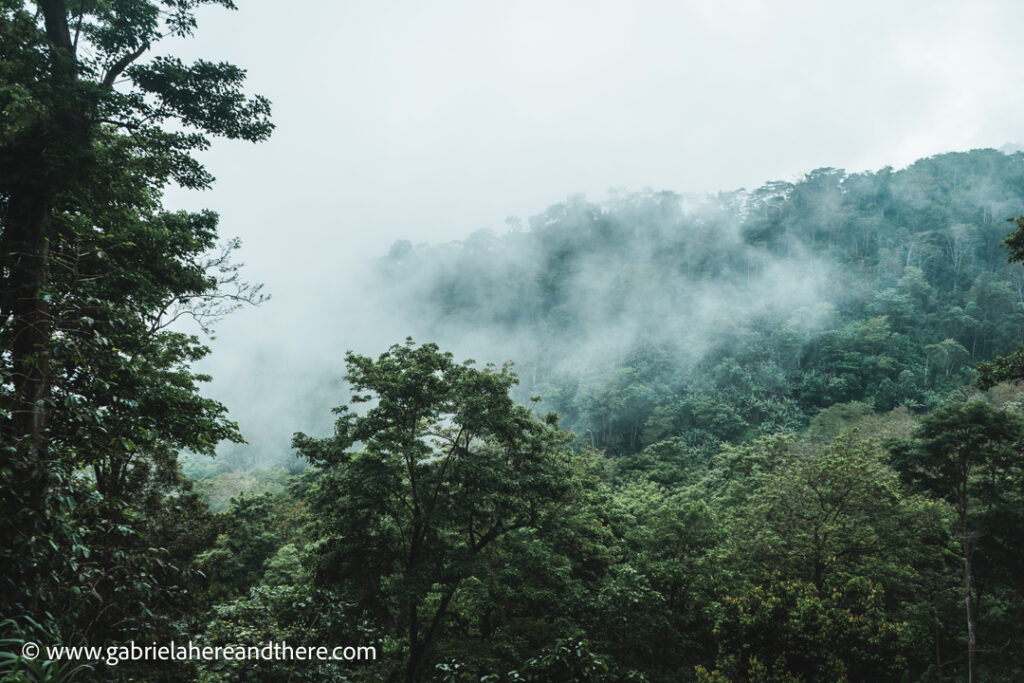
The interior of São Tomé Island is largely covered by Ôbo National Park, and hiring a local guide is recommended when exploring this area. There are several hiking options, including the challenging climb to the island’s highest peak, Pico de São Tomé. The country is also known for its incredible biodiversity, with around 95 endemic plant species and 16 endemic bird species.
Roça Monte Café

Just outside the national park is located Roça Monte Café, a plantation founded in 1850 that was once one of the largest producers of cocoa and coffee. Today, Roça Monte Café is open to visitors as the National Coffee Museum, where you can learn about coffee production—from cultivation to harvest—and, of course, enjoy a tasting.
Waterfalls and Botanical Garden

While there are many natural waterfalls in São Tomé and Príncipe, most are difficult to reach. However, two accessible ones can be found in the center of the island: the São Nicolau Waterfall and the Bombaim Waterfall. The São Nicolau Waterfall is located very close to Roça Monte Café, making it easy to combine the two. If you’re staying at Club Santana, they even arrange a free tour to both the waterfall and the plantation. Nearby, you’ll also find the Jardim Botânico do Bom Sucesso, a botanical garden that’s highly recommended for anyone interested in nature.
Scuba Diving in São Tomé
São Tomé is one of Africa’s most underrated diving destinations, with warm waters, excellent visibility, and uncrowded volcanic reefs. Most dives are led by the Atlantic Diving Center, located at Club Santana on the island’s east coast.

The dive sites feature lava formations, reefs, and abundant marine life, with chances to spot turtles and rays. Beginners can try a Discover Scuba Dive, starting in the pool before heading out to sea, while certified divers can choose from single dives, multi-dive packages, night dives, and even shipwreck or long-distance coastal dives.
PADI Open Water and Advanced courses are also available, making São Tomé a great place to learn to dive or upgrade your certification in a relaxed, uncrowded setting.
👉 Check available scuba diving experiences here
South of the Island
Visit the Beaches
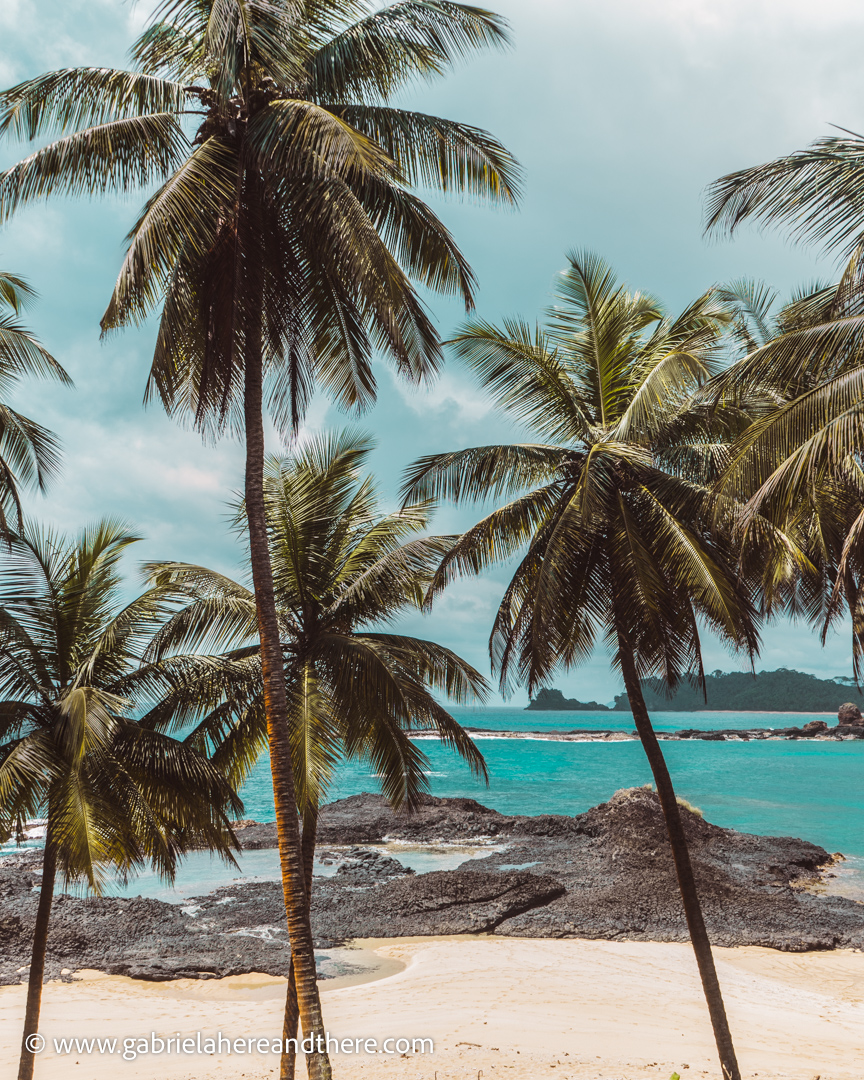
The southern part of the island has the most beautiful beaches and breathtaking scenery. White sand, lush green forests, and crystal-blue water are everywhere—and the best part is that you can often have these pristine beaches all to yourself!

I recommend visiting at least Praia Micondó, Praia Piscina, Praia Inhame and Praia Jalé.
Ilhéu das Rolas
One of the highlights in the south is Ilhéu das Rolas, a small island located almost exactly on the Equator. Visiting it as a day trip is one of the most popular excursions in São Tomé, but if you’re feeling adventurous, you can also choose to stay overnight on the island, where there is one basic accommodation available.
The day trip includes a scenic boat ride along the coast, snorkeling in crystal-clear water, time on quiet beaches, and a visit to the famous Equator monument, where you can stand with one foot in each hemisphere.
👉 You can book a full-day boat trip to Ilhéu das Rolas here
Boca do Inferno

Another beautiful spot along the coast is Boca do Inferno (the “Mouth of Hell”)—an impressive natural formation where waves crash into underwater caves and shoot dramatically into the air.
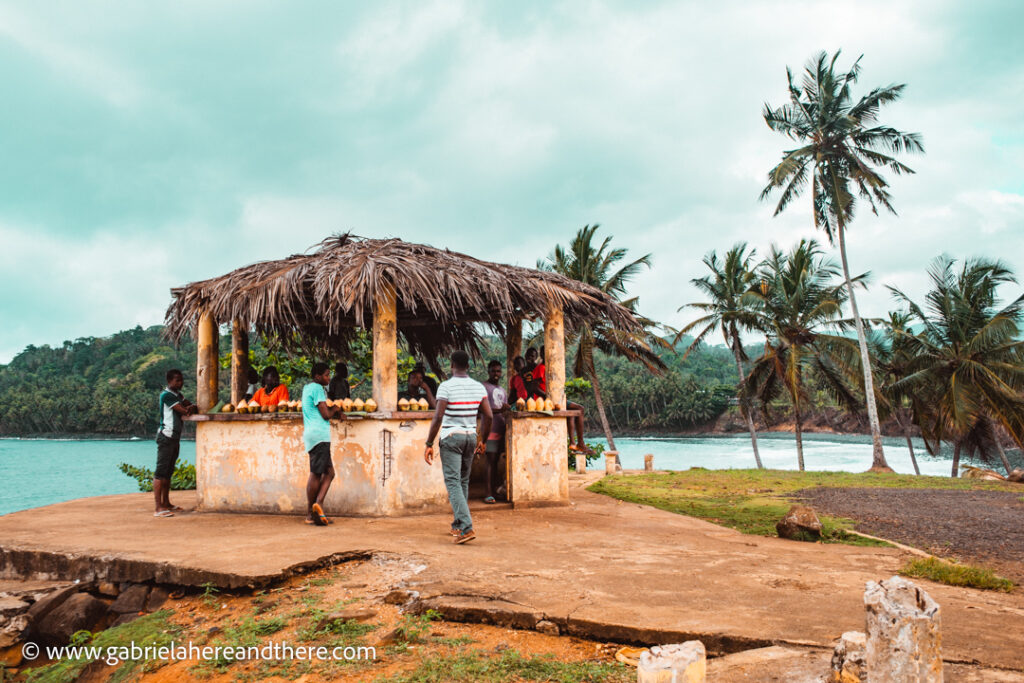
While you’re there, you can also buy fresh coconuts from local vendors.
Roça Agua Izé and Roça São João dos Angolares

If you want to explore some roças in the south, I highly recommend Roça Água Izé, one of the original plantations where cocoa farming began in the country. The most interesting building here is the old hospital, which sits on a hill and offers stunning views of the surrounding area. Another great roça to visit is Roça São João dos Angolares, a beautifully restored estate known for its excellent restaurant and a chef who creates delicious dishes using locally sourced ingredients.
Pico Cão Grande
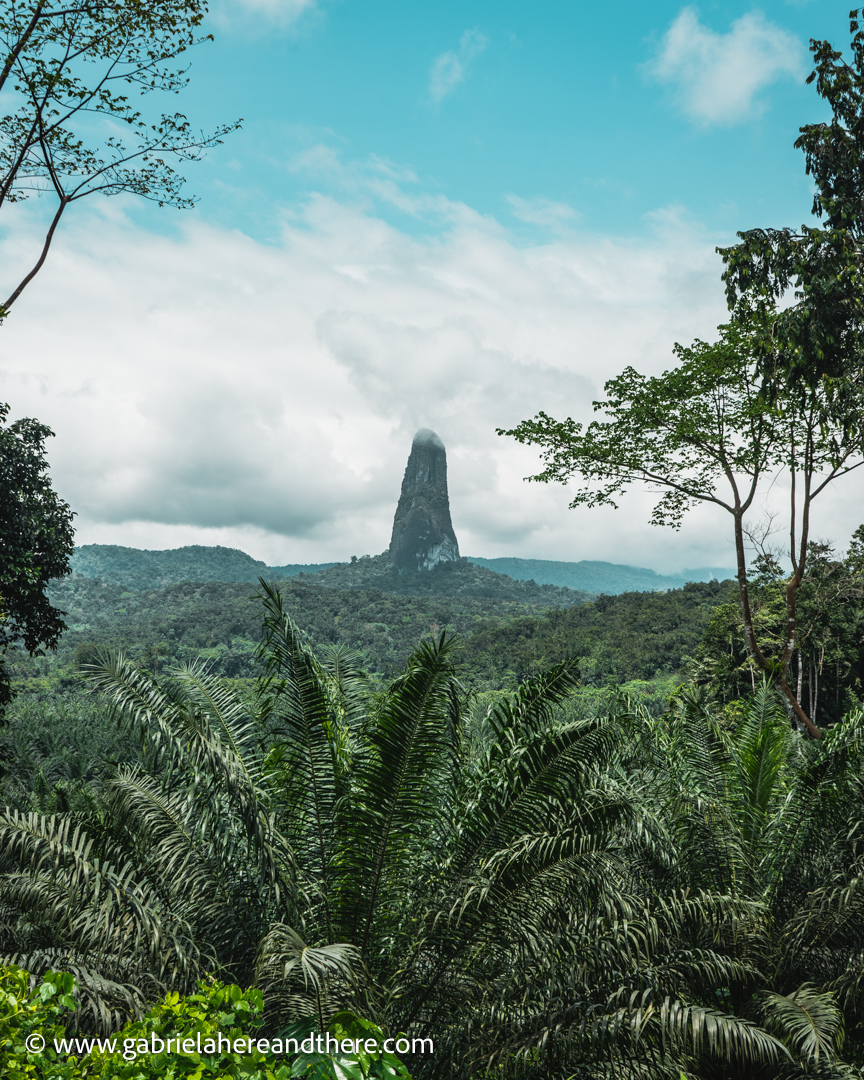
Pico Cão Grande, the iconic landmark of São Tomé, is an absolute must-see when traveling in this area. This needle-shaped volcanic plug rises dramatically from the rainforest, creating a truly majestic sight.
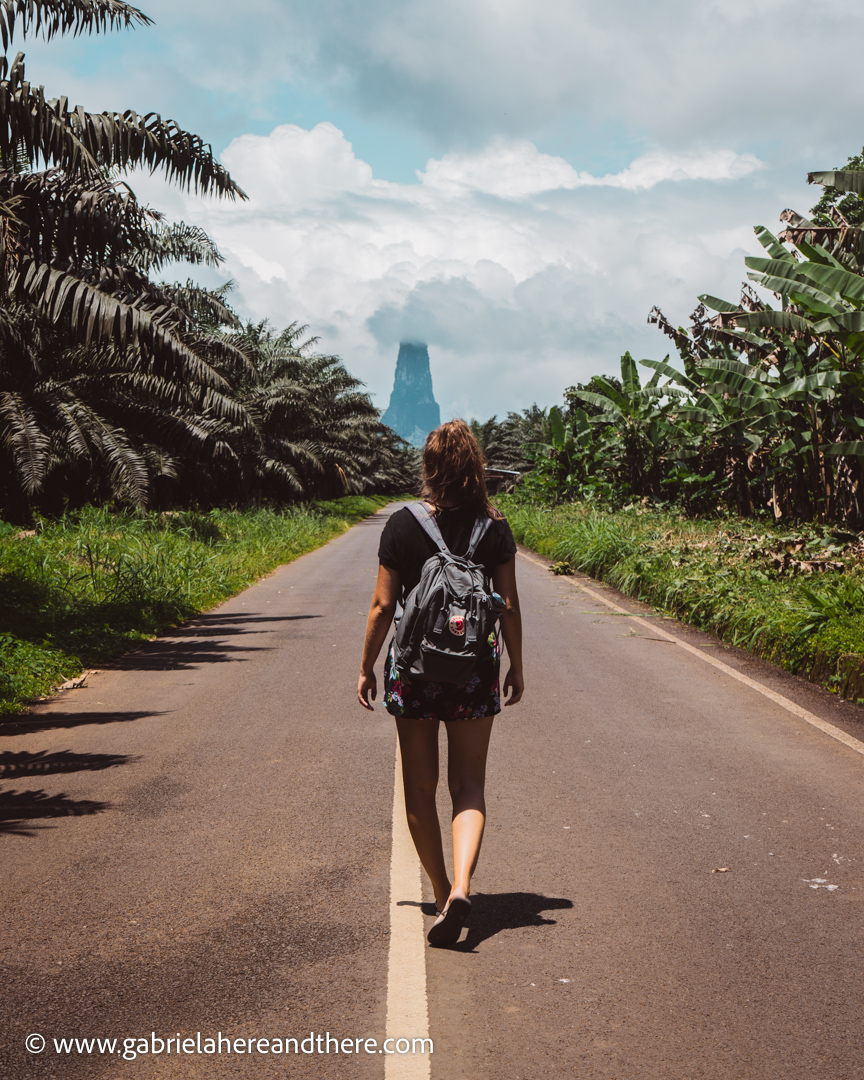
There are at least three excellent viewpoints along the drive from north to south, and since there’s only one main road, it’s impossible to miss them. With so little traffic on São Tomé, it’s also easy to stop along the way to take photos.
Turtle Watching

You can also go turtle watching on the southern tip of the island. Praia Jalé Eco Lodge is a rustic eco-lodge that runs a marine turtle protection program. Located right on the beautiful Praia Jalé, it’s the perfect place to witness giant turtles laying their eggs—and, if you’re lucky, watch baby turtles hatching during the season. I visited during turtle season, but since they come ashore only early in the morning, I didn’t get to see them. The best way to increase your chances is to stay overnight at a more simpler Praia Jalé Eco Lodge or at Praia Inhame Eco Lodge nearby, which offers a more comfortable and modern option.
Final Thoughts
São Tomé and Príncipe is truly a special place, and it has become one of my new favorite destinations in Africa—if not in the world. I hope this guide helps those planning a trip and inspires others who may not have heard of this beautiful country to add it to their travel list!
🌍 Visiting Every Country — Support My Work
I’m visiting every country in the world, and my travels are entirely self-funded. I focus on unusual, off-the-beaten-path destinations that don’t always get much coverage — which is exactly why I create detailed guides like this.
If you found this post helpful, buying me a coffee is a simple way to support my work and helps me keep creating in-depth travel guides to less-visited places. Thank you for your support ❤️
Pin to share:


10 comments
Wow, this looks incredible! I’m planning a West Africa trip later this year – mostly focussing on Ghana, but I’m sure as he** checking flights to this island now! Thanks for sharing – looks like paradise!
São Tomé if I am not mistaken this was a Portuguese colonized. The food the Praias look stunning. Would love to visit.
Wow this looks like an amazing place..a paradise never heard about it before but now its in my bucket list for sure .thanks for sharing
Wow this looks so amazing, i would love to go there! I saved this post for later, very informative 🙂
This is such an inspiring post, really put São Tomé on the radar for me! I’m deadly afraid of snakes, though. So I’ll probably have to get over that when I visit 😉
Amazing! I will travel to São tomé next month and I love read your advices about it. Thanks. Good job!
Great guide with lots of useful information. Now I am even more looking forward to my stay on the island! thank you
Beautiful pictures! Next time you are coming visit us!! We are doing tour of our unit of transformation of vanilla and plantation, with vanilla rum degustation!
Best regards,
Thanks for all the helpful info. What would be the travel options to get to Sao Tome from the United States: airlines, what countries to fly to first etc
In the 1980’s, I took a one day working visit to Sao Tome and Principe from the airport on the mainland in Libreville, Gabon. Yes, it is truly beautiful, but the main memory I have is the amazing peacefulness and charm. When schools let out, I watched as kids ran to the shore, through down their books and uniforms and dashed into the sea in joyful glee. I thought, “what a wonderful way to grow up.”